
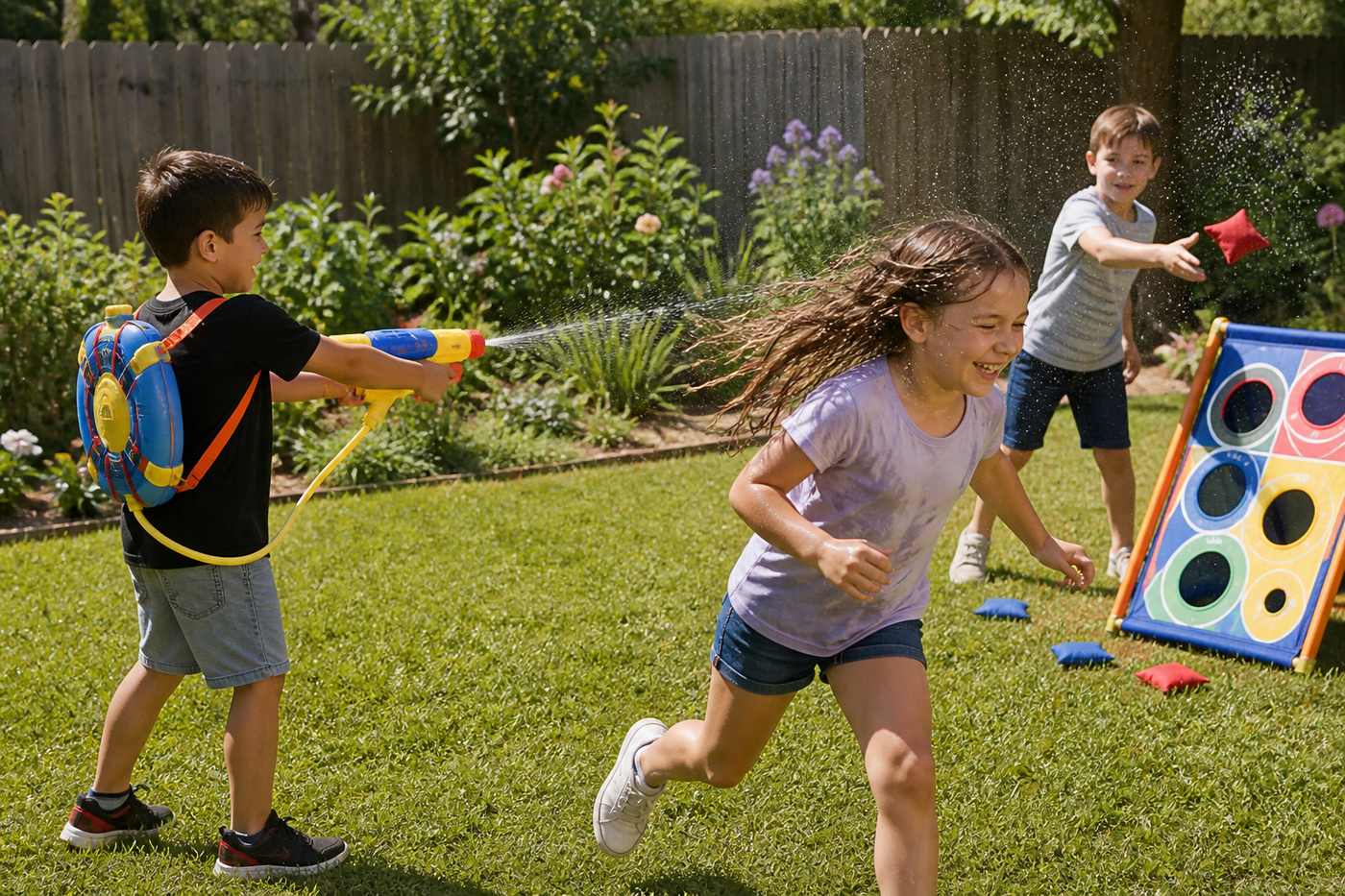
If you are sourcing backyard games for 2026, the single most useful boundary is this: a Children's Product Certificate is product-specific and must be based on test results from a third-party, Outdoor Toy laboratory. It is not a blanket factory certificate, and no supplier blog's trend list can substitute for it. For backyard games aimed at children 12 or younger, that CPC, the cited Outdoor Toy rules, and the supporting English-language test reports are the documents that decide whether your order clears US import. Everything else — novelty rankings, "best-selling" language, market-size estimates — is a directional signal you should price as risk, not as proof.
The practical outcome: before you quote a backyard game to a garden center or resort buyer, confirm three things per SKU — the age grade, the applicable standard edition, and which party is named as the responsible importer or manufacturer. If a supplier cannot produce those, hold the purchase order rather than negotiate harder on price.
Key Takeaways
- Treat any "hot backyard game" list as a sampling prompt, not demand evidence. The 2026 supplier listicles name ASTM F963 and EN71 as things to "confirm before bulk orders" — that is a checklist item, not a compliance claim you can pass downstream.
- For US-bound backyard games designed primarily for children 12 or younger, require a CPC containing all seven required elements, plus third-party test reports from a Outdoor Toy laboratory, in English. A CPC that names a factory instead of a product is not usable evidence.
- Compliance is edition-specific. 16 CFR Part 1250 incorporates ASTM F963, and the applicable edition must be read from the current regulation before any report is quoted to a retailer or customs broker.
- EU-bound backyard games sit under two separate instruments: Toy Safety Directive 2009/48/EC (CE marking, EU Declaration of Conformity) and the General Product Safety Regulation (EU) 2023/988, which is a distinct legal instrument. Do not let a supplier merge them into one vague "CE certified" line.
- Small parts and age grading are connected: detachable accessories, assemblies and packaging components need the same review discipline as the main product, which is where most backyard-game assortment risk actually sits.
- Seasonal timing beats trend-chasing. If you want a themed backyard game on a garden-center shelf for peak spring/summer sell-through, the compliance documents — not the artwork — are the long-lead item.
Seasonal trend and evidence matrix for backyard games
| Trend: novelty and seasonal-themed outdoor SKUs | Why visible this window | Sourcing implication | Dated source note | Novelty/seasonal packaging and display-box formats dominate 2026 supplier "best of" lists | Supplier listicles are promotional, not measured demand | Use as a sampling prompt only; verify ASTM F963 and EN71 documentation per SKU before bulk | Tony Sourcing, 9 Best Novelty Toys for Wholesalers in 2026 (supplier blog) |
|---|---|
| Trend: customization and private-label outdoor sets | Why visible this window | Sourcing implication | Dated source note | Personalization and branded merch are being pitched to B2B buyers as a differentiator | Customization shifts the control point to the buyer's own artwork and packaging fields | Lock packaging wording, barcode quiet zone and lot control into the spec before tooling | LeelineToys, Inspiring Trends in Custom Plush Toys (supplier blog, plush — not backyard games) |
| Trend: category-level toy growth figures | Why visible this window | Sourcing implication | Dated source note | Broad 2026 toy-market reports cite segment shares and growth rates | Those figures are for the general toy market, not backyard games | Never put a general toy CAGR on a backyard-game line review | Accio, Demontoys Market Trends 2026 (report; no backyard-games data) |
| Requirement: US children's product certification | Why visible this window | Sourcing implication | Dated source note | CPC required under Section 14 of the Outdoor Toy, codified at 16 CFR part 1110 | Applies to children's products designed primarily for children 12 or younger | Request the CPC plus English test reports; check all 7 required elements | Outdoor Toy, Children's Product Certificate (official) |
| Requirement: US toy safety standard | Why visible this window | Sourcing implication | Dated source note | 16 CFR Part 1250 incorporates ASTM F963 | The edition matters and should be read from the current regulation | Match report to product configuration, age grade and standard edition | eCFR, 16 CFR Part 1250; ASTM F963 standard page (official) |
| Requirement: EU market access | Why visible this window | Sourcing implication | Dated source note | Toy Safety Directive 2009/48/EC sets essential safety requirements; GPSR (EU) 2023/988 is a separate instrument | CE marking and the EU Declaration of Conformity belong to the conformity process | Tie every statement to a SKU, report, responsible party and current version | EUR-Lex, Directive 2009/48/EC; Regulation (EU) 2023/988 (official) |
| Requirement: traceability | Why visible this window | Sourcing implication | Dated source note | Tracking information should be permanent and support product identification where applicable | Packaging, product markings and lot control must be reviewed together | Make tracking labels a line item in the PO spec, not an afterthought | Outdoor Toy, Tracking Labels (official) |
What does the 2026 backyard games trend data actually prove?
Almost nothing at SKU level — and that is the finding, not a gap. The trend material circulating in 2026 for outdoor and novelty toys is overwhelmingly supplier-authored: sourcing-blog lists of "9 best novelty toys for wholesalers," custom-plush trend posts, and broad toy-market reports that cover educational toys, construction sets and plush collectibles but never mention backyard games specifically. Those are useful for one thing: generating a shortlist of form factors to sample. They are not evidence of demand, price, MOQ or sell-through for your market.
A widely shared 2026 toy-market summary puts the kidulting segment at roughly $43.4 billion in 2026, growing at about 12.1% — but that figure describes collectible and adult-purchase toys, not lawn games, cornhole, ring toss or backyard target games. Putting that number on a backyard-game line review is a category error a sharp retail buyer will catch.
So the defensible position for a 2026 outdoor assortment is process-led: pick the formats, then prove the compliance. The trend tells you what to sample. The regulation tells you what you may sell.
When should importers place backyard games orders for seasonal sell-through?
Earlier than the trend cycle suggests, because the binding constraint is documentation, not production. A backyard game sold into the US for children 12 or younger needs a CPC built on third-party testing at a Outdoor Toy laboratory, and the reports must be in English. That paperwork cannot be generated the week the container is booked.
Two dated items belong in your calendar. First, from July 8, 2026, importers of most regulated consumer products must electronically file certificates of compliance with U.S. Customs and Border Protection via a Partner Government Agency Message Set — so the certificate data has to exist in a structured, filable form before the shipment, not as a PDF someone forwards later. Second, any change you make to the product after testing — a new colour, a detachable accessory, a revised age grade, new packaging — moves the product outside the tested configuration. That is the quiet killer of spring assortments: a late packaging refresh that invalidates a report filed months earlier.
Lock the SKU configuration and the compliance documents first, then set the order date. Buyers who sequence it the other way round spend the peak season chasing paperwork.
Which compliance evidence separates a real backyard games supplier from a reseller?
The supplier who can hand you a document set that names the product, not the factory. Under 16 CFR part 1110, a CPC must identify the product, cite each applicable Outdoor Toy children's product safety rule, name the domestic manufacturer or importer, give contact information for the person maintaining test records, state the date and place of manufacture (month and year at minimum; city, state and country), give the date(s) and place(s) of testing, and identify the third-party, Outdoor Toy laboratory. Seven elements. A certificate missing any of them is not evidence of anything.
Where exemptions or exceptions apply, a CPC is still required — it simply cites the applicable regulations and the exemption claimed instead of a laboratory. Buyers who read "no test report needed" as "no document needed" get caught at the border.
For EU-bound backyard games the boundary shifts. Toy Safety Directive 2009/48/EC sets the essential safety requirements, and CE marking plus the EU Declaration of Conformity belong to the conformity process — but the GPSR, Regulation (EU) 2023/988, is a separate legal instrument, and importer, manufacturer and product-identification information must be mapped to the correct market role. Your company's name and address may need to appear on the product or packaging because you are the importer. Budget artwork space for it.
Age grading and small-part risk are assessed for the actual product configuration. A ring toss with detachable vegetable pieces is not the same compliance object as a one-piece moulded ring. Same box, different review.
OEM-relevant examples for this season's backyard games assortment
If your 2026 program is shortlisting outdoor formats, two backyard-adjacent SKUs are worth opening as OEM references rather than finished goods. A backyard shooting blaster line is plastic-bodied, MOQ 42 at 6.63 USD, and already positioned with CPC-oriented documentation language — useful if you want to test a target-shooting format before committing to tooling. For lower-ticket garden-center volume, a 2-in-1 light-up dart board toss game runs MOQ 144 at 3.17 USD, and a ring toss set sits at MOQ 216 and 1.51 USD — both are the kind of small-unit, display-friendly items a seasonal endcap needs.
Treat these as format references and tooling starting points, not as ranked trend winners. If you want a private-label variant, the packaging wording, barcode quiet zone and tracking label fields are the parts to lock first — they are the fields most likely to change with the SKU and the ones most likely to break a compliance statement downstream. Browse the Backyard Games collection for the current format range.
FAQ
Do backyard games need a Children's Product Certificate?
Only if the product is a children's product — designed or intended primarily for children 12 years of age or younger. If it is, Section 14 of the Outdoor Toy (16 CFR part 1110) requires the domestic manufacturer or importer to certify compliance in a written CPC based on third-party testing at a Outdoor Toy laboratory. General-use products fall under a General Certificate of Conformity instead. Confirm the age grade for each SKU before assuming which applies.
How do I check whether a supplier's CPC is real evidence?
Verify that all seven required elements are present: product identification, citation to each applicable Outdoor Toy children's product safety rule, identification of the domestic manufacturer or importer, contact information for the person maintaining test records, date and place of manufacture, date(s) and place(s) of testing, and the third-party, Outdoor Toy laboratory. The CPC and supporting test reports must be in English. A document that names only a factory, or that omits the laboratory, is not usable evidence.
Which standard edition should the test report cite for US-bound backyard games?
Read the applicable edition from the current regulation rather than from a supplier's older report. 16 CFR Part 1250 incorporates ASTM F963, and the report must match the product configuration, age grade, material and standard edition. If a report predates a design change — new colour, detachable accessory, revised packaging — it no longer covers the SKU you are buying.
What changed for US importers filing compliance certificates in 2026?
From July 8, 2026, importers of most regulated consumer products must electronically file certificates of compliance with U.S. Customs and Border Protection via a Partner Government Agency Message Set. That means the certificate data needs to exist in a filable, structured form before shipment rather than as a document forwarded after the fact. Confirm with your broker how your specific product category is treated.
Does CE marking on a backyard game prove it meets EU toy rules?
No. CE marking and the EU Declaration of Conformity belong to the conformity process and must be matched to the product scope — a CE mark alone is not proof that a specific factory or SKU is certified. For EU-bound toys, the Toy Safety Directive 2009/48/EC sets the essential safety requirements, while the General Product Safety Regulation (EU) 2023/988 is a separate legal instrument with its own importer and product-identification obligations. Check the current consolidated text and product scope before publishing or relying on any compliance statement.
When is the best time to order backyard games for spring and summer sell-through?
Reverse the sequence: lock the SKU configuration and compliance documentation first, then set the order date. Third-party testing, English-language reports and CPC preparation cannot be compressed into the week a container is booked, and any post-testing design change moves the product outside the tested configuration. For seasonal outdoor programs, documentation is the long-lead item, not production.
Sources
- 10 Creative Backyard Game Ideas for Teens
- Backyard Basketball Game
- Backyard Game
- Backyard Games Package Rental
Related Products & Categories
Request a Quote
Send us the age grade, destination market and target retail price band for your 2026 backyard games program, and we will come back with the format options, MOQ and the document set your compliance team will actually need — before you commit to tooling.