
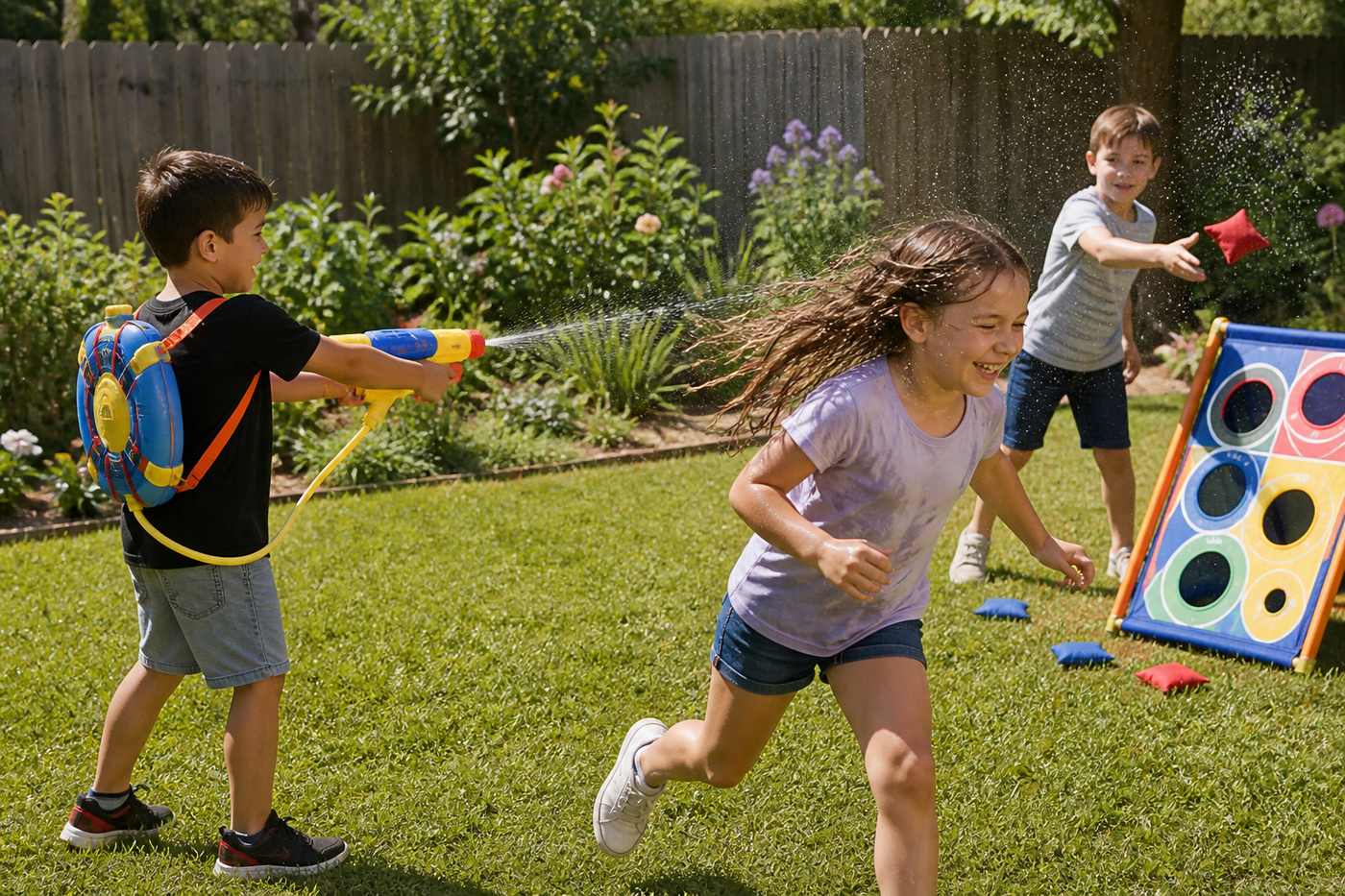
The material and quality checks you run before buying beach and sand toys wholesale decide whether your summer line survives the beach. Direct sun, salt air, chlorinated pools, and the inevitable drop onto concrete will expose any shortcut in resin choice, wall thickness, or color masterbatch. This article gives you the concrete factory and quality questions to ask, the material checks to request, and the evidence to demand before you commit to a container.
The practical outcome: you should walk away able to write a PO that names your material standard, your test protocol, and your physical golden sample — and know which production hubs to approach for which category.
Key takeaways for beach toy buyers
- Match the material to the use case: ABS suits rigid, load-bearing parts like sand table frames and water gun bodies; general-purpose plastic (often PP or PE) works for flexible, low-stress items like buckets and shovels. Ask the factory which specific resin they use — do not accept a generic 'plastic' label.
- Outdoor failure modes are predictable: UV fade, chlorine and salt corrosion, impact cracks, and thin-wall or color-masterbatch issues. Put each one on your RFQ as a test request, not a hope.
- The physical golden sample is your only reliable production benchmark — photos and emails fail on the second lot. Require a sealed sample with tool number and revision before any bulk production.
- Know your production geography: injection-molded plastics cluster in Chenghai, wooden toys in Yunhe, plush in Yangzhou, and general merchandise in Yiwu. That geography shapes what you can realistically inspect and enforce.
Beach toy material and quality checks at a glance
| Use case: Sand buckets, shovels, molds | Material to ask: Flexible plastic (PP/PE) with adequate wall thickness; Test to request: Drop test on packaged and unpackaged unit, flex test on handles and thin edges |
|---|---|
| Use case: Sand & water tables, rigid frames | Material to ask: ABS or impact-modified plastic; Test to request: Static load or drop test on frame, check for stress cracks at joints |
| Use case: Water guns, sprayers (manual) | Material to ask: ABS for body, plastic for seals; Test to request: Repeated trigger/function test, chlorine and salt-water soak test |
| Use case: Electric water guns, bubble machines | Material to ask: Plastic housing with sealed electronics; Test to request: Water ingress check, drop test, function test after 100 cycles |
| Use case: Any brightly colored beach toy | Material to ask: UV-stabilized resin with color masterbatch; Test to request: UV exposure / fade test, compare bulk color to sealed golden sample |
What material should you specify for beach toys — ABS or general plastic?
Specify ABS for parts that take impact and hold shape — sand table frames, water gun bodies, and any component that must not flex or crack under a child's weight. Use general-purpose plastic (typically PP or PE) for flexible, low-stress items like buckets, shovels, and molds.
The label on the RFQ is not enough. On the factory floor, 'plastic' can mean anything from virgin PP to regrind with unknown properties. Your material check must name the specific resin, the wall thickness, and the color masterbatch — then verify it against a physical sample.
Consider a sand and water table with a play tent: the rigid frame needs ABS with adequate wall thickness, while the fabric needs its own UV and seam-strength check. Do not let a single 'ABS' line item cover the whole product.
Which outdoor failure modes should you test for before a beach toy order?
Beach toys die in four predictable ways: UV fade, chlorine and salt damage, impact cracks, and thin-wall or color-masterbatch issues. Each one has a test you can put on your RFQ.
UV fade is the most visible. A bright orange bucket that turns pink after one season in the sun will generate returns even if the toy is structurally fine. Ask the factory for a UV-stabilized resin and request a fade test on the actual color masterbatch — not a photo of a sample that sat on a warehouse shelf.
Chlorine and salt water attack seals, valves, and any metal or painted surface. For water guns and sprayers, request a soak test in chlorinated and salt water, then a function test. A gun that leaks on the third use is a customer-service headache.
Impact is where safety and durability questions meet. Drop testing — on both packaged and unpackaged units — checks whether the toy withstands a defined impact without creating unsafe broken parts or loss of function. For thin molded features like handles, blades, and wings, add a flex test based on foreseeable use. A shovel that snaps at the handle on the beach is a safety issue, not just a quality issue.
Where are beach toys typically produced — and what does that mean for your audit?
Production geography is a practical shortcut for sourcing. Injection-molded plastic toys — the bulk of beach and sand toys — cluster in Chenghai, Guangdong. Wooden toys come from Yunhe, plush from Yangzhou, and general merchandise from Yiwu.
That geography tells you what kind of factory you are dealing with and what you can realistically inspect. In Chenghai, you are likely working with a specialist injection molder that has the tooling and QC systems for plastic toys. In Yiwu, you are more likely dealing with a general merchandise trading hub where quality control may be less rigorous and you need to be more prescriptive in your PO.
Before you fly anywhere, do a supplier qualification that evaluates capability, material control, quality records, compliance evidence, and capacity claims — not a catalog page. If a factory cannot show you its quality records and a clear material-control process, that is a red flag no matter how good its booth looks at a fair.
Why the golden sample beats photos and email for approving a beach toy production run
The sealed golden sample on the QC shelf ends color fights on the factory floor — not emails, not photos. Compare bulk production to that physical piece across color, fit, flash, and function. Buyers who approve only a photo often pay for it on the second lot.
This is especially true for beach toys, where color is a selling point and flash (the excess plastic left from molding) is a visible quality signal. A photo taken under fair lighting can hide a mismatch. A physical sample under your own light cannot.
When you request a golden sample, ask for the tool number and revision marked on it. That way, if the factory changes the tool or the material, you have a verifiable reference. Do not accept a fair booth sample as your production standard — those are often hero units that do not represent the bulk run.
How should you set up inspection and defect classification for a beach toy order?
Your PO should reference an inspection plan that defines critical, major, and minor defects — not rely on informal factory language. AQL (Acceptable Quality Limit) is the common framework, but the exact number must come from your agreed inspection plan, not from a catalog sentence.
On the factory floor, a failed lot should be isolated, the defect class recorded, and the lot released only after rework. That discipline protects your margin. If the factory cannot walk you through their defect classification and rework process, that is a risk you should price into your decision.
For beach toys specifically, classify defects by how they affect the customer. A minor color fade on a bucket may be acceptable at a discount; a crack that creates a sharp edge is a critical safety defect regardless of lot percentage.
FAQ: Beach toys wholesale material and quality questions
What MOQ should I expect for custom beach toy orders?
MOQs vary widely by product and factory. In the provided catalog, MOQs range from 1 unit for a low-cost ABS water gun to 216 units for an electric water gun. For custom orders with new tooling, expect higher MOQs. Always confirm MOQ per SKU in writing before sampling.
How do I verify a factory's material claims for ABS vs plastic?
Ask for the specific resin grade and a material certificate or test report. On the floor, have the factory show you the raw material bags and compare bulk parts to a sealed golden sample. If they cannot name the resin, treat the claim as unverified.
What tests should I request for UV fade on beach toys?
Request a UV exposure test on the actual color masterbatch, not just the resin. The test should simulate direct sun exposure and compare the result to the sealed golden sample. Confirm the test standard and duration with the factory.
How do I test for chlorine and salt water damage on water guns?
Request a soak test in chlorinated and salt water, followed by a function test. This checks seals, valves, and any metal or painted surfaces. Specify the soak duration and the expected performance after the test.
What is the difference between a golden sample and a pre-production sample?
A golden sample is the sealed, approved physical standard for the entire production run — it carries the tool number and revision. A pre-production sample is a trial piece from the actual tooling. Use the golden sample as your comparison baseline for color, fit, flash, and function.
How should I handle a failed lot during inspection?
Isolate the failed lot, record the defect class (critical, major, minor), and do not release it until rework is complete and re-inspected. The rework and release criteria should be defined in your inspection plan, not improvised on the floor.
Sources
Related Products & Categories
Ready to spec your beach toy order with the right material checks?
Use this checklist as your RFQ template: name the resin, request the drop and flex tests, demand a sealed golden sample with tool revision, and define your inspection plan in the PO. If you need help translating these checks into a supplier brief, a sourcing partner can walk you through the process — request a quote and we will send you a sample RFQ template.