
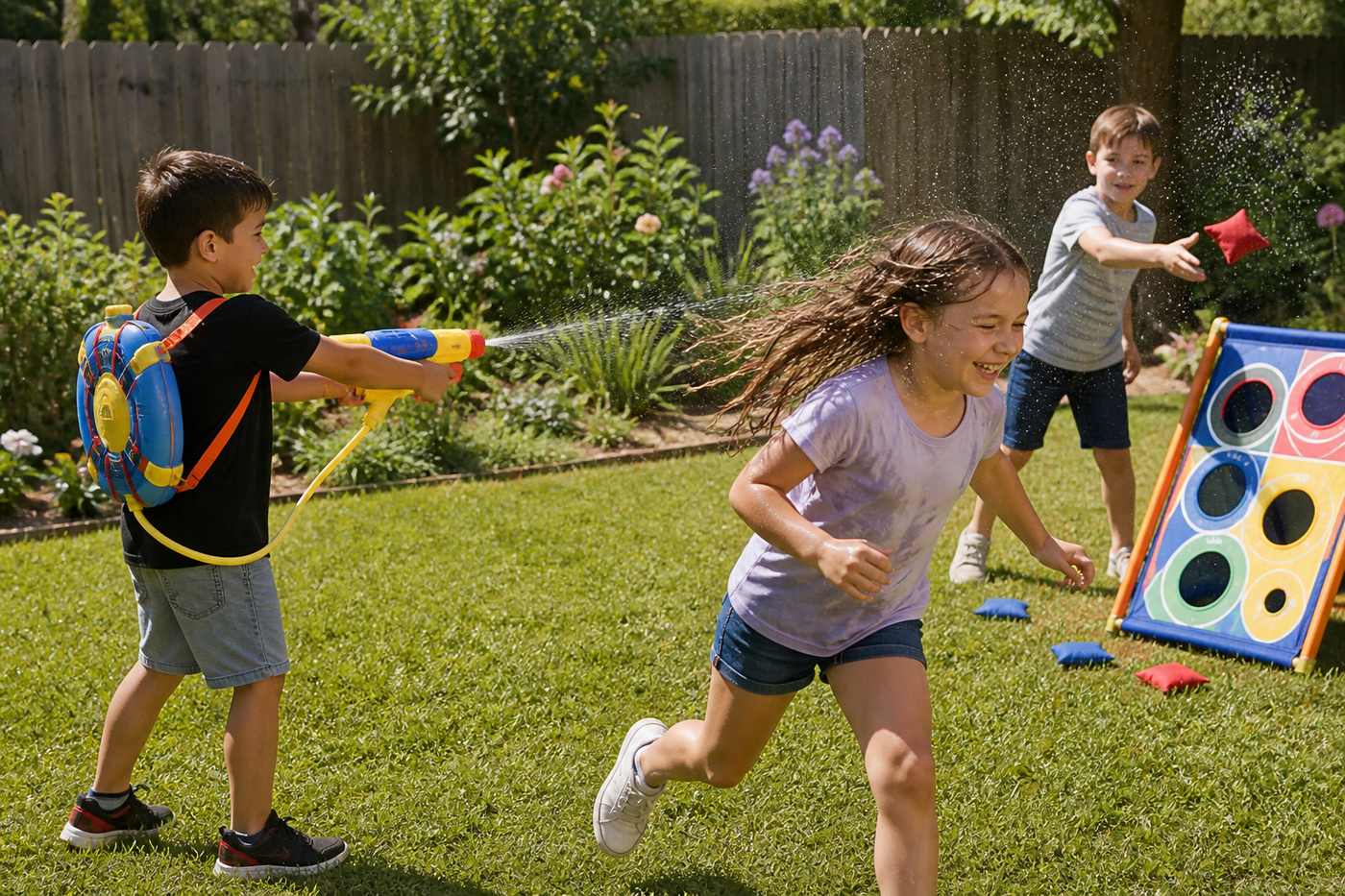
To source bulk outdoor vehicles and ride-ons profitably, start with a product-and-market fit matrix, then use MOQ, carton data, and FOB terms to compare suppliers—not a generic best-price list. This sourcing map gives you a step-by-step framework to prepare a comparable RFQ, from mapping your channel's needs (camp, resort, retail, e-commerce) to verifying safety evidence and negotiating container-friendly assortments. You will leave with a checklist of what to ask every supplier, what document gaps to reject, and how to structure a purchase plan that survives inspection and delivery.
Key Takeaways
- Choose suppliers based on documented product fit, assortment economics, and verifiable safety evidence—not on a catalog page or a trade-show photo.
- For ride-ons and electric outdoor toys, expect tiered MOQs that vary by SKU; always ask for price breaks at 1×20GP, 1×40HQ, and larger volumes, and use carton data to calculate landed cost.
- Carton dimensions and units per carton should be based on measured production packaging, not preliminary artwork—corner-sensitive items like LCD-equipped ride-ons require double-wall, corner boards, and ECT specifications.
- AQL is a contractual sampling standard, not a legal requirement; agree on defect classes and inspection levels in the PO, and use General Inspection Level II as your baseline for consumer toys.
- Certificates must map to specific products and lots; a UKCA or VOC file for one electric toy does not cover a different model or market, so request a document matrix from every supplier.
Sourcing Channels Compared
| Direct manufacturer (China/Asia) | Lowest unit cost; OEM/ODM and private label possible; MOQ often high (varies by spec); need to verify certifications yourself; FOB port terms common; best for large, repeat orders. |
|---|---|
| B2B marketplace (Alibaba, etc.) | Access to multiple suppliers; MOQ varies widely; buyer protection but still need vetting; useful for comparing prices and product ranges; beware of unbranded filler that complicates your retail story. |
| Trade shows (Canton Fair, Spielwarenmesse) | See products in person; meet factory reps; but booth samples are often 'hero units'—never treat a fair photo as a production standard; require a revision card on samples. |
| Regional wholesaler/distributor | Lower MOQs; access to multiple brands; regional exclusivity and after-sales support possible; higher unit cost than factory-direct; good for testing a market before committing to container loads. |
| Direct from supplier's B2B site | Some factories sell direct to importers/distributors; may offer flexible MOQs; verify B2B-only policy (no retail sales) and request customer references in your channel. |
Step 1: Map Product Fit by Use Case and Channel
Decide which outdoor vehicle or ride-on category fits your channel before requesting quotes. For a camp or resort buyer, durability and low maintenance matter more than shelf appeal; for retail, display-ability and demo potential drive sales; for e-commerce, carton dimensions and shipability are critical.
Classify your assortment into ride-ons (pedal/push, electric), scooters, and outdoor action toys (e.g., water blasters, RC cars). For each SKU, note the target age range—electric ride-ons typically suit ages 3–8, while balance bikes and pedal models suit younger toddlers—and the use case: backyard play, park, or beach.
If two products compete for the same use slot, rationalize. A distributor importing a mixed container might need one anchor product (a hero ride-on) and several high-turnover fillers to complete CBM—think of small water toys or bubble guns that sell quickly and fill leftover space. Generic unbranded filler can complicate your storytelling to retailers, so choose filler that supports your assortment narrative.
A worked example (illustrative, not a real shipment): You are a resort buyer planning a summer program. You estimate 200 units of a 3-wheel scooter ride-on (MOQ 10 per the catalog) for ages 3–5, plus 300 electric water guns as high-turnover add-ons. You need carton data to see if these fit a 20GP container with your existing furniture order. The scooter's larger cartons may force you to choose a smaller quantity or a different mix—this is the point where you recalculate before committing.
Step 2: Assess Assortment Economics: MOQ, CBM, and Container Mix
MOQ varies by SKU and by whether you buy stock designs or custom (OEM/ODM), so ask for a tiered MOQ table: what is the minimum per SKU, and what price breaks apply at one 20GP, one 40HQ, or five 40HQ? A factory's stated capacity is a planning input, not a verified fact, until you check product type, machine mix, shifts, and recent records.
Container economics start with carton data. You need per-carton dimensions, gross/net weight, units per carton, and pallet configuration for every SKU. Only with that can you calculate how many units fill a 20GP or 40HQ and estimate landed cost per unit. Package dimensions and quantity per carton should be based on measured production packaging, not just a preliminary artwork file—ask for a packing data sheet that matches the actual production carton.
If you are importing a mixed container, plan for both anchor products and filler. A 20GP holds roughly 28 CBM of cargo, but actual fill depends on carton shapes and pallet heights. Large ride-ons with big wheels or bodies increase landed cost and warehouse space, so compare power systems (6V vs 12V) and wheel/body size against your target retail price points. For electric models, remember that higher voltage (24V) suits older kids and rougher terrain but adds cost—match voltage to your market.
Consider the seasonality of outdoor toys. Many importers book holiday inventory in August–September to ensure arrival before peak selling. Add that lead time to your container planning.
Step 3: Define Packaging and Logistics Specifications
Corner-sensitive goods—LCD screens, large molded parts, or items with delicate electronics—die in transit when the booking instruction is vague. Specify double-wall corrugated cartons, corner boards, ECT (edge crush test) rating, and pallet height in your PO. Claims are won on the booking file, not on a handshake.
For each SKU, write a packaging spec: carton type, units per inner and master carton, gross weight, and pallet pattern. If you plan to display products in retail, request display-ready packaging or a merchandising unit that lets customers test the product before buying—this can reduce counter returns, as some retailers have found with squeeze-test displays.
Samples: At a trade fair, a booth sample is often a 'hero unit.' Never accept a fair photo as your production standard. Insist on a production sample with a tool number and a revision card that identifies the exact version. For color, texture, logo, and assembly, use that approved sample as your reference—not a loose photo.
Step 4: Verify Safety Evidence and Documentation Mapping
Compliance is not a single certificate. For the US, toys must meet Outdoor Toy requirements and ASTM F963; for the EU, EN 71 (and CE marking) applies; for the UK, UKCA may be needed. Electric toys may require insulation, dielectric, leakage-current, or other electrical-safety checks depending on their power architecture. AQL sampling is a quality-control method, not a certification—it does not replace legal compliance evidence.
The critical buyer question is: which test report or certificate covers which product and which lot? A UKCA file on an electric bubble machine does not cover a different model, and a VOC file is not a UKCA certificate. Insist on a document matrix that maps each certificate to the specific SKU, market, and lot. If the supplier cannot produce that mapping, treat it as an evidence gap.
AQL is a contractual standard, not a legal mandate. You and your supplier should agree on defect classes—critical (safety), major (function, brand), minor (cosmetic)—and set acceptance limits in the PO. For general consumer products, AQL 0 critical, 2.5 major, 4.0 minor is common; for licensed or premium branded items, you might tighten to 1.0 major. Use General Inspection Level II as a baseline. Never rely on a catalog sentence for your AQL number; it must be in the inspection plan on the PO.
Pre-shipment inspection (PSI) should be scheduled when at least 80% of the order is packed and ready. This is your last chance to catch problems before shipment. For ride-ons, check for sharp edges, battery compartment integrity, wheel security, and correct labeling. If a critical defect is found, the entire batch is rejected—zero tolerance.
Step 5: Prepare Your RFQ and Vet Suppliers
A useful toy RFQ states your destination market, age grade, materials and colors, packaging language, requested tests, sample policy, tooling terms, and the requested trade term (FOB, CIF, DDP). Remember that Incoterms allocate trade responsibilities but do not certify the toy or replace CE, CPC, UKCA, or other market evidence.
Supplier vetting should evaluate capability, material control, quality records, compliance evidence, capacity claims, and subcontracting—not just a catalog page. Ask for customer references in your channel (toys, party, mass market). Confirm the supplier is B2B-only (no retail sales) to avoid channel conflict. For electric ride-ons, ask about spare parts availability and after-sales support.
Use the RFQ checklist below to compare suppliers on equal footing. A good supplier will provide a document matrix, tiered MOQs, measured carton data, and a production sample with revision card. A poor one will offer vague answers and a fair photo.
RFQ Checklist: What to Ask Every Supplier
| 1. Tiered MOQ & pricing | What is the MOQ per SKU? What price breaks at 1×20GP, 1×40HQ, and 5×40HQ? Ask for a written tier table, not a single price. |
|---|---|
| 2. Carton data | Provide per-carton dimensions (L×W×H), gross/net weight, units per carton, and pallet configuration for each SKU. Ask for measured production data, not estimates. |
| 3. Packaging specs | Is double-wall corrugated standard? Can you provide corner boards and ECT ratings on request? What is your standard pallet height? Specify for corner-sensitive items. |
| 4. Certification matrix | Which test reports and certificates cover which product and lot for my target markets (US, EU, UK)? Provide a document matrix; reject one-size-fits-all claims. |
| 5. Inspection protocol | What AQL levels and inspection level (e.g., General II) do you recommend? Can we agree defect classes and acceptance criteria in the PO? |
| 6. Sample standard | Will you provide a production sample with tool number and revision card? How does it differ from a show booth unit? Never accept a fair photo as a standard. |
| 7. B2B policy | Confirm you sell only to importers, distributors, and retailers, not end consumers. Get it in writing. |
| 8. Customer references | Can you share relevant client examples in toys, party, or mass market channels similar to my operation? Ask for references you can contact. |
| 9. Display support | Do you offer display-ready packaging or merchandising units that let customers test before buying? This can reduce returns. |
| 10. Mixed container support | Can you help optimize CBM with filler products alongside anchor items? Ask for a loading plan that uses your container efficiently. |
How to Choose Between Channels and Suppliers
If you are a small retailer testing a new category, a regional wholesaler or distributor with lower MOQs is the safer first step—you avoid tying up capital in a container of ride-ons that may not sell. If you are an established importer with predictable volume, factory-direct sourcing gives you the margin to justify higher MOQs, especially if you want private labeling or custom colors.
When comparing suppliers, weigh the total landed cost, not just the FOB price. FOB terms tell you the cost at the port of loading, but your real cost includes freight, insurance, duties, and the risk of damage or delay. A supplier who offers a lower FOB but poor packaging that leads to damaged goods in transit will cost you more in returns and replacements.
For outdoor ride-ons, consider the after-sales burden. Electric models need spare parts and technical support; if your supplier cannot provide a parts list and a warranty policy, factor that into your margin. A pedal or push ride-on is simpler and may be a better entry point for a camp or resort that needs low-maintenance equipment.
A worked example (illustrative, not a real shipment): You are an e-commerce retailer planning a summer assortment. You request quotes from three suppliers for a 3-wheel scooter ride-on (MOQ 10) and an electric water gun (MOQ 72). Supplier A gives a low FOB but no carton data; Supplier B provides measured cartons and a tiered MOQ table; Supplier C offers a certification matrix but a higher MOQ on the scooter. You choose Supplier B because their carton data lets you calculate shipping costs accurately, and you negotiate a mixed-container rate with filler items to reach the scooter's MOQ. Later, at pre-shipment inspection, you find that 3% of the scooters have a loose wheel—a major defect under your agreed AQL (2.5 major). Because the defect rate exceeds acceptance, you reject the lot and require rework before shipment, avoiding a costly recall.
What to Watch for This Year (2026)
Regulatory deadlines for toys can shift. For example, the EU's General Product Safety Regulation (GPSR) applies to most consumer products, but its application date to specific categories is not always confirmed in official text. Do not assume a single 'must apply by' date for all toys; check the official regulation for your product and market.
The Digital Product Passport (DPP) is a separate initiative from GPSR and from the Toy Safety Directive; do not mix their deadlines. For the US, Outdoor Toy rules update periodically; check the Outdoor Toy website for the latest on ASTM F963. Always verify the current status with official sources before you finalize your compliance plan.
For quality inspection, ISO 2859-1 remains the reference standard for AQL sampling, but its application is contractual. If a supplier quotes a specific AQL number, ask for the sampling plan in writing and confirm it matches your PO.
FAQ
What MOQ should I expect for bulk outdoor ride-on toys?
MOQs vary widely by product type and supplier. A 3-wheel scooter ride-on may have an MOQ of 10, while electric water guns can range from 72 to 120. For larger electric ride-on cars, expect higher MOQs (often 50–100+). Always ask for a tiered MOQ table at different price breaks.
How do I get accurate carton data for container planning?
Ask the supplier for measured production packaging data: per-carton dimensions, gross/net weight, units per carton, and pallet configuration. Do not accept preliminary artwork dimensions; they often differ from the actual carton. For corner-sensitive items, specify double-wall, corner boards, and ECT rating.
What does FOB mean for my toy import, and what should I ask?
FOB (Free On Board) means the seller delivers goods to the port of loading and you bear freight and risk from there. FOB does not certify toy safety. Ask for the FOB port, loading charges, and whether the price includes export packaging. Compare FOB quotes alongside carton data to estimate landed cost.
Which certifications do I need for outdoor ride-on toys in the US and EU?
For the US, toys must meet Outdoor Toy requirements and ASTM F963, and you need a Children's Product Certificate (CPC). For the EU, EN 71 and CE marking apply; for the UK, UKCA may be required. Electric toys may need additional electrical-safety tests. Always request a document matrix that maps each certificate to a specific product and lot.
How do I set AQL levels for inspection of ride-on toys?
AQL is a contractual standard. Agree on defect classes (critical, major, minor) and set acceptance limits in your PO. For general consumer toys, AQL 0 critical, 2.5 major, 4.0 minor is common; for premium or licensed items, tighten major to 1.0. Use General Inspection Level II and schedule pre-shipment inspection when 80% of the order is packed.
Should I buy from a manufacturer or a wholesaler for my first bulk order?
If you are testing a new market, a wholesaler or distributor offers lower MOQs and variety, but higher unit cost. If you have predictable volume and want private labeling, factory-direct gives better margin despite higher MOQs. Match the channel to your capital and risk tolerance.