
Choose a wholesale supplier for outdoor ride-on toys based on comparable product and supplier evidence, not on catalogue pages or a single sample photo. If you are a distributor or retailer entering this category, your first decision is whether you are buying for resale, rental, or a placement program—each changes how you qualify a factory and what approval evidence you need. This guide walks you through a step-by-step market entry workflow: define your use-case, screen suppliers by factory evidence, seal a physical golden sample, agree a written inspection plan before the PO, and size a pilot that fits your channel. By the end, you will have a concrete next action: send the five supplier questions listed in the final section.
Key Takeaways for Market Entry
- Define use-case first: Whether you are buying outdoor ride-ons for resale, rental, or a program (e.g., camp or resort) determines if you need a sealed golden sample or if photo approval might suffice. Resale and rental demand physical sample comparison; a silent program contract may allow a faster start.
- Screen factories by evidence, not claims: Ask for the supplier's client list or 'OUR CUSTOMERS' wall, and verify that the ride-on line is produced under the same export standards as their large-client orders. A known mass-market retailer name is a signal, but you must confirm the same factory line and export procedures.
- Golden sample is your truth: For eleven years in Chenghai, the sealed golden sample on the QC shelf ends colour fights—not emails. Compare bulk to that physical piece on colour, fit, flash, and function. Photo-only approval is a known failure point on the second lot.
- Put the inspection plan in the PO: Do not accept an AQL sentence from a catalogue. Agree on defect classes (critical, major, minor) and a rework-release protocol in writing before the PO. The inspection plan defines the numbers you will use—not a blog.
- Pilot to test fit: For a mixed-container importer, high-turnover outdoor toys can act as CBM filler that moves fast and tells a story to retailers. For a new category, run a small pilot sized to your container or display space before committing to a season.
Why Buy Outdoor Ride-On Toys in Bulk?
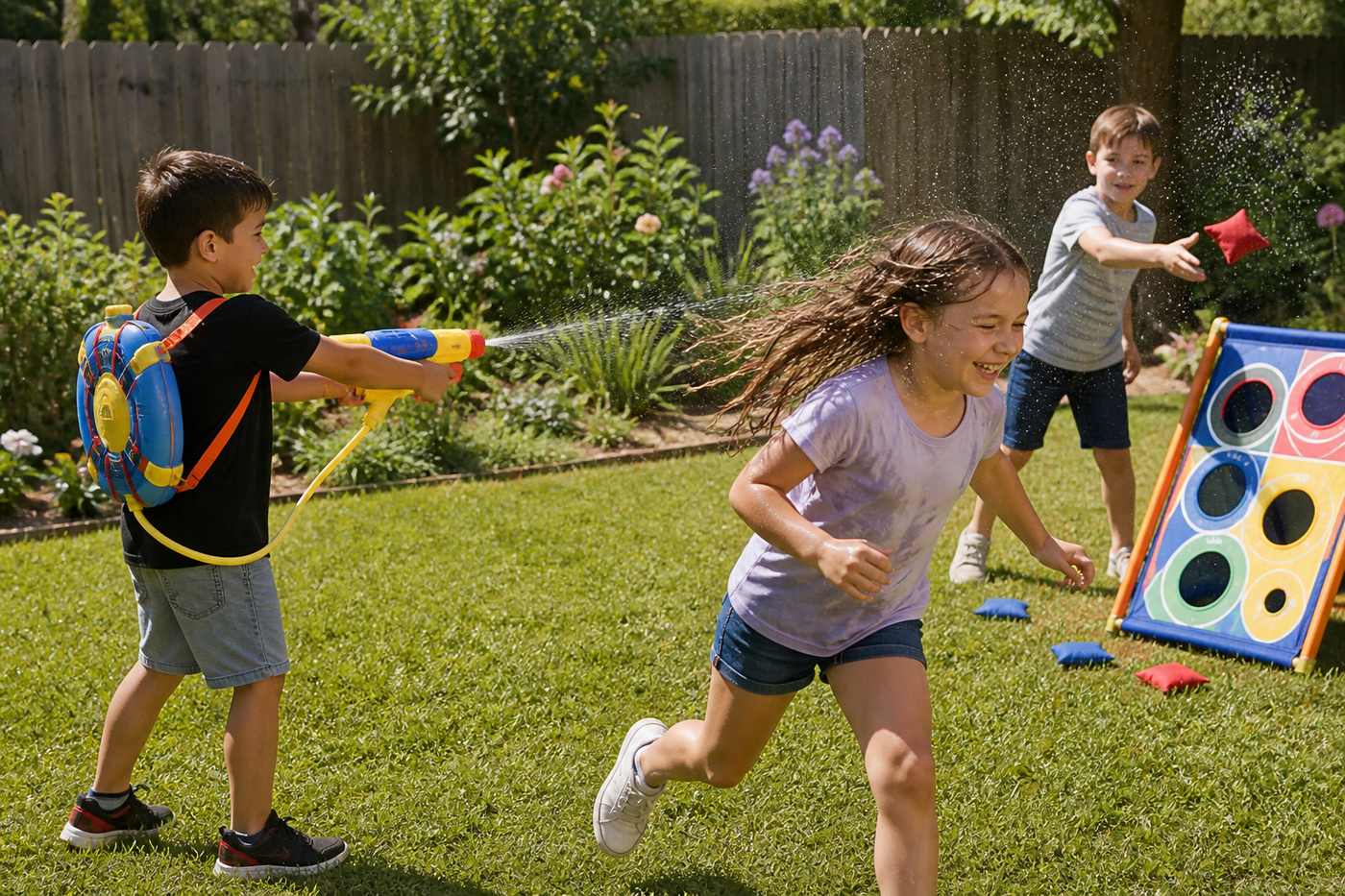
Outdoor ride-on toys—from water sprinklers and sand tables to electric water guns and sports targets—are seasonal, high-engagement products that pull customers into a store or an online listing. For a distributor, buying in bulk reduces per-unit logistics cost and gives you room to offer retail margins. For a camp or resort buyer, a fleet of ride-ons turns a quiet afternoon into a booked activity.
The category fits small space and moves fast. One importer in Lima who brings 20GP/40HQ loads uses high-turnover filler to complete CBM alongside outdoor goods; he calls it 'gold in a container.' The same logic applies to a retail department: a few SKUs of water play or sports toys can fill a display and generate repeat foot traffic.
Bulk buying also gives you leverage with the factory. When you order enough to fill a container or a dedicated production slot, you can request a sealed golden sample, agree on an inspection plan, and negotiate trade terms that photo-approval buyers never get.
Step 1: Define Your Use-Case and Volume Model
Your entry decision starts with the end customer. Are you stocking retail shelves (distributor or ecommerce), renting out units at a resort or camp, or placing a program in schools or clubs? Each model changes how you qualify the product and how much quality evidence you need.
For resale, you need products that pass retailer packaging and labelling standards, and you'll likely need to match a price band. For rental, durability and easy repair are critical—you'll inspect for wear after each season. For a program placement, such as a 'sensory corner' in schools, the contract may renew silently each semester, so the product must fit a small space and carry simple packaging with short instructions.
Write down your target channel, the age range of end users, and the number of units you expect to move in the first season. This volume model determines whether you can meet typical MOQs (which vary by spec) and whether you need a mixed container or a dedicated order.
Step 2: Screen Suppliers by Factory Evidence, Not Catalogue Pages
A supplier's catalogue can show attractive photos, but it does not prove capability. When entering the outdoor ride-on market, you need to evaluate a factory on material control, quality records, compliance evidence, capacity claims, and subcontracting—not just the product page.
Ask the supplier to show its 'OUR CUSTOMERS' wall or equivalent client list. The presence of large retailers, such as mass-market chains or toy specialists, indicates the factory has experience with demanding compliance and packaging requirements. But do not stop there: verify that the outdoor ride-on line operates under the same export standards as the client's orders. A factory might produce premium lines for one client and lower-grade goods for another.
Request current certificates for your destination market—for example, ASTM F963 for the US, EN 71 for the EU—but remember that a certificate is only as good as the test report behind it. Check the Outdoor Toy recall database for the product type and brand; an absence of recalls is not a safety certification, but a recall history is a red flag.
Step 3: Seal a Golden Sample for the Specific SKU
Once you have shortlisted a supplier, request a physical golden sample of the exact SKU you intend to order. The sealed golden sample—signed and dated—becomes your reference for the entire production run.
On the factory floor, the argument that ends a colour fight is the sealed golden sample on the QC shelf. Emails do not. Compare bulk production to that physical piece on four dimensions: colour, fit, flash, and function. For outdoor ride-ons, function includes moving parts, water resistance, battery life (if powered), and assembly integrity.
Buyers who approve only a photo often pay for it on the second lot, when the factory shifts colour or material. Insist on a golden sample for each SKU, and ask the supplier to hold it on their QC shelf for the duration of the PO.
Step 4: Agree a Written Inspection Plan Before the PO
Quality control in toy manufacturing is built on statistical sampling, typically following ISO 2859-1. The AQL (Acceptable Quality Level) defines the maximum number of defects acceptable in a random sample. Defects are classified as critical (zero tolerance, e.g., safety hazards), major (affects function or brand likeness), and minor (aesthetic imperfections).
Do not accept an AQL number from a catalogue or a blog. The acceptable levels—for example, critical 0, major 2.5, minor 4.0 are common—must be written into your quality agreement and the PO. The supplier should state how it isolates a failed lot, records defect class, and releases only after rework. For outdoor toys with electronics or moving parts, include functional testing in the inspection plan.
Schedule a pre-shipment inspection (PSI) when at least 80% of the order is packed. This is the final gate before container loading. Ask the supplier to provide the inspection report and any corrective action records.
Step 5: Run a Small Pilot to Test Category Fit
Before committing to a full season, run a pilot that matches your channel. For a distributor, that might be a mixed container where outdoor ride-ons fill CBM alongside your core products. For a retailer, it could be a display 'test zone' where customers physically engage with the product before buying.
A pilot sized to your container or display space lets you measure sell-through, returns, and customer feedback without risking a large inventory. One importer found that his 'filler' products—high-turnover toys that fit small space—became the line customers reordered in advance because they sold out faster than pricier categories.
During the pilot, track the defect rate you actually see (using your agreed inspection plan) and compare it to the supplier's claim. This data will inform your reorder decision and give you leverage for the next negotiation.
Step 6: Plan the Renewal Trigger for Program Buyers
If you are buying for a program—schools, camps, or resorts—define the renewal checkpoint before the first order. Is it a fixed season (spring/summer) or a sell-through threshold? A silent contract that renews each semester can be a steady revenue stream, but only if the product performs.
Set measurable outcomes: counter returns, sell-through rate, reorder frequency, or damage in transit. Tie the renewal decision to these numbers, not to anecdote. Ask the supplier to provide trend reports on defect rates and any field failures, so you can drive continuous improvement.
For camps and resorts, consider the rental lifecycle: how many uses per unit before replacement? Build that into your cost model. A unit that lasts two seasons at high use may justify a higher upfront price.
Supplier Screening Checklist for Outdoor Ride-Ons
| Use-case | Resale (retail/ecommerce), rental (camp/resort), or program placement (school/club). Determines golden sample vs. photo approval. |
|---|---|
| Factory evidence | Client list or 'OUR CUSTOMERS' wall; verify same-factory export standards as large-client lines. Check Outdoor Toy recall database for product type. |
| Golden sample | Sealed, signed, and dated for the specific SKU. Compare bulk on colour, fit, flash, and function. |
| Inspection plan | Written into PO; defect classes (critical/major/minor) and rework-release criteria. Schedule PSI at 80% packed. |
| Pilot order | Sized to container CBM or display space. Track sell-through, returns, and defect rate. |
| Renewal trigger | Fixed season or sell-through threshold. Tie to measured outcomes, not anecdote. |
What to Ask Suppliers: RFQ Checklist
| Destination market & age grade | State the market (US/EU/UK/AU) and age range. This determines which safety standards apply (e.g., ASTM F963, EN 71) and which certificates you need. |
|---|---|
| Materials and colors | Specify approved materials (e.g., ABS, plastic) and color codes. Tie to the golden sample. |
| Packaging language | Confirm the language for instructions and warnings. For the UK, note that Great Britain and Northern Ireland use different marking routes (CE, UKCA, or CE UKNI). |
| Requested tests | List the specific tests (mechanical, chemical, electrical) required for your market. Ask for the latest test report, not just a certificate. |
| Sample policy | Ask if the supplier will seal a golden sample and hold it for the duration of the PO. Clarify sample costs and lead time. |
| Tooling terms | If custom tooling is required, clarify ownership and amortization. This affects your switching costs. |
| Trade term | Specify the delivery term (e.g., FOB, CIF) and Incoterms. This impacts your total landed cost. |
Worked Example: A Mixed-Container Pilot (Illustrative)
Let's walk through a hypothetical scenario to see how the steps come together. A distributor in North America, call them 'Sunbelt Outdoor,' plans to enter outdoor ride-ons for the summer season. They already import backyard games and want to add a few SKUs of water play and sports toys.
Sunbelt defines their use-case: resale to independent retailers and ecommerce. They target a mid-price band and need products that pass ASTM F963. They screen three suppliers, ask for client lists, and shortlist one factory that shows experience with large retail chains and agrees to seal golden samples for two SKUs: an electric water gun and a soccer goal set.
They request golden samples, compare them on colour and function, and approve. The PO includes a written inspection plan with AQL 0/2.5/4.0 (critical/major/minor) and a pre-shipment inspection at 80% packed. The order is 500 units, filling about 15 CBM in a 40HQ mixed with their core products.
At the PSI, the inspector finds a colour mismatch on the water gun bodies compared to the golden sample. The lot is isolated, reworked, and re-inspected before release. Sunbelt tracks sell-through over the summer: the water gun sells out, but the soccer goal has slower movement. They reorder the water gun for fall and drop the soccer goal.
This example is illustrative, not a real shipment, but it shows the decision points: define use-case, screen by evidence, seal samples, agree inspection in writing, pilot small, and renew based on data.
Which Markets Have Special Compliance Considerations?
If you are selling toys in the US, you need to comply with the Consumer Product Safety Improvement Act (Outdoor Toy) and the ASTM F963 safety standard. Third-party testing by a Outdoor Toy lab is required for most toys. The Outdoor Toy recall database is a useful tool to check for known hazards in the product type.
For the EU, the Toys Safety Directive (2009/48/EC) and the EN 71 series apply, along with REACH for chemical substances. The CE mark is required. The UK has a separate regime: Great Britain uses UKCA marking, while Northern Ireland accepts CE or CE UKNI. You must identify the destination before choosing the marking route.
Note that the EU's Digital Product Passport and the General Product Safety Regulation (GPSR) are separate regulatory frameworks from the Toys Safety Directive. They have different timelines and requirements. Do not assume a single deadline applies to all. The official text does not confirm a uniform application date for every provision, so confirm with your supplier and legal counsel.
What Should You Look for in a Factory's Quality System?
Supplier qualification should evaluate capability, material control, quality records, compliance evidence, capacity claims, and subcontracting—rather than relying on a catalogue page. Ask for a factory audit report or request a third-party audit if you plan a long-term relationship.
Specifically, look for evidence of a written quality manual, batch traceability from raw material to finished product, and a procedure for change control. If the factory subcontracts any step (e.g., painting, assembly), ask how they qualify the subcontractor.
Document retention is crucial. Supplier records for materials, production, inspection, change control, and testing should be retained long enough to support your market and recall obligations. This is often several years after the last sale. Ask the supplier how long they keep records and whether you can access them on request.
How to Handle Packaging and Shipping for Outdoor Ride-Ons
Outdoor ride-ons are bulky and often have irregular shapes. Packaging must protect the product from transit damage, especially for water play items with hollow parts. Ask the supplier to provide a packaging specification and, if possible, a drop-test report.
For mixed-container orders, discuss CBM completion with the supplier. High-turnover filler items can fill gaps around larger products, but you must ensure the ride-on packaging can withstand stacking. In the worked example, the water gun boxes were sturdy enough to sit at the bottom of the container, while lighter items filled the top.
Consider the retail display: does the packaging show the product clearly? For ecommerce, you need the box to survive parcel shipping without adding excessive weight. Ask for a 'ship-in-own-box' test if you plan to sell online.
FAQ: Outdoor Ride-On Toys Wholesale Market Entry
What is the typical MOQ for outdoor ride-on toys wholesale?
MOQs vary by supplier and product. In the product catalogues we reviewed, MOQs range from 36 to 162 units per SKU, but this is not a universal figure. You must request the MOQ for each specific SKU and ask if mixed-container orders can include lower quantities per item.
How do I verify a supplier's safety compliance for the US market?
Ask for a current ASTM F963 test report from a Outdoor Toy lab, and check the Outdoor Toy recall database for the product type and brand. A certificate without a test report is not sufficient. Also confirm the factory's quality system includes batch traceability and document retention.
Is AQL inspection required by law?
No, AQL is an industry standard, not a legal mandate. However, major retailers expect AQL-based quality assurance protocols. For market entry, you should agree on an AQL level and defect classification with the supplier in writing, and schedule a pre-shipment inspection.
What is the difference between CE, UKCA, and CE UKNI for toys?
The CE mark is required for toys sold in the EU. For the UK, Great Britain uses UKCA marking, while Northern Ireland accepts CE or CE UKNI. The destination market determines which marking applies. You must identify the destination before ordering to ensure the supplier labels correctly.
How can I protect myself from quality issues on the second lot?
Seal a golden sample for the specific SKU and ask the supplier to hold it on their QC shelf for the duration of the PO. During production, compare bulk to the golden sample on colour, fit, flash, and function. Have the inspection plan written into the PO and schedule a pre-shipment inspection.
How do I decide between a dedicated order and a mixed container?
A dedicated order makes sense when you have enough volume to meet MOQs and want the lowest per-unit cost. A mixed container allows you to test new categories with smaller quantities, filling CBM alongside your core products. For market entry, a mixed container with a pilot quantity is often the safer choice.
Sources
Related Products & Categories
Ready to Enter the Outdoor Ride-On Market?
You have the checklist: define your use-case, screen suppliers by evidence, seal golden samples, agree a written inspection plan, and run a small pilot. The next action is to send the supplier questions from this guide to at least three shortlisted factories.
If you are still comparing options, use the buyer guide evidence to request product specifications, test reports, and sample policies for the outdoor ride-on SKUs that match your target price band. Good market entry is built on evidence, not photos.