
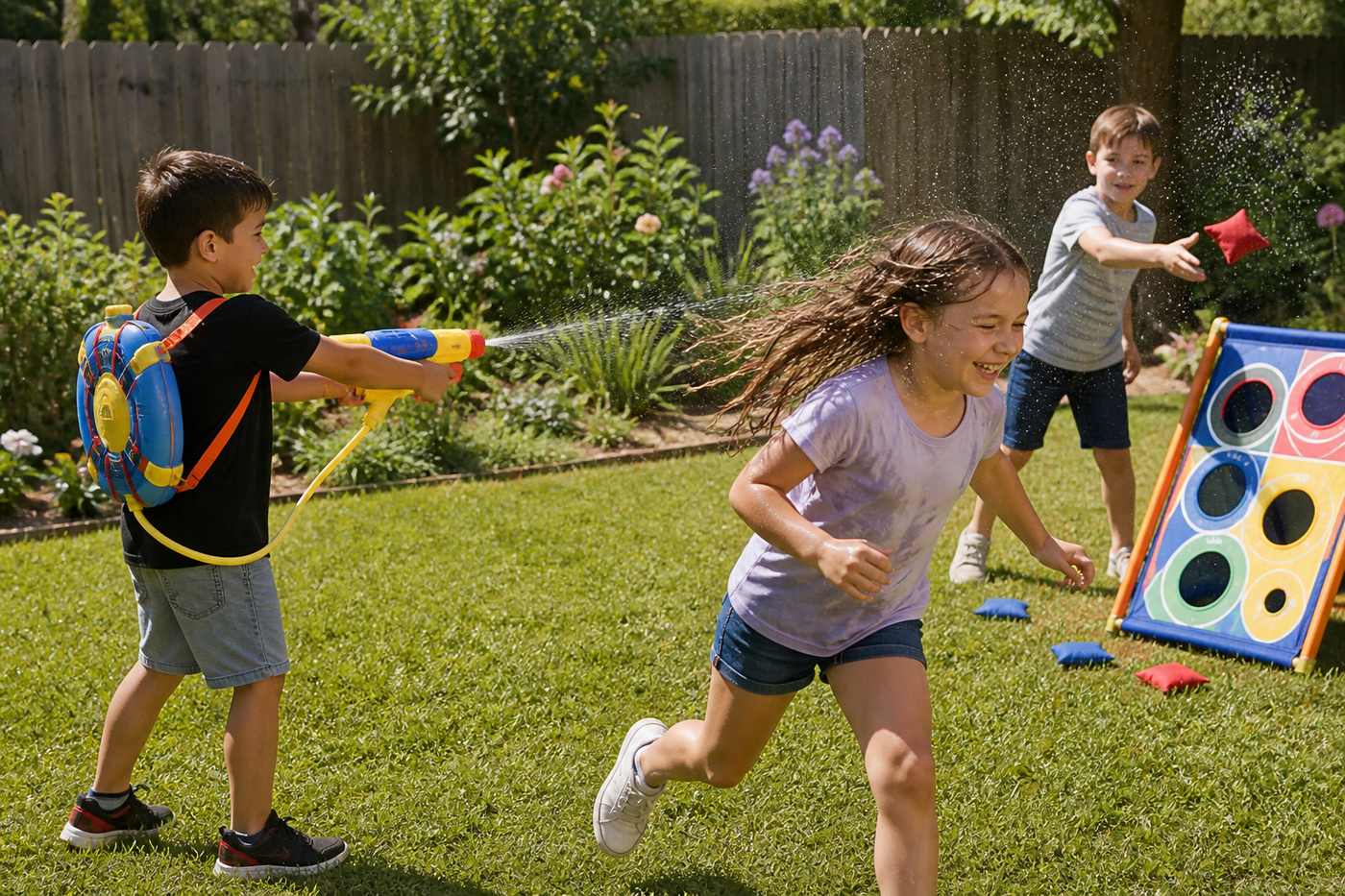
A catalogue photo of an outdoor ride-on toy tells you nothing about the 2,000 pieces sitting in a Chenghai warehouse. The quality decision for outdoor vehicles and ride-ons should rest on comparable evidence: a sealed golden sample on the factory QC shelf, a defined photo record protocol, and an inspection plan written into your PO. If you are buying outdoor ride-on toys wholesale for a backyard, family, or specialty retail program, your next action is to require those three artifacts before you commit to bulk production. Photo records are not marketing images; they are the audit trail that ends colour fights and stops a bad lot from reaching your container.
Key Takeaways
- Golden sample is the referee: Insist on a physical, sealed, dated golden sample per SKU before production; it is the only objective reference for colour, fit, flash, and function. A photo of a sample is not a sample.
- Define the photo protocol: Tell the factory exactly which photos to take at each stage: angles, lighting, a colour reference card, timestamp, and lot number. If you leave it vague, you get vague records.
- Compare bulk to the golden sample: When bulk arrives, compare it side by side with the sealed piece and document any deviation in writing with photos. Do not rely on the supplier's word that 'it's the same'.
- Get AQL numbers from the PO: If you want a specific AQL (Acceptable Quality Limit) number, it must be written into the inspection plan on your purchase order. Catalogue sentences or verbal promises are not enforceable.
- Decide on evidence, not assurances: Use the photo records, golden-sample comparison, and inspection results to decide whether the line fits your program. Supplier charisma is not a quality indicator.
What changed this year and why photo records matter now
Buyers are under more pressure to verify quality remotely. Travel budgets shrank, virtual audits became routine, and the temptation to approve a product from a high-resolution photo grew. A photo can be flattering; a sealed golden sample cannot lie. On the factory floor in Chenghai, the argument that ends a colour dispute is not an email thread — it is the physical golden sample on the QC shelf. The factory compares bulk to that piece for colour, fit, flash, and function. Buyers who approve only a photo often pay for it on the second lot, when the plastic resin changes or the mould starts to wear. This year, make photo records a contractual requirement, not a courtesy.
What can be customized in outdoor ride-on toys wholesale
If you are building a private label or a custom outdoor ride-on line, the factory can typically customize more than you think. Colour is the most common change — you can specify a Pantone chip or a physical colour card. Size and material vary by product: a sand-and-water table might come in ABS, a water gun in plastic, a remote-control airplane in TPR, a golf set in cloth. Packaging is almost always customizable: your logo, your artwork, your instruction language. Logo placement can be pad-printed, hot-stamped, or applied as a sticker, depending on the surface. Some factories also allow you to tweak accessories or add a simple feature, but that usually crosses into tooling territory. For existing moulds, customization is limited to colour, packaging, and logo. For a truly new design, you will need a new mould, which means higher MOQs and longer lead times. The factory can tell you which of your shortlisted SKUs are existing designs (no tooling) and which require a mould.
Customization checklist: what you can change and what it costs
| Colour (Pantone or physical chip) | No tooling for existing moulds; MOQ varies by product (e.g., 120 pcs for a sand & water table set); lead time: sample confirmation first. |
|---|---|
| Size / material change | Usually requires new tooling if the mould changes; MOQ and lead time vary by spec; confirm with factory drawing. |
| Logo (pad print, hot stamp, sticker) | No tooling for pad-print plates; MOQ often lower (e.g., 500+ pieces); lead time adds ~1 week for plate making and testing. |
| Packaging / private label | No tooling for standard boxes; MOQ often 500–1000 sets depending on box size; lead time adds 2–3 weeks for print approval. |
| Instruction language | No tooling; simple PDF translation; MOQ varies; lead time minimal if packaging is also customized. |
| Full OEM (your design) | Requires new mould; MOQ typically 1000+ pieces to amortize tooling; lead time 45–90 days after tooling trial. |
What you need to provide the factory for a custom quote
To get a useful custom quote, you need to hand the factory more than a vague idea. Provide vector artwork for your logo (AI or EPS format, not a low-resolution JPEG), because a blurry logo will come back blurry on the product or box. Specify your brand colours with Pantone numbers or physical chips — a screen colour is not a production colour. Describe your packaging requirements: box size, material (folding carton, display box, polybag), artwork files, and any barcode or certification marks that must appear. State the target market, because that determines which safety standards apply (for example, ASTM F963 for the US, EN71 for the EU) and which documentation you will need. Give the factory your target price point and your expected order volume, so they can tell you whether your MOQ aligns. If you want a specific AQL number for inspections, write it into the PO — do not expect it to be a catalogue sentence. Finally, ask the factory which of your shortlisted SKUs are existing designs (no tooling) and which require a mould. For an existing design, customization is faster and cheaper; for a new mould, expect a bigger commitment.
How to run the OEM/ODM process with photo records at each step
Step 1 — Inquiry and specification. Send the factory your product list, target quantities, and customization needs. Ask which SKUs are existing designs and which need tooling. This is when you request their supplier qualification evidence: capability, material control, quality records, compliance documentation, and any subcontracting practices. Do not rely on the catalogue page; verify with records.
Step 2 — Quote and sample. The factory quotes based on your specs. For an existing design, they can send a stock sample. For a custom colour, they will produce a sample for your approval. This is your first photo record opportunity: ask for photos of the sample under defined lighting, with a colour reference card, from multiple angles. But remember — photos are for documentation, not for approval. The physical sample is your golden reference.
Step 3 — Golden sample and tooling. Before bulk production, the factory must produce a sealed golden sample for each SKU, labelled and dated, stored on the QC shelf. This is your quality referee. If the product requires a new mould, tooling trials happen here. The golden sample must match the signed drawing and any safety test sample. Ask the factory to show you the golden sample on a video call, physically, not just as a photo.
Step 4 — Photo record protocol. Define what photos the factory must take during production: at the start of each lot, mid-production, and before packing. Specify angles that show colour accuracy, close-ups of logos and assembly, and a colour card in each frame. Require timestamps and lot numbers in the file names. This is your remote audit trail.
Step 5 — Bulk production and in-line inspection. The factory runs the order. If you have a third-party inspector or your own QC, they visit the factory and compare bulk pieces to the golden sample. Any deviation in colour, fit, flash, or function is recorded with photos. If a lot fails, the factory isolates it, records the defect class, and reworks before release. You need written confirmation of the rework.
Step 6 — Final random inspection and AQL. The agreed AQL plan on your PO determines how many pieces are inspected and how many defects are acceptable. The inspector pulls a random sample, compares each piece to the golden sample, and records the results. If the lot passes, it is released. If it fails, the factory sorts or reworks. Do not accept a verbal 'it's fine' — get the inspection report.
Step 7 — Shipping and documentation. The factory packs according to your instructions — double-wall cartons, corner boards, ECT, pallet height. Photo records of the packed containers help you verify that the right product, in the right quantity, is loaded. Keep all photo records and inspection reports for your files; they are your evidence if a claim arises.
IP, NDA & mold ownership
If you are bringing your own design or brand to a factory, protect it before you share drawings. Have the factory sign an NDA (non-disclosure agreement) that covers your product specifications, pricing, and any proprietary features. For a custom mould, the contract must state who owns the tooling. Typically, if you pay for the mould, you own it — but only if the invoice and contract say so. Some factories will quote a lower product price but keep the mould ownership, which lets them sell your design to other buyers. Decide which model you want: pay for the mould and own it, or share the tooling cost and accept that the factory may produce for others. In most cases, if you are building a brand, you want mould ownership. The same applies to your logo and artwork: the factory should not use your brand on other products without permission. Your NDA and contract should also cover confidentiality of your sales data and market plans. Ask the factory directly: 'Who owns the mould if we pay the tooling cost?' and get the answer in writing before you place the order.
Worked example (illustrative, not a real shipment)
Imagine you are a distributor planning a summer outdoor program. You shortlist two water guns and a sand-and-water table. You agree with the factory on a sealed golden sample for each SKU, and you write a photo protocol into the PO: two angles of each piece, a colour card in frame, timestamped, at the start of the lot and before packing. The factory sends you photos at each stage. You see that the water gun body colour looks slightly off in the pre-packing shot — more orange than the golden sample. You ask the factory to pull that lot and compare it physically. They confirm a deviation in the colour masterbatch, isolate the lot, and rework it with the correct resin. The reworked pieces match the golden sample. Your inspection plan (with the AQL written in the PO) passes the lot. You ship the order to two destinations: one with English packaging, one with Spanish. Because the photo records caught the colour issue early, you avoid a container of mismatched product and a wave of customer returns.
What to check this year: compliance and market updates
For outdoor ride-on toys sold in the US, the Consumer Product Safety Commission (Outdoor Toy) recall database records market actions. Search it by product, brand, and hazard before you commit to a supplier — but remember that an absence of a recall is not a safety certification. For the EU, the Toy Safety Directive (2009/48/EC) and its latest amendments apply, along with the General Product Safety Regulation (GPSR) that entered into force in 2023 and applies to most consumer products from December 2024. For Great Britain, the Toys (Safety) Regulations 2011 apply, and guidance indicates technical documentation should be retained for 10 years after each product is placed on the market. Note that the Digital Product Passport and GPSR are different regimes; do not mix their deadlines. Always confirm with your buyer or a compliance specialist which standards apply to your destination market, and get the factory's test reports and declarations of conformity as part of your photo record file.
FAQ
What is the minimum order quantity (MOQ) to customize an outdoor ride-on toy?
MOQ varies by product and customization type. For existing designs with colour or logo changes, MOQs can be as low as 16 pieces for a remote-control airplane or 36 for a wall boxing target, but most plastic toys start around 72–180 pieces. For a new mould, expect a higher MOQ, often 1000+ pieces, to amortize tooling costs. Always confirm the MOQ in writing for your specific SKU.
How much does a sample cost and how long does it take?
Stock samples are often free or charged at cost, but custom samples with your colour or logo typically cost more and take longer. The factory needs time to produce the sample and ship it; a typical timeline is 7–15 days for an existing design, more if tooling is involved. Ask the factory for a sample quotation and timeline before you order.
Who owns the mould if I pay for the tooling?
It depends on the contract. If you pay for the mould and the contract states that you own it, then you do. If the contract is silent, the factory may retain ownership and could produce for other buyers. Always get mould ownership in writing before you pay tooling costs.
Can you print our logo and use our packaging?
Yes, most factories offer logo printing (pad print, hot stamp, sticker) and custom packaging. Provide vector artwork (AI/EPS), your brand colours in Pantone, and packaging specifications. Confirm the MOQ for custom printing and packaging, and request a proof before production.
Will you sign an NDA to protect my design and market plans?
Most reputable factories will sign an NDA, especially if you are sharing proprietary designs or sensitive market information. Ask for the NDA before you send detailed drawings. Also include confidentiality clauses in your purchase contract.
How do I verify product quality if I cannot visit the factory?
Use a combination of a sealed golden sample, a defined photo record protocol, and a third-party inspection with an AQL plan written into your PO. Ask the factory to send timestamped photos at each production stage, and consider hiring an inspection service to compare bulk pieces to the golden sample. Photo records are not a substitute for physical checks, but they are your remote audit trail.
Sources
Related Products & Categories
Request a custom quote for your outdoor ride-on line
Ready to turn your outdoor ride-on idea into a private-label product? Send your design files, target colours, and packaging specs to our sourcing team, and we will return a detailed quote with MOQ, lead time, and tooling requirements. We work with factories that maintain sealed golden samples and photo record protocols, so you can buy with confidence.