
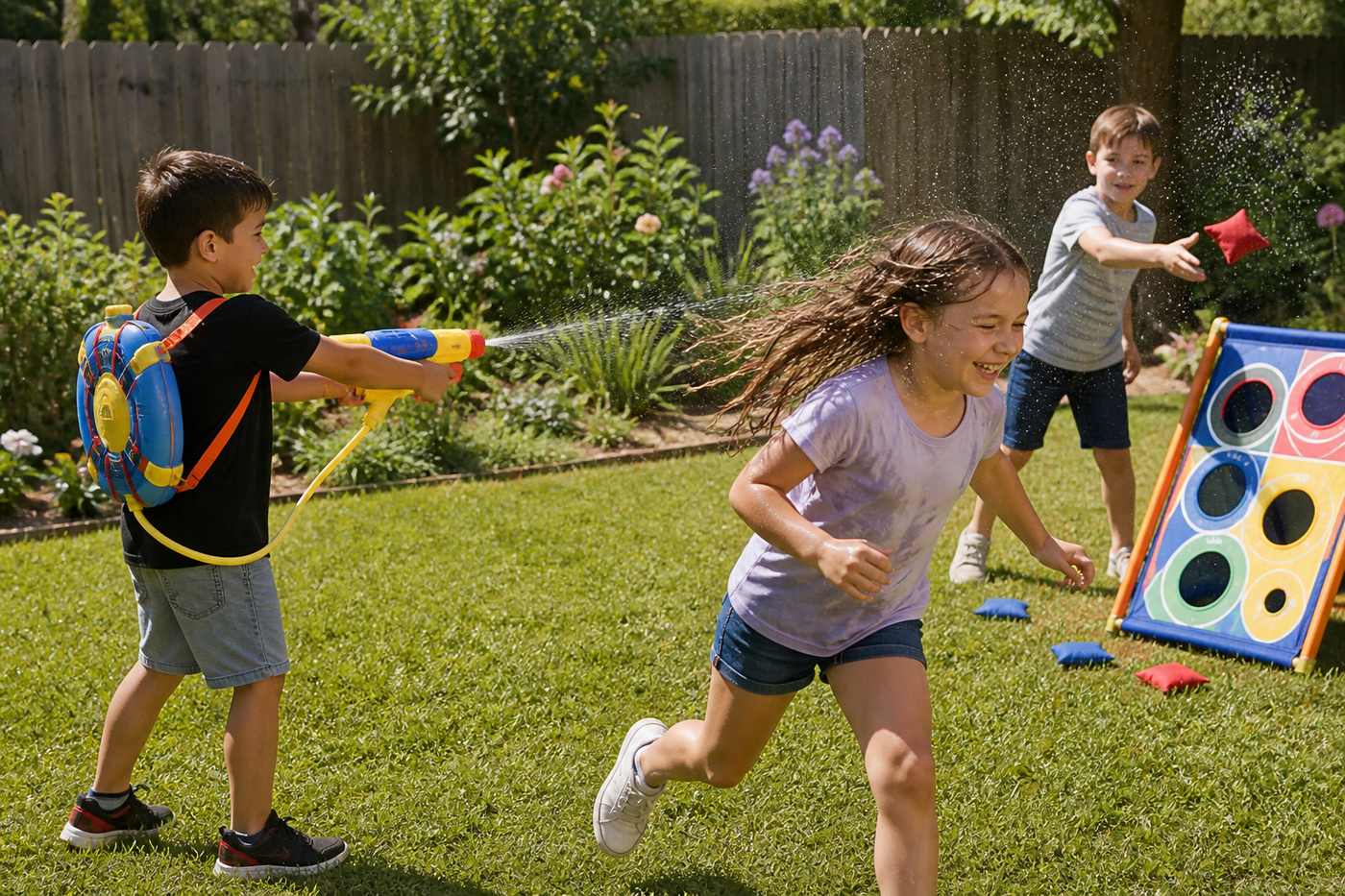
Before you ask any factory to "match our resort colors" on outdoor toys wholesale, define the color target at SKU level — resin grade, surface finish, lighting condition, and an approved master sample — because appearance changes with all four variables. That single discipline is the whole subject of this page: which fields a buyer must fix in writing, what the regulatory sources actually establish, and what they do not.
The practical outcome is a request you can hold a supplier to. Vague color talk produces a first article that looks right in the sample room and wrong poolside in August. A written spec produces a comparison you can run across two or three candidate factories.
One dated fact, and why it is the only one we use
Here is the only dated item in the supplied material that touches this category: a catalog snapshot dated 2026-10-09 records four outdoor-leaning SKUs — a sand and water activity table, an air-pump ball shooter set, a foam glider, and a battery-operated water blaster — with recorded MOQs from 1 to 120 pieces and recorded unit prices from USD 4.25 to 12.50.
Read that as a reference point, not a market. Every one of those records carries the same disclaimer: reconfirm the approved sample, current quote, packing and destination documents. No certification, age suitability, licensing, stock or factory capacity is established by any of them. We are using them for one purpose only — to show that a single resort assortment can span plastic, ABS and MPP foam, and that color matching therefore has to be specified per SKU rather than per purchase order.
Nothing in the supplied trend material is specific enough to this category to quote as a dated fact, so we are not quoting one.
What the evidence supports about color matching — and what it does not
Supported: color matching should use the same resin grade, surface finish, lighting condition and approved master sample, because appearance shifts with all four. Also supported: outdoor plastic can experience UV-driven fading, embrittlement and cracking, so outdoor exposure belongs in the design review, and outdoor plastic toys may need a UV-stabilized grade or coating. Validation of color, brittleness, cracking and loss of function after exposure is a legitimate QC step to ask about.
Not supported by anything we can cite: that any specific factory offers color matching, what it costs, how long it takes, what tolerance is achievable, what MOQ it triggers, or that "color matching capability" is a standard, marketable service in this category. There is no color-matching standard, no Pantone workflow document, and no supplier capability record in the material behind this page. Treat all of that as unknown until a supplier puts it in writing against your SKU.
The compliance position is the part buyers most often get wrong. According to the Outdoor Toy's toy safety business guidance and the Children's Product Certificate guidance, color, material and marking changes are controlled fields that can change the product configuration and therefore the applicable test scope. A Children's Product Certificate is product-specific and is not a blanket factory certificate; per 16 CFR Part 1250 and ASTM F963, a test report should identify the product configuration, age grade and standard edition. So when you change a resin or a pigment, you have changed the article you tested — ask the supplier which report and which responsible party cover the configuration you are actually ordering, and read the current regulation text rather than a summary.
The seven fields to fix before you request a color match
Put these in the RFQ as numbered lines, not in a paragraph. A supplier who answers all seven is comparable to the next supplier; one who answers four is not.
1. Target color reference — a physical approved master sample plus the digital reference, labeled with the light source under which you approved it. 2. Resin grade and supplier, named, including whether it is UV-stabilized. 3. Surface finish and texture, since gloss and matte read as different colors. 4. The exact SKU and configuration, including detachable parts, because the assembly is what gets assessed. 5. Packaging and markings, treated as controlled fields that change with the SKU. 6. Destination market and the market role you hold, since importer and manufacturer identification obligations attach to a role. 7. Which test report, standard edition and responsible party cover this configuration.
Two fields buyers forget. According to Outdoor Toy tracking label guidance, tracking information is expected to be permanent and to support product identification where applicable, so a color change that alters a marking is a tracking question, not just an aesthetic one. And per Outdoor Toy small parts guidance, age grading plus small-part risk must be assessed for the actual configuration — a color-matched accessory that changes how a part detaches is a different assessment, not a repaint.
Where one product fits this, and where it does not
A recorded snapshot MOQ and unit price for any item is a reference that must be reconfirmed against an approved sample and a current quote. Do not build a program budget on a catalog line.
For a resort or camp program, a water-play piece such as the Fishing Game Toy Set fits the outdoor-use intent and illustrates the problem well: it is a color-forward item where a poolside palette and a retail palette pull in different directions, and where the color you approve in a showroom gets tested by sun and chlorinated water rather than by a buyer's eye.
If flying and bubble items are part of your assortment, the same seven fields apply — a foam glider and a bubble machine share almost no materials, so a single "house color" instruction across both is the fastest way to get two mismatched deliveries.
Choose your path: spec-first or sample-first
If your resort buys one or two container loads a season and color is a brand consistency issue across properties, choose spec-first: lock the master sample and the seven fields, then sample against that document with two suppliers before committing volume. It is slower up front and it is the only version that survives a supplier change mid-season.
If you are testing color direction with a single property or a soft-goods pilot, choose sample-first: get a physical sample in your target palette, approve it under the lighting condition it will actually be seen in, then write the spec backwards from what you approved. Just do not skip writing it down — an approved sample without a recorded resin grade and finish is not reproducible.
Either way, the next buyer action is the same: ask each candidate supplier for a written color-matching statement against your SKU list, plus the report and responsible party covering that configuration. Send the drawings, the color standards and the test requirements under an appropriate non-use agreement before you send them at all.
FAQ
Is demand for outdoor toys for resorts growing?
We cannot support a demand claim from the supplied material — there is no market-size, growth or forecast data in it, and we will not invent one. What the material does show is that color and appearance are treated as controlled product fields in the compliance sources, which means appearance consistency is a real specification task regardless of volume direction.
What should I send a supplier to get a comparable color quote?
Send a physical approved master sample, the digital color reference with the lighting condition you approved it under, the named resin grade including whether it is UV-stabilized, the surface finish, the exact SKU and configuration, the packaging and markings, your destination market and market role, and the test report and responsible party that cover that configuration.
Does changing color affect my test reports or certificate?
Treat it as a controlled field that can change the product configuration and the applicable test scope. Per Outdoor Toy guidance, a Children's Product Certificate is product-specific and is not a blanket factory certificate, and a test report should identify the product configuration, age grade and standard edition. Ask which report covers the configuration you are ordering.
How do I handle UV fading on outdoor resort toys?
Build outdoor exposure into the design review. Outdoor plastic can fade, embrittle and crack under UV, so ask for a UV-stabilized grade or coating and ask for validation of color, brittleness, cracking and loss of function after exposure. Whether a specific factory does this is unknown until they confirm it in writing.
Can I use one house color across a mixed outdoor assortment?
Only if you accept that the same color reference will read differently across resin grades and finishes. Color matching should use the same resin grade, surface finish, lighting condition and approved master sample, so a foam item and an ABS item cannot be matched to one instruction — specify each SKU separately.
What is the minimum order quantity for a custom color?
Unknown, and it is supplier- and SKU-specific. Recorded snapshot references in our material show MOQs from 1 to 120 pieces across four different outdoor-leaning SKUs, but those are reference records only and must be reconfirmed with a current quote — never assume a custom color runs at the same MOQ as a stock color.
Sources
Related Products & Categories
Get a color-matching statement against your SKU list
Send us your SKU list, approved master sample and destination market, and we will come back with a written color-matching statement per item — resin grade, finish, packaging fields, and the report and responsible party covering each configuration — so you can compare suppliers on the same seven lines instead of on a photo.