
Demand a document trail, not a pitch. For camp and resort assortments, the learning and development value of an outdoor toy is a risk and compliance question you must verify before you commit. A water gun that teaches cause and effect is only an asset if it meets the safety standards for the children who will use it, and if the supplier can prove it with documents, not photos. Choose a supplier that can hand you a test report, a Children's Product Certificate (CPC) for the US, and a written inspection plan, and treat any "educational" claim as something to be evidenced, not assumed.
This article gives you a guided-activity framework to evaluate any Chenghai or Shantou toy factory for your camp or resort program. You will learn which documents matter, what the MOQ bands look like for common outdoor toys, and how to turn a supplier pitch into a verifiable checklist.
Why the Learning and Development Claim Is a Compliance Trigger
When you buy outdoor toys for a resort or camp, you are not just buying plastic. You are buying a promise about how a child will interact with that object, and that promise carries regulatory weight. In the US, the Outdoor Toy defines a toy as any object designed for children under 14, and toys intended primarily for children 12 and under require third-party testing and a Children's Product Certificate (CPC).
The learning and development angle matters because it defines the age grade. A "learning" toy aimed at a 4-year-old is held to a different standard than a "sporting" item aimed at a teenager. Sporting goods and camping goods are excluded from the toy definition, but a water gun or a wall boxing target for children is not a sporting good—it is a toy. So the first question to ask is not "what does this teach?" but "what age is this for, and does the supplier's compliance paperwork match that age?"
This is where the risk sits. A supplier can tell you a product is educational, but if they cannot show you the test report that matches the SKU, the age grade, and the standard edition, the claim is just packaging. Your job as a buyer is to connect the learning task to the evidence trail.
Key Takeaways for Camp and Resort Buyers
- Demand a document trail, not a pitch. For any outdoor toy, ask for the test report that names the specific SKU, the age grade, and the standard edition (EN71, ASTM F963). A generic "we are certified" claim is not evidence.
- Understand the US CPC requirement. Toys for children 12 and under need a Children's Product Certificate based on testing at a Outdoor Toy lab. Starting July 8, 2026, importers must file these electronically with CBP—ask your supplier if they are ready.
- Use MOQ as a filter, not a verdict. MOQs for plastic outdoor toys in Chenghai can range from 36 to 480 units depending on the item, but a low MOQ does not tell you about quality. Pair the MOQ with the inspection plan.
- Verify the guided-activity claim with a sample. The sealed golden sample on the QC shelf is the standard in Chenghai—compare bulk to that physical piece, not to a photo. Ask for the sample before you approve anything.
- Check for line clearance and lot control. A factory that can show you its process for clearing labels and colors between SKUs is a factory that understands the risk of mixed products reaching your guests.
Which Learning and Development Outcomes Fit Outdoor Resort Use?
The learning value of a resort toy is tied to how it is used. A guided activity is not free play—it is structured play with an outcome. For camps and resorts, the most defensible learning outcomes are physical coordination, cause-and-effect understanding, and social cooperation.
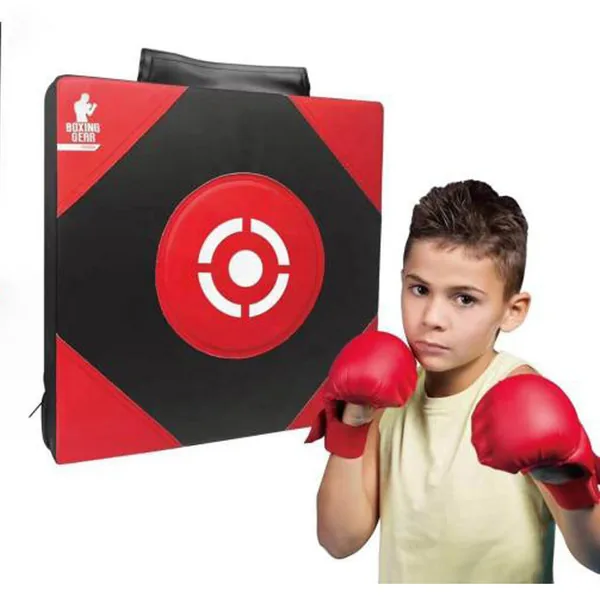
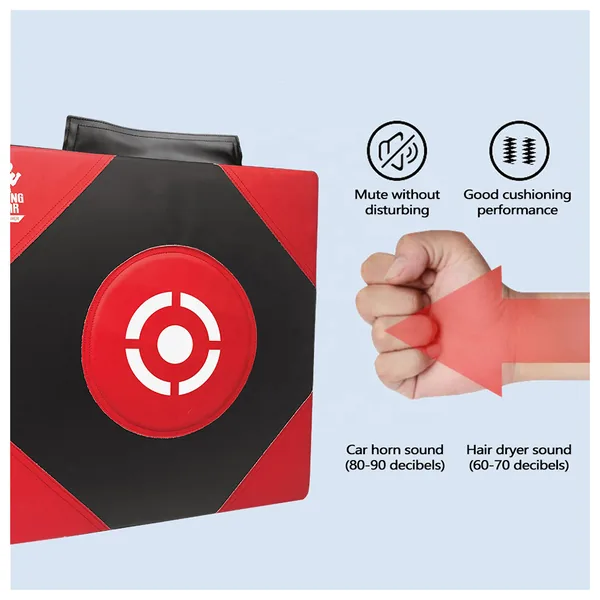
Consider a wall boxing target. It teaches hand-eye coordination and gross motor control, and it is a guided activity when a coach or counselor sets a rhythm or a pattern. A water table game teaches cause and effect (water flows, wheels turn) and can support counting and sorting when guided. Water guns, especially electric ones, teach cause and effect and spatial reasoning, but they are also the highest-risk category because of small parts, projectiles, and battery access.
The learning outcome you choose will determine the compliance burden. If you want a toy for under-3s, you need to check small parts and cord lengths. If you want a toy for 8-12s, you need to check impact and projectile safety. Write down the intended age and the learning outcome before you talk to a supplier, and make the supplier's documentation match that brief.
Outdoor Toy Categories and What to Verify
| Electric Water Guns (High Capacity) | Specialty: Cause-and-effect, spatial reasoning. MOQ: 36–480 units. Origin: Chenghai/Shantou. OEM/ODM: Varies by spec. Certs to ask: ASTM F963, EN71, battery access test, CPC for US. |
|---|---|
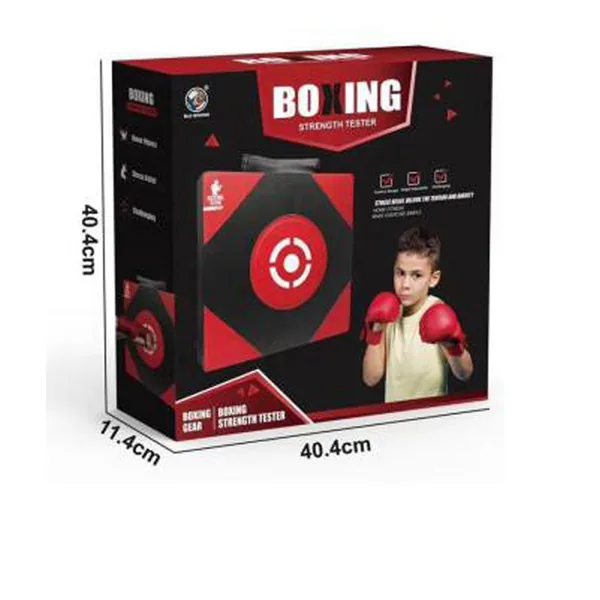
| Wall Boxing Targets | Specialty: Gross motor, hand-eye coordination. MOQ: 36 units. Origin: Chenghai. OEM/ODM: Varies by spec. Certs to ask: ASTM F963, EN71, use-and-abuse testing, CPC for US. |
| Water/Sand Play Tables | Specialty: Sensory play, counting, sorting. MOQ: 120 units. Origin: Chenghai. OEM/ODM: Varies by spec. Certs to ask: ASTM F963, EN71, small parts, water retention, CPC for US. |
| Water Guns (Manual, Basic) | Specialty: Active play, social cooperation. MOQ: 216–480 units. Origin: Chenghai. OEM/ODM: Varies by spec. Certs to ask: ASTM F963, EN71, small parts, CPC for US. |
| Electric Water Guns (Themed, e.g. Dinosaur) | Specialty: Imaginative play, cause-and-effect. MOQ: 72 units. Origin: Chenghai. OEM/ODM: Varies by spec. Certs to ask: ASTM F963, EN71, battery access, CPC for US. |
How to Verify a Chenghai or Shantou Toy Supplier
Chenghai, in Shantou, Guangdong, is the toy capital of China. The advantage is density: you can find a factory for almost any plastic toy, and the ecosystem of mold makers, injection molding shops, and assemblers is deep. The risk is that density also means inconsistent quality. Your job is to separate the factories with process discipline from the ones that just ship plastic.
Start with the sample. In Chenghai, the argument that ends a color fight is the sealed golden sample on the QC shelf. Emails do not settle it. The factory compares bulk to that physical piece—color, fit, flash, function. Buyers who approve only a photo pay for it on the second lot. So your first verification step is to demand a physical sample and a commitment that the bulk will match it.
Then audit the process. Ask how the factory handles a failed lot. A credible factory will isolate the lot, record the defect class, and release only after rework. They will not give you an AQL number from a catalogue sentence—they will point to the agreed inspection plan on the PO. Ask to see the line clearance procedure: what happens when a new SKU starts? A factory that stops the line to clear labels, colors, and work instructions is a factory that understands the risk of a mixed label reaching a retailer.
Finally, check the paperwork. For the US market, you need a CPC that includes seven elements: product identification, citation to safety rules, manufacturer/importer info, record-keeper contact, date/place of manufacture, date/place of testing, and lab identification. For the EU, you need CE marking and an EU Declaration of Conformity under the Toy Safety Directive 2009/48/EC, plus the General Product Safety Regulation (EU) 2023/988. Ask for the report that names your specific SKU, not the factory's general brochure.
The Guided Activity: A Checklist for Evaluating Any Supplier
Turn your sourcing into a guided activity with this checklist. It is designed to be used with any supplier, not just one factory.
1. Define the learning outcome. Write down what the toy should teach (coordination, cause-and-effect, cooperation) and the age grade. This defines the compliance standard.
2. Request the test report. Ask for the report that names the exact SKU, the age grade, and the standard edition (ASTM F963, EN71). If the report is generic, it is not evidence.
3. Verify the CPC. For the US, confirm the CPC has all seven required elements. For the EU, confirm the CE mark and the Declaration of Conformity. Check if the supplier is ready for the July 8, 2026 eFiling requirement.
4. Ask for the physical sample. Compare bulk to the sealed golden sample. Reject photo approval.
5. Confirm the inspection plan. The AQL number comes from the PO, not from a catalogue. Agree on the defect classes and the inspection level before you order.
6. Check lot control. Ask about line clearance between SKUs and how failed lots are isolated and reworked.
7. Plan the packaging. For LCL shipments, specify double-wall cartons, corner boards, and ECT. Claims are won on the booking file.
What MOQ Should You Expect for Outdoor Toys?
MOQs for plastic outdoor toys from Chenghai vary widely by product. A wall boxing target can be available at a MOQ of 36 units, while a basic manual water gun might require 480 units. Electric water guns with more complex features (lights, batteries, higher capacity) typically sit in the 36 to 144 unit range.
The MOQ is a function of the mold and the assembly complexity. A simple two-part water gun is cheap to produce, so the factory needs a higher volume to make the line worthwhile. A complex electric blaster with interactive lights has a higher unit price, so the factory can accept a lower minimum.
Do not treat a low MOQ as a sign of flexibility or a high MOQ as a sign of quality. The real question is whether the factory can hold the standard across the entire lot. That is why the inspection plan matters more than the MOQ number.
Which Certification Applies to Outdoor Toys for the US and EU?
For the US, the mandatory standard is ASTM F963, codified at 16 CFR Part 1250 under Outdoor Toy. Toys intended primarily for children 12 and under must be tested at a Outdoor Toy laboratory and certified with a Children's Product Certificate (CPC). The CPC must identify the product, the applicable safety rules, the manufacturer and importer, the record keeper, the date and place of manufacture and testing, and the lab.
For the EU, the Toy Safety Directive 2009/48/EC sets the essential safety requirements. Toys must carry CE marking and have an EU Declaration of Conformity. The General Product Safety Regulation (EU) 2023/988 adds importer and manufacturer identification requirements. For activity toys like swings or slides, EN 71-8 is the specific standard.
The critical point is that a certification is product-specific. A factory cannot give you a blanket "we are certified" statement that covers all its toys. The report must match your SKU, your age grade, and the current edition of the standard. If the supplier cannot produce that, the toy does not meet the standard for your market.
FAQ: Sourcing Questions for Camp and Resort Buyers
What is the first document I should request from a toy supplier in Chenghai?
Request the test report that names your specific SKU, the age grade, and the standard edition (ASTM F963 for the US, EN71 for the EU). A generic factory brochure is not evidence. Then ask for the Children's Product Certificate (CPC) for US-bound toys.
How do I verify a learning and development claim from a supplier?
Ask for a guided-activity document that describes the learning outcome, the age grade, and how the toy is used. Then verify that the compliance paperwork matches that age grade. A learning claim for a 4-year-old requires small-parts testing and a CPC.
What MOQ should I expect for electric water guns?
MOQs for electric water guns from Chenghai typically range from 36 to 144 units, depending on the features. A basic manual water gun can have a MOQ of 480 units. The MOQ depends on the mold and assembly complexity, not on quality.
Is a Children's Product Certificate (CPC) required for all outdoor toys?
No. The CPC is required for toys intended primarily for children 12 and under. Sporting goods and camping goods are excluded from the toy definition. A water gun or boxing target for children is a toy and requires a CPC for the US market.
What is the July 8, 2026 eFiling requirement?
Starting July 8, 2026, importers must electronically file certificates with U.S. Customs and Border Protection (CBP) via a Partner Government Agency (PGA) Message Set. Ask your supplier if they are prepared to support this filing to avoid import delays.
How do I protect my resort from liability when buying toys wholesale?
Demand a CPC with all seven required elements, verify the test report matches your SKU, and keep the documentation on file. Also agree on a written inspection plan with AQL levels on the PO. Never rely on a photo approval; use the sealed physical sample as the standard.
Sources
- VTech Learning Toys China
- learning and creativity
- Learning Resources齿轮玩具玩法攻略
Related Products & Categories
Request a Quote or Factory Audit
If you are sourcing outdoor toys for a camp or resort program, the next step is to put this checklist to work. Request a quote for the products you need, and ask for a factory audit that covers the sample standard, the inspection plan, and the compliance documentation for your market.