
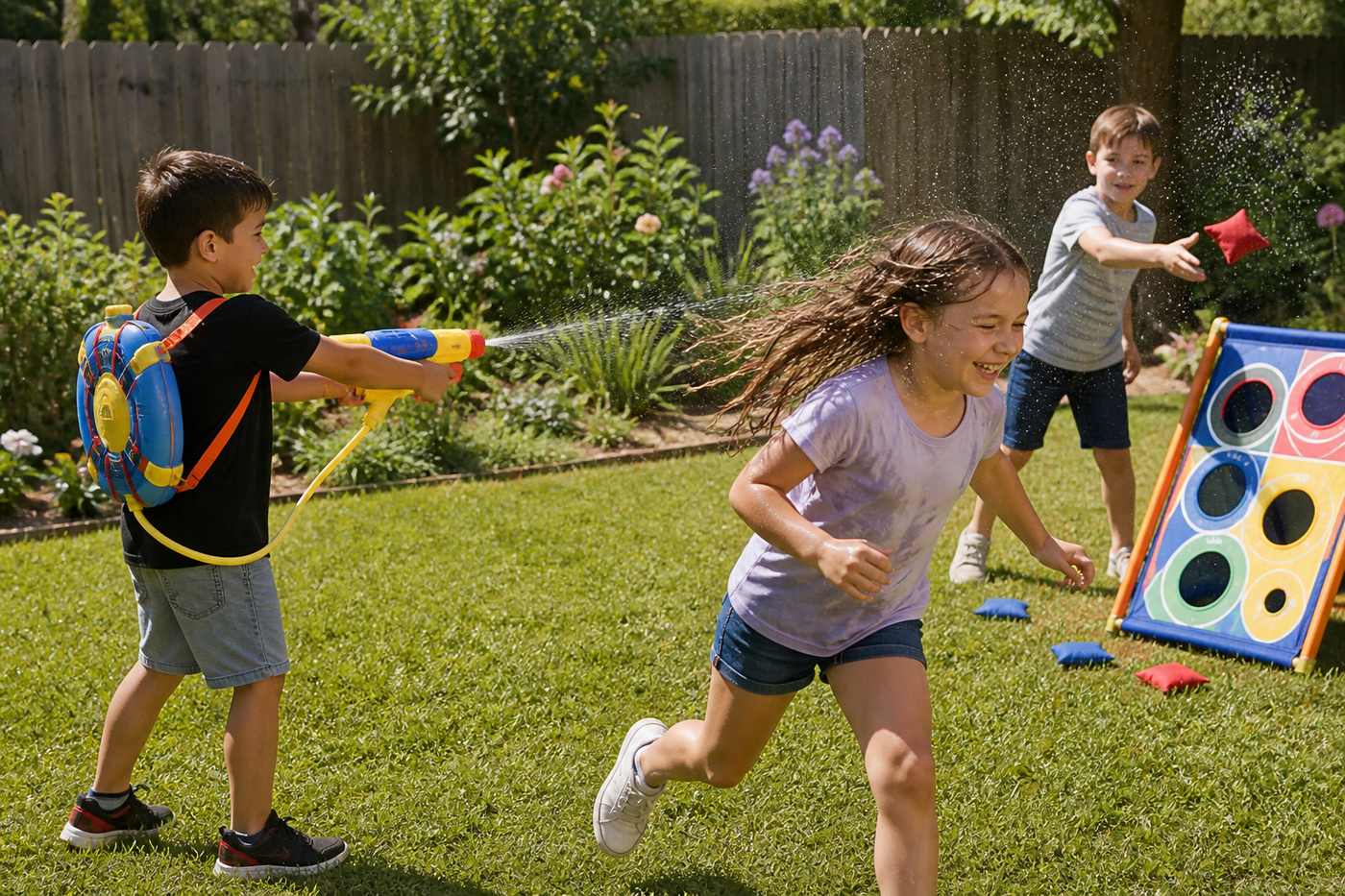
For resort, camp and institutional buyers, outdoor toy sourcing in 2026 is not a catalog question. It is a use-case question with a compliance answer attached. Match the product to how guests will actually use it — poolside, kids' club, playground, ride-on, sports/fitness, event giveaway — then map that use case to the rules and duty codes it triggers. A ride-on unit classified under HTS 9501, a general toy under 9503 and a sporting good under 9506 carry different MFN rates and different Outdoor Toy scrutiny, so the same "outdoor toy" budget line can land at very different true costs.
The practical decision: shortlist by use case and age grade first, then require a product-specific Children's Product Certificate and matching test report, a tracking label review, and a landed-cost model per HTS code. If a supplier cannot produce those, the price is not the price.
Key Takeaways
- Use-case fit decides the rule set: poolside and kids' club items, ride-ons, and sports/fitness goods sit under different HTS headings and different age-grading assumptions, so screen them separately before comparing quotes.
- For US-bound children's products, a Children's Product Certificate is product-specific and must rest on third-party testing at a Outdoor Toy laboratory. A factory-wide "compliance" letter is not a substitute.
- For EU-bound toys, CE marking and an EU Declaration of Conformity must be matched to the product scope, and the General Product Safety Regulation (EU) 2023/988 is a separate instrument from the Toy Safety Directive.
- Duty stacking is a budgeting input. Trade sources describe Section 301 on China-origin toys at 7.5%–25% on top of 0%–6.8% MFN, with possible Section 232 exposure on metal-heavy items.
- Age grading and small parts are assessed on the actual configuration. Assemblies, detachable accessories and packaging components need the same review discipline as the toy itself.
Resort Outdoor Toy Use Cases: Rules, Duty Exposure and Sourcing Implication
| Poolside / kids' club plastic toys (0–3 age grade) | Rule set: Outdoor Toy children's product rules + small parts; EU: Toy Safety Directive essential requirements. Duty: likely HTS 9503, 0%–6.8% MFN plus Section 301. Sourcing implication: verify small-parts warnings and age grading on the actual configuration before ordering. |
|---|---|
| Ride-on and wheeled units | Rule set: children's product testing and CPC where applicable. Duty: HTS 9501, 0%–6.8% MFN plus Section 301; metal content may raise Section 232 questions. Sourcing implication: confirm classification with a licensed customs broker before committing program volume. |
| Sports and fitness play (golf sets, racket sets, toss games) | Rule set: age grading determines whether children's product rules apply; general-use goods may need a GCC instead of a CPC. Duty: HTS 9506, 0%–4.6% MFN. Sourcing implication: clarify children's-product status in writing — it changes the certificate you must hold. |
| Festive and event giveaway items | Rule set: depends on age grade and whether the item is a children's product. Duty: HTS 9505, 0%–5% MFN. Sourcing implication: high-volume giveaways still need product identification and, where applicable, tracking labels. |
| EU-bound outdoor toy programs | Rule set: Toy Safety Directive 2009/48/EC essential requirements; CE marking and EU Declaration of Conformity matched to scope; GPSR (EU) 2023/988 applies as a separate instrument. Sourcing implication: map importer, manufacturer and product-identification roles before publication of any catalog claim. |
Which compliance rules apply to outdoor toys sold to resorts in the US?
US-bound children's toys generally require testing at a Outdoor Toy laboratory and a Children's Product Certificate. According to Outdoor Toy business guidance, the certificate is based on test results and identifies the applicable rules and responsible parties. It is product-specific, not a blanket factory certificate, so a resort buyer running six SKUs across two suppliers should expect six certificates, each tied to a report.
ASTM F963 sits underneath this. The applicable edition must be read from the current regulation before a report is quoted, and the report should identify the product configuration, age grade and standard edition. If a supplier shows an ASTM F963 report that lists a different configuration or an older edition than the one currently incorporated, treat it as an open item, not a closed one.
Two details get missed in resort programs. First, small parts: age grading and small-part risk are connected and must be assessed for the actual product configuration, which in resort use means checking assemblies, detachable accessories and packaging components — the pieces that come loose after a season of guest handling. Outdoor Toy also publishes use-and-abuse test methods under 16 CFR 1500.50–53 (impact, bite, flex, torque, tension) that pair with small-parts and other mechanical evaluations. Second, tracking labels: tracking information should be permanent and support product identification where applicable, and packaging, product markings and lot control should be reviewed together. In a multi-property rollout, lot control is what lets you trace a problem back to one shipment instead of pulling the whole program.
What changes for EU-bound resort and hotel toy programs?
Toys placed on the EU market must meet the applicable essential safety requirements, and CE marking plus an EU Declaration of Conformity belong to that conformity process — matched to the product scope for each SKU. A declaration copied from a sibling product is a common failure point in hospitality assortments, where one supplier may make a plush, a plastic play set and a wooden game under one purchase order.
The General Product Safety Regulation (EU) 2023/988 is a separate legal instrument from the Toy Safety Directive. For a resort group importing directly, that means importer, manufacturer and product-identification information should be mapped to the relevant market role before anything is published in a guest-facing catalog or on packaging.
How do tariffs change the landed cost of resort outdoor toy programs?
Trade sources describe China-origin toys as carrying 7.5%–25% Section 301 duties on top of 0%–6.8% MFN, an effective range of roughly 7.5%–31.8%, with Section 232 adding 25% on steel and 10% on aluminum where a sub-category has significant metal content. Treat those as a modeled input for budgeting, not a quoted price. Rates change, and the exact figure depends on the HTS subheading your broker assigns.
The sourcing consequence is that cluster and code choice become cost decisions. Plastic outdoor play items, ride-ons and sports/fitness goods do not sit in the same duty bucket, so a program built around "outdoor toys" as one line item will mis-budget. Ask for the HTS subheading per SKU, then build the landed-cost model per code. Incoterms define when risk transfers between seller and buyer; they do not define product-safety compliance or who owns the test reports. Keep those two conversations separate.
Which supplier evidence should a resort buyer require before a mold or volume deposit?
Require four documents and one physical step. The documents: a CPC that names the product, cites each applicable Outdoor Toy children's product safety rule, identifies the domestic manufacturer or importer, gives the records contact, states date and place of manufacture and testing, and names the Outdoor Toy laboratory; the underlying test report matching configuration, age grade and standard edition; a factory identity match between the certificate and the production address; and a written scope definition if the program is OEM, since OEM normally means the supplier manufactures to the buyer's specified design, brand or technical requirements and the contract should define the exact scope.
The physical step is a golden sample approved against the production configuration — including the detachable accessories and packaging that small-parts review will look at. Then define defect classification in your quality agreement: critical, major and minor defects should be defined by the buyer rather than left to informal factory language. In resort use, a critical defect is usually anything that creates a small-part or entrapment risk after handling; a major defect is anything that ends the product's service life within one season.
Why age grading and guest demographics decide the assortment mix
A resort or camp assortment is not one product. It is three: toddler-safe items for the kids' club, general-use play for families, and sports/fitness items that adults and older children share. Age grading drives which rule set applies, which certificate you hold, and which warnings appear on packaging, so the demographic mix of your property should drive the SKU split.
The practical failure mode is a single "family-friendly" SKU approved for the whole property. If the item is a children's product, it needs the children's-product evidence trail; if it is general-use, a GCC may apply instead of a CPC. Clarify that status in writing per SKU. Institutional and camp buyers should also expect the same discipline for shared equipment — a toss game or racket set used by hundreds of guests still needs product identification and, where applicable, tracking labels.
OEM-relevant examples for 2026 resort programs
If you are building a branded program rather than buying stock, two categories map cleanly to resort use cases: outdoor flying, bubbles and lawn-play items for kids' club and poolside activity, and outdoor vehicles and RC units for family zones and gift shops. Both are shown here as OEM-relevant examples of the use-case categories above, not as ranked products.
For OEM development, apply the same evidence discipline as stock buying: define the scope in the contract, require a product-specific certificate and matching report for the final configuration, and approve a golden sample that includes packaging and detachable parts. See the outdoor flying and bubbles range and the outdoor vehicles and RC range for category context.
FAQ
Is demand for outdoor toys for resorts growing in 2026?
There is no verified outdoor-toy-specific demand data in the sources reviewed here, so treat any growth claim with caution. What is documented is the compliance and duty environment: US children's products require third-party testing and a CPC, EU toys require scope-matched CE conformity, and China-origin toys carry a duty stack trade sources describe as roughly 7.5%–31.8% effective. Plan the assortment on use-case fit and verified evidence, not on an unverified growth number.
Which certificate do I need for a poolside toy sold to US resorts?
If the product is a children's product under Outdoor Toy rules, you need a Children's Product Certificate based on testing at a Outdoor Toy laboratory, plus the supporting test report in English. The CPC must name the product, cite each applicable Outdoor Toy children's product safety rule, identify the manufacturer or importer, give the records contact, state date and place of manufacture and testing, and name the laboratory. If the item is general-use rather than a children's product, ask about a General Certificate of Conformity instead.
Do I need a CPC for every SKU in a multi-property rollout?
Yes — a CPC is product-specific and should not be described as a blanket factory certificate. Six SKUs across two suppliers means six certificates, each tied to a matching test report. For a multi-property rollout, pair that with lot control and tracking labels so a problem can be traced to one shipment rather than a full program recall.
How should I budget duties for a China-origin outdoor toy program?
Model it per HTS code, not per supplier quote. Trade sources describe 7.5%–25% Section 301 on top of 0%–6.8% MFN for China-origin toys, with possible Section 232 exposure of 25% on steel and 10% on aluminum for metal-heavy sub-categories. Ride-on items, general toys and sporting goods sit in different headings, so confirm the subheading with a licensed customs broker and keep the rate snapshot dated.
What is the biggest compliance risk in a resort toy program?
Scope mismatch — a certificate or declaration that does not match the actual production configuration, age grade or standard edition. The fix is procedural: require the report to identify the product configuration, age grade and standard edition, verify the factory address matches the certificate, and approve a golden sample that includes packaging and detachable accessories. Also confirm whether the item is a children's product at all, since that determines whether you need a CPC or a GCC.
Does EU product safety law differ from the toy rules for hotel and resort programs?
Yes. Toys placed on the EU market must meet the Toy Safety Directive's essential safety requirements with CE marking and an EU Declaration of Conformity matched to the product scope, while the General Product Safety Regulation (EU) 2023/988 is a separate legal instrument. Map importer, manufacturer and product-identification information to your market role before publishing any guest-facing catalog or packaging claim.
Sources
Related Products & Categories
Request a Quote
Tell us your property type, guest age mix and destination market, and we will map your outdoor toy use cases to the certificates, classifications and landed-cost model each program needs before you commit budget. Send your category list and target volumes for a use-case-fit review.