
Choose the factory that can tie every compliance claim to a SKU, a test report, and a named responsible party — and walk away from any supplier that offers only a blanket "we are certified" statement. For outdoor toys OEM, inspection questions are the practical bridge between a seasonal line plan and a supplier that can actually ship compliant goods. This article translates the US and EU regulatory framework into a concrete factory and quality audit checklist, so your decision rests on comparable product and supplier evidence, not marketing language.
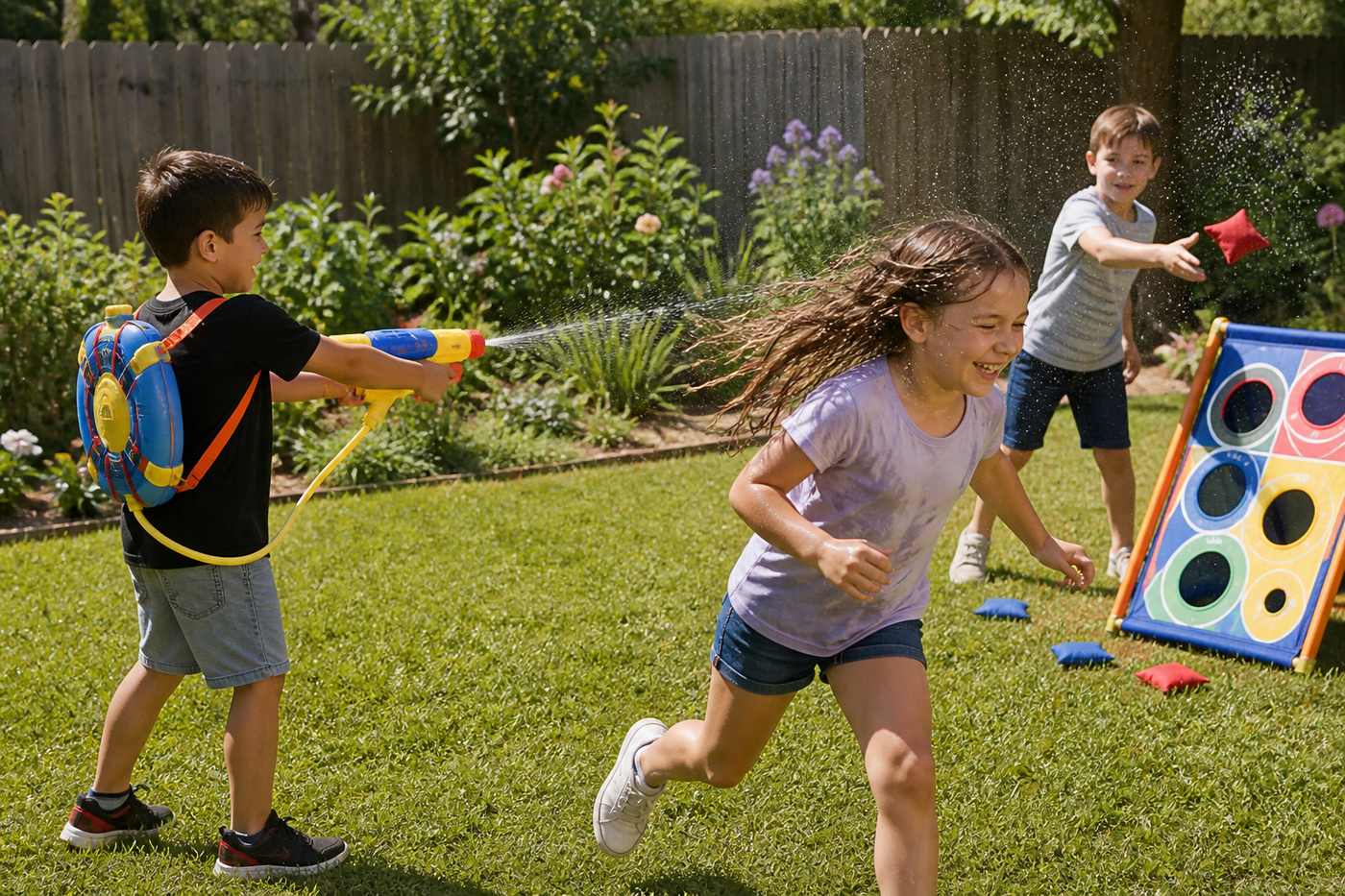
The stakes are specific to outdoor toys. Rain, temperature cycling, sand, and dirt can affect joints, labels, batteries, and coatings in ways indoor toys never face. A water blaster that passes a bench test can fail after a season in the sun. A ride-on's stability issue may only appear under load. The questions below target process control, documentation, and test evidence — not just a polished sample.
Key Takeaways
- Before you sign an outdoor toys OEM order, ask for a Children's Product Certificate (CPC) sample that lists the exact factory address (including street, if the plant shares a city with other facilities), not a corporate office.
- A test report is only as good as its match to your product: confirm the report identifies the product configuration, age grade, material, and the specific standard edition (e.g., the current ASTM F963 referenced in 16 CFR Part 1250).
- For toys intended primarily for children 12 and under, third-party testing at a Outdoor Toy laboratory is generally required; for the EU market, the Toy Safety Directive 2009/48/EC sets essential safety requirements, and the General Product Safety Regulation (EU) 2023/988 is a separate legal instrument with its own obligations.
- AQL sampling (ISO 2859-1 / ANSI/ASQ Z1.4) is a contractually agreed inspection plan — there is no universal "toy AQL" that every factory must use. Negotiate and document your own major and minor defect limits per lot.
- Factor in the July 8, 2026 US requirement for importers to electronically file certificates with CBP via eFiling, and confirm your factory can provide the electronic certificate data.
Outdoor Toys OEM Inspection Focus Areas at a Glance
| Compliance documentation | Why it matters: A CPC is product-specific, not a blanket factory certificate. Sourcing implication: Ask for a sample CPC matching your exact SKU, and verify it lists the correct regulatory citations and responsible parties. Dated source note: Outdoor Toy guidance; 16 CFR Part 1250 current as of 2024. |
|---|---|
| Test report validity | Why it matters: The applicable standard edition (e.g., ASTM F963) changes, and a report must match the product, age grade, and material. Sourcing implication: Confirm the report's edition and test date align with your production batch and target market. Dated source note: ASTM F963-23; 16 CFR Part 1250 current as of 2024. |
| Factory process control | Why it matters: A polished prototype tells little about repeatability across thousands of units. Sourcing implication: Review documented workflows, change-management procedures, and operator training records, not just final inspection results. Dated source note: Industry audit guidance, 2026. |
| Outdoor-specific risks | Why it matters: Weather, sand, and dirt affect joints, labels, batteries, and coatings. Sourcing implication: Ask how the factory tests for these conditions and how they define cosmetic acceptance for visible surfaces. Dated source note: Industry QC guidance on material and finish control, 2026. |
| Shipment release criteria | Why it matters: Final inspection should verify product, packaging, markings, quantity, documents, and test status before release. Sourcing implication: Define your AQL and defect limits in the contract; do not rely on the factory's default percentages. Dated source note: ISO 2859-1 / ANSI/ASQ Z1.4 framework. |
Compliance Documentation — What to Ask Before You Sign
Ask for a sample Children's Product Certificate (CPC) that matches your exact product configuration, not a generic template. Under US rules, children's toys generally require testing at a Outdoor Toy laboratory and a CPC. That certificate is product-specific — it identifies the applicable rules, the responsible parties, and the test results for a particular SKU. It is not a blanket factory certificate that covers every toy the supplier makes.
Verify the sample CPC includes the seven required elements, especially the date and place of manufacture (at least month/year and city/country of assembly) and the identification of the third-party laboratory. If the factory runs multiple plants in the same city, the street address must appear. If the factory cannot produce a CPC that matches a real product configuration, treat that as a red flag.
For the EU, the Toy Safety Directive 2009/48/EC sets essential safety requirements, and CE marking with an EU Declaration of Conformity is part of the conformity process. Separately, the General Product Safety Regulation (EU) 2023/988 imposes its own obligations on manufacturers and importers. Map importer, manufacturer, and product-identification information to your specific market role before publication — and never let a supplier's generic claim substitute for a SKU-specific review.
Test Reports — The Edition and the Configuration Must Match
A test report is only meaningful if it matches three things: the product configuration, the age grade, and the standard edition. The applicable edition of ASTM F963 should be read from the current regulation before you quote a report — the standard is updated, and an older test may not cover the current requirements.
Ask the factory which edition of the standard their report references. Confirm the report identifies the exact product configuration you plan to order, not a similar model. Age grading matters: testing and certification requirements generally apply to toys intended primarily for children 12 and under, while the scope of the toy definition can extend to children under 14. A report for a 6+ product does not cover a 3+ version of the same toy.
For outdoor toys, the configuration question is especially important. A water blaster with a detachable reservoir, a ride-on with a battery compartment, or a playset with cords each triggers different sections of the standard. Ask which sections of ASTM F963 apply to your product — small parts, sharp edges, cords, ride-on stability, battery access — and request the corresponding test evidence.
Factory Process Control — Beyond the Polished Sample
A beautiful sample tells you little about the factory's ability to repeat that quality across a production run. The inspection questions that matter probe process control: documented work instructions, operator training records, equipment calibration logs, and change-management procedures.
Ask how the factory handles engineering changes. Who signs off on a modification to the approved drawing or golden sample? How are revisions controlled so outdated drawings do not reach the production line? What happens if a material grade must be substituted — is there a written approval process, or does the factory make the call on its own?
Traceability is the backbone of process control. Can the factory link a finished lot back to its raw material batch, its subcontract finishing steps, and its inspection records? If a defect surfaces after shipment, can they identify which lots are affected and where they went? A factory that cannot answer these questions will struggle to contain a quality issue before it becomes a recall.
Outdoor-Specific Quality Risks — Weather, Sand, and Dirt
Outdoor toys face conditions that indoor toys never encounter. Rain, temperature cycling, sand, and dirt can affect joints, labels, batteries, and coatings — not just the plastic body. A toy that survives a climate-controlled warehouse may fail after a summer in the backyard.
Ask the factory how they test for these conditions. Do they cycle temperature and humidity? Do they test for UV degradation of coatings? How do they handle the interface between plastic parts and metal or electronic components, where corrosion and wear are most likely? For battery-operated toys, ask about battery access prevention and overheating tests — the relevant standard sections exist for a reason.
Cosmetic acceptance is another outdoor-specific issue. A visible scratch that is acceptable on an indoor toy may be a return reason on a backyard playset. Define your cosmetic acceptance zone and defect limits in the contract, and confirm the factory's internal standards align with yours. Their default percentages are not automatically your acceptance criteria.
Shipment Release — Final Inspection Is a Documented Gate
Final inspection is the last chance to catch a problem before the container leaves the factory. It should verify the product, packaging, markings, quantity, documents, and test status — all together, against your agreed criteria.
AQL sampling (ISO 2859-1 / ANSI/ASQ Z1.4) is a contractually agreed inspection plan. There is no universal "toy AQL" that every factory must use. Negotiate your own major and minor defect limits per lot, and put them in writing. Ask the factory how they handle defective product, how customer complaints are investigated, and how often internal quality audits are conducted.
The inspection plan should also cover packaging. Outdoor toys often ship in large cartons, and packaging damage — scratches, dents, or finish transfer — is a common source of arrival defects. Ask how the factory validates carton strength, part separation, and bagging for your product's weight and configuration.
OEM-Relevant Examples for Seasonal Sourcing
For a summer outdoor line, water blasters and foam projectile sets are typical OEM categories. Two examples that illustrate common outdoor toy configurations: an automatic water gun blaster (MOQ 144 units) and a kids' soft bow and arrow set (MOQ 90 units). Both are plastic, both target the outdoor summer segment, and both require the compliance and QC checks described above.
Camping and adventure play sets that combine multiple functions — walkie-talkies, picnic tableware, and a play tent in one kit — suit a broader outdoor assortment. These multi-component toys require extra attention to small parts and age grading, since each component may trigger a different section of the safety standard.
You can review comparable OEM product configurations in our Flying, Bubbles & Outdoor Fun collection and our Outdoor Vehicles & RC collection. Use these as reference points when you compare factory quotes and test reports.
FAQ
What is the most important document to request from an outdoor toys OEM before placing an order?
Request a sample Children's Product Certificate (CPC) that matches your exact product configuration, not a generic template. The CPC must identify the product, the applicable safety rules, the manufacturer/importer, the responsible party for test records, the date and place of manufacture, the date and place of testing, and the Outdoor Toy laboratory. If the certificate does not list the correct factory address and product details, treat it as a red flag.
How do I verify that a factory's ASTM F963 test report is valid for my product?
Check that the report identifies your exact product configuration, the intended age grade, the material, and the specific standard edition. The applicable edition should be read from the current regulation (16 CFR Part 1250) before you quote a report. A report for a similar but different model does not cover your product — the configuration, age grade, and standard edition must all match.
What AQL levels should I specify for an outdoor toys OEM order?
AQL sampling (ISO 2859-1 / ANSI/ASQ Z1.4) is a contractually agreed inspection plan — there is no universal 'toy AQL.' Negotiate your own major and minor defect limits per lot and put them in the contract. The factory's default percentages are not automatically your acceptance criteria. Also define cosmetic acceptance zones, since outdoor toys face visible wear from weather and handling.
Is a supplier's blanket 'we are certified' claim enough for US market compliance?
No. A CPC is product-specific and should not be described as a blanket factory certificate. Testing and certification requirements generally apply to toys intended primarily for children 12 and under. Ask for a CPC that lists your specific SKU, the applicable regulatory citations (e.g., 16 CFR Part 1501 for small parts, 16 CFR Part 1303 for lead paint), and the Outdoor Toy laboratory that performed the tests.
What extra checks matter for outdoor toys compared to indoor toys?
Outdoor toys face rain, temperature cycling, sand, and dirt, which can affect joints, labels, batteries, and coatings. Ask the factory how they test for weather exposure, UV degradation, and the interface between plastic and metal or electronic components. For battery-operated toys, request evidence on battery access prevention and overheating. Cosmetic acceptance is also stricter for outdoor products that sit in the yard.
I am importing to the US. What compliance deadlines should I plan for in 2026?
Starting July 8, 2026, importers must electronically file certificates with CBP via eFiling. Confirm your factory can provide the electronic certificate data required for the filing. Also verify that your CPC and test reports are current and match your production batch, since the applicable standard edition changes over time.
Sources
Related Products & Categories
Request a Quote
Ready to move from inspection questions to a shortlist? Send us your product specs, target market, and quality requirements, and we will help you evaluate factory evidence against your compliance needs.
Contact us to discuss your seasonal outdoor toys OEM program.