
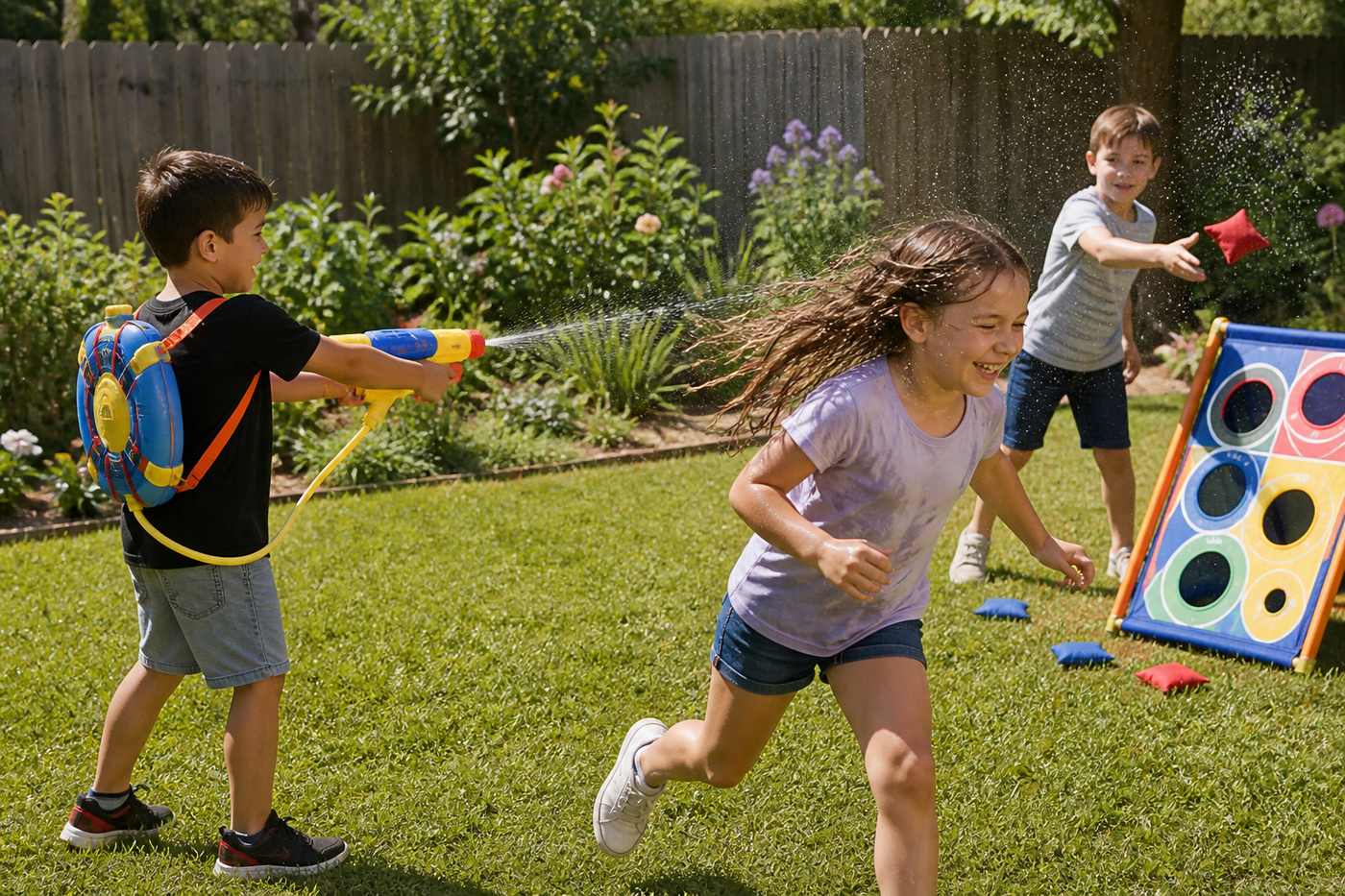
The most expensive sample gate is the one you skip: buyers approve a booth sample or a catalogue photo, release mass production, and discover on the second lot that the colour, fit, or function has drifted. For outdoor toy OEM and ODM orders — motorized water guns, hover soccer balls, sticky-ball target sets, RC trucks — the production standard should be a sealed physical sample, not a photo thread.
This page sets out a four-gate decision path for private-label outdoor toy programs: scenario, material, reason, then the three questions to put to the factory before you sign the PO. It covers what a sealed golden sample must carry, why line clearance is a named gate, what the sample gate cannot verify, and which documents you should demand instead of a typical range.
Key Takeaways for Buyers
- A sealed golden sample labelled with tool number and revision is the production standard; a Canton Fair photo is not. Factory evidence states booth samples are often hero units and Fair lighting lies, while the revision card does not.
- Line clearance is a separate gate from sample approval. A new SKU has started with the previous SKU's labels still in the hopper — the line must be stopped and labels, colours, and work instructions cleared before your run begins.
- Do not accept a typical range for Shore hardness, tensile strength, motor speed, or battery run time. The declared inputs contain none of these numbers; request the TDS row or test report that carries the figure and names the test method.
- The AQL number belongs on the PO, not in a catalogue sentence. Factory practice is to isolate a failed lot, record defect class, and release only after rework; the agreed inspection plan on the PO is where the number lives.
- Outdoor use adds variables beyond the plastic body — rain, temperature cycling, sand, and dirt affect joints, labels, batteries, and coatings, so the sample gate should pin function and finish, not just colour.
Sample Gate Options at a Glance
| Gate 1 — Physical sample standard | Sealed golden sample with tool number and revision card, held on the QC shelf. Applies to all outdoor SKUs. Who holds the sealed piece and what the revision card must list: confirm in writing. |
|---|---|
| Gate 2 — Line clearance record | Documented clearance of labels, colours, and work instructions before the first unit of your SKU runs. Written checklist and sign-off owner: ask the factory. |
| Gate 3 — Material and performance data | TDS row or test report carrying the specific number (Shore hardness, tensile, tear, motor, battery). Grade name and test method: ask TDS. No numbers supplied in the product records. |
| Gate 4 — Inspection plan on the PO | Agreed defect classes and release rule attached to the purchase order. AQL level and critical/major/minor definitions: varies by spec and buyer agreement. |
| Electric Water Gun (MOQ 120, Plastic) | Motor, seal path, and shell interact; pin function on the sealed sample. FOB basis, lead time, carton cube: ask supplier. |
| Hover Soccer Ball (MOQ 48) | LED and shell appearance; material not stated in the record. Material grade and drop-test method: ask TDS. |
| Sticky-Ball Toss Game (MOQ 240, Plastic) | Low unit price point, high unit commitment; label and colour changeover risk is the main gate. Packaging format: varies by spec. |
| RC Dump Truck (MOQ 48, Plastic) | Gravity-sensor controller and electronics; pin function check and battery run time. Run time and cycle count: ask supplier test report. |
What is the first sample gate for an outdoor toy OEM order?
The first gate is a sealed physical sample, not a photo. Before any measurable argument starts, confirm the factory will seal a golden sample and label it with tool number and revision, and that this sealed piece — not a booth sample or a Fair photo — is the approval reference.
The reason is practical, not bureaucratic. Factory evidence is blunt: at a trade fair the booth sample is often a hero unit, and Fair lighting lies. The revision card does not. For eleven years in Chenghai, the argument that ends a colour dispute is the sealed golden sample on the QC shelf, compared on colour, fit, flash, and function. Emails do not settle it.
That distinction matters most where appearance and mechanism meet. A light-up hover soccer ball has an LED and a shell; a motorized water gun has a motor, a seal path, and a shell; an RC dump truck has a gravity-sensor controller and a body. Only a sealed piece can settle whether bulk matches the approved unit on colour, fit, flash, and function at the same time.
So the first three questions to the factory are: Will you seal a golden sample with tool number and revision card? Who holds the sealed piece — your QC shelf, my office, or a third party? What exactly does the revision card list: which colour, which fit points, which flash locations, which functions? If the factory will not name a tool number and revision on the sealed piece, you do not have a production standard.
Why does line clearance sit between sample approval and the first production hour?
A sealed sample protects nothing if the line starts on the wrong setup. Factory evidence records a new SKU starting with the previous SKU's labels still in the hopper — the line was stopped, labels, colours, and work instructions were cleared, then the run started. Line clearance is boring until a mixed label reaches a retailer.
Treat clearance as a named gate with a named record. Ask what is cleared before the first unit of your SKU is produced: labels, colour material, work instructions. Ask who signs the clearance record and whether you receive a copy. A verbal answer is not a gate.
This is where sample-to-mass risk concentrates for multi-SKU outdoor ranges. If you are buying a water gun, a hover soccer ball, and a sticky-ball set from the same factory in the same window, the label and colour changeovers are exactly where a mixed shipment is born. The sealed sample proves what the product should be; the clearance record proves the line was set to make that product and not the previous one.
What the sample gate cannot verify — and what to demand instead
A sealed sample and a clearance record do not tell you the material performance of the plastic. The declared material for the supplied outdoor SKUs is plastic, and no Shore hardness, tensile strength, or tear strength appears in the records. Do not accept a typical range. Ask for the TDS and read the specific rows: Shore A or Shore D depending on the part, tensile strength, and tear strength for the resin actually used. If the TDS does not name the grade, the TDS is not evidence.
The sample gate also does not verify the inspection plan. Factory evidence is explicit that no AQL number is invented in a blog; a failed lot is isolated, defect class is recorded, and release happens only after rework. Buyers who want a number get it from the agreed inspection plan on the PO. So the second half of the gate is a document gate: inspection plan, defect classes, and release rule attached to the purchase order.
For motorized and electronic SKUs — the water gun and the RC dump truck — pin function at the sample stage. Ask which functions are demonstrated on the sealed piece and how bulk function is checked against it. The evidence supports comparing bulk to the sealed piece on function, but it does not name a test method or cycle count. Ask the factory to state the function check it will run and to record the result per lot. If it cannot describe the check, the sealed sample is a display piece, not a control.
Outdoor use adds variables beyond the plastic body: rain, temperature cycling, sand, and dirt affect joints, labels, batteries, and coatings. The sample gate should therefore pin finish and function, not just colour — and the packaging carton should be validated with the actual toy, inserts, labels, and accessories, because packaging failures often occur at the interfaces between components.
Which sample gate fits which outdoor toy SKU?
Match the gate to the SKU's risk, not to its price. The two RC vehicles in the supplied range carry the lowest MOQ at 48 units, which supports testing more SKUs per container; the pogo jumper at MOQ 420 and the dart board at MOQ 288 commit far more units per SKU. Those are unit-count facts only — no price, margin, or sell-through data is supplied, so do not read a ranking into them.
For motorized and electronic lines — the electric water gun at MOQ 120 and the RC dump truck at MOQ 48 — the sample gate must pin function, and the document gate must carry a function check per lot. For appearance-led lines such as the light-up hover soccer ball at MOQ 48, the sealed sample carries more of the weight, but the material for that SKU is not stated in the record, so ask for the material grade and the drop-test method.
For high-unit-commitment lines such as the sticky-ball toss game at MOQ 240 and the self-adhesive dart board set at MOQ 288, the changeover risk is the dominant gate: labels, colours, and work instructions must be cleared and recorded before your run. For the novelty and exploration line — the animal caller at MOQ 216 — the material is likewise not stated, so the TDS request applies.
One short compliance note: outdoor toys sold into the US should carry Outdoor Toy tracking information on the product and packaging to the extent practicable, and the destination market determines which standard applies. Confirm the certification and current test reports per SKU with the factory rather than assuming a category-wide certificate.
FAQ
Will a Canton Fair booth sample be accepted as the production standard?
No. Factory evidence states booth samples are often hero units and a Fair photo is refused as the production standard, because Fair lighting lies while the revision card does not. Ask for a sealed golden sample labelled with tool number and revision, and make that sealed piece the approval reference.
What MOQ should I expect for a private-label outdoor toy line?
In the supplied range, MOQ runs from 48 units on the RC dump truck and hover soccer ball up to 420 units on the foam pogo jumper, with the water gun at 120 and the dart board at 288. These are the recorded figures for those SKUs only; any change for custom packaging or colour must be confirmed with the factory.
How do I verify plastic performance if no TDS is supplied?
Request the TDS and read the specific rows — Shore hardness, tensile strength, tear strength — for the resin actually used, and require the grade name. If the TDS does not name the grade or the test method, treat the number as unverified. No hardness or strength figures are supplied for these SKUs.
Where does the AQL number come from?
From the agreed inspection plan on the PO, not from a catalogue sentence. Factory practice is to isolate a failed lot, record the defect class, and release only after rework. Ask which defect classes are critical, major, and minor for each SKU, and attach the plan to the order.
Can I combine several outdoor SKUs in one order with mixed packaging?
A mixed-SKU order with clear blister packaging, FOB quotation, and pre-shipment QC photos is a format the factory has executed before, but it is not tied to any specific SKU in the supplied records. Confirm the combined MOQ, packaging format, and carton validation with the actual toy and inserts before committing.
What are the three questions to ask before releasing mass production?
One: will you seal a golden sample with tool number and revision, and is that the production standard? Two: can you show a written line-clearance checklist for switching from the previous SKU? Three: which TDS row or test report carries each performance number, and what test method was used? Verbal answers are not gates.
Sources
Related Products & Categories
Set the sample gate before you sign
If you are building a private-label outdoor toy program — water guns, hover soccer, target games, RC vehicles — start by writing the four gates into your PO: sealed golden sample with tool number and revision, documented line clearance, TDS or test report rows for every performance claim, and the inspection plan with defect classes. Then ask the factory to confirm each one in writing.
Browse the outdoor ranges to see which SKUs fit your seasonal line, and bring the gate checklist to the first sample review.