
Texture selection for outdoor toys OEM is a safety, durability, and compliance decision, not a cosmetic afterthought. Whether you are a distributor launching a seasonal line or a resort buying private-label water toys, the texture you specify affects grip, UV resistance, cleanability, and regulatory tests like ASTM F963 or EN71. This article gives you a practical framework to evaluate a factory's material claims, request the right samples, and verify that your chosen textures will survive both the playground and the paperwork.
What Changed This Year in Outdoor Toy Textures?
In 2026, the conversation around outdoor toy textures has shifted from purely aesthetic to regulatory and functional. Buyers are asking for textured grips that stay grippy when wet, soft-touch surfaces that resist UV fading, and anti-slip finishes on ride-ons and stepping stones. The U.S. Consumer Product Safety Commission (Outdoor Toy) now requires electronic filing of Children's Product Certificates with Customs starting July 8, 2026, so every material and finish you choose must be documented and traceable.
Texture is now part of the compliance conversation. A textured paint or coating must meet heavy-metal limits (16 C.F.R. part 1303). A raised grip that detaches becomes a small part. A cord or strap with a textured handle must still meet length and performance rules for children under 36 months. When you brief an OEM factory in Chenghai or Shantou, you are not just picking a finish—you are defining test parameters.
Why Texture Matters for Outdoor Toys: Grip, UV, and Cleanability
Outdoor toys live in harsh conditions: sun, sand, pool chlorine, and the occasional drop on concrete. Texture choices affect grip, durability, and hygiene.
Grip is obvious—a smooth plastic water gun handle is a slip hazard when wet. Anti-slip textures like rubberized overmolds or raised diamond patterns help, but they add mold complexity. ABS, a common material for sand-and-water tables and stepping stones, can support several molded finishes, but the final feel depends on the exact grade and mold surface. Ask for a physical sample before you approve.
Durability means UV resistance. Bright colors fade fast in direct sun, and textured coatings can chalk or peel. Look for UV-stabilized resins or painted finishes with a UV topcoat. Do not take the factory's word for it—ask for weathering test data or a sample you can leave in the sun for two weeks.
Cleanability matters for resorts and camps. Deep textures trap sand and grime. A fine matte finish might look premium but be a nightmare to wipe down. For shared-use toys, smooth surfaces with a subtle texture are easier to sanitize.
How to Evaluate an Outdoor Toy OEM Factory: The Texture-Specific Checklist
Here is a checklist tailored to outdoor toys OEM:
1. Request a sealed golden sample. In Chenghai, the argument that ends a color fight is the physical sample on the QC shelf, not an email. Ask for a sample that matches your texture spec exactly and keep it sealed. When bulk arrives, compare to that piece: color, fit, flash, function.
2. Ask about mold and texture capability. Does the factory handle in-house mold making? Can they do textures like soft-touch overmolding or textured tooling? If a texture requires a side action or an undercut, mold cost and lead time rise. Ask how they handle that.
3. Verify line clearance for labels and packaging. A new SKU can start with last SKU's labels still in the hopper. A good factory stops the line, clears labels, colors, and work instructions before starting. Ask how they handle line clearance and what documentation they provide.
4. Get a compliance map. For the U.S., identify which ASTM F963 sections apply to your texture choices—lead in paint, small parts, sharp edges, cords, and stability. For the EU, map to EN71 and the Toy Safety Directive 2009/48/EC. Ask the factory for test reports that match your specific product, age grade, and texture.
5. Inspect packaging for export. Outdoor toys often ship LCL. Ask about double-wall cartons, corner boards, ECT rating, and pallet height. A claim is won on the booking file, so request the shipping specs in writing.
6. Confirm QC procedures, not just an AQL number. A reputable factory can isolate a failed lot, record defect class, and rework before release. Ask for their inspection plan and recent reports.
Texture Options Compared: What to Specify for Different Outdoor Toys
Not all outdoor toys need the same texture. Match the finish to the product's function:
Water guns and blasters: A smooth or lightly textured body reduces drag and is easy to clean, but handles benefit from a slip-resistant grip. ABS or polypropylene with a molded-in texture works, but avoid painted textures that wear off in chlorinated water.
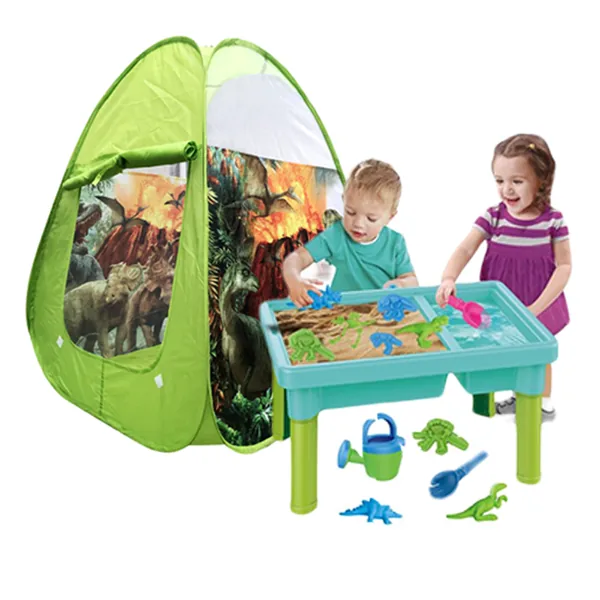
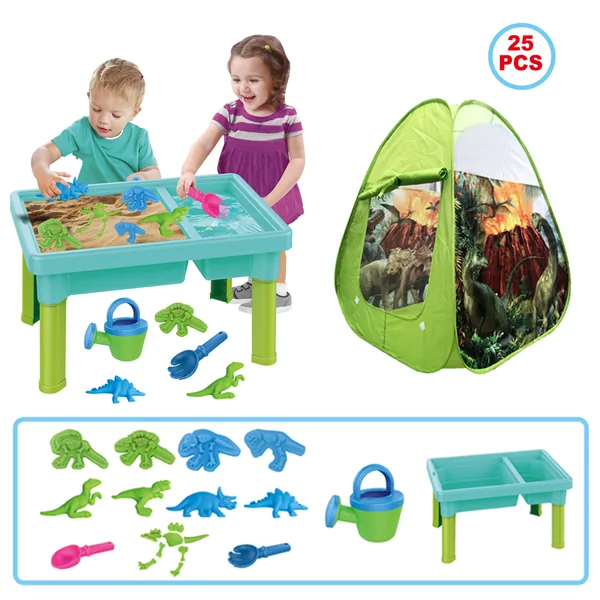
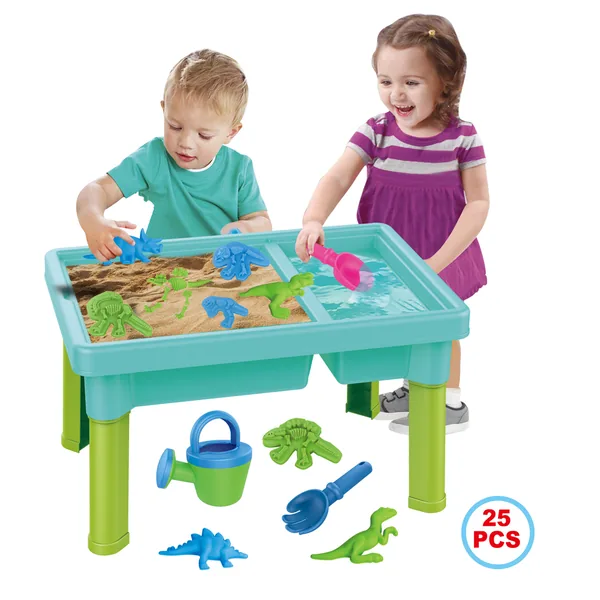
Sand and water tables: These need a smooth, wipe-clean surface. A subtle matte finish resists scratches and hides sand. ABS is common; check that the texture does not trap moisture, which can lead to mold.
Stepping stones and balance toys: These are load-bearing. A high-friction top surface is critical to prevent slips. Textured rubber pads or molded-in treads work, but they must withstand UV and temperature swings. ABS with a textured top is a good option.
Bubble guns and blasters: These are high-turnover items. A glossy, colorful body attracts kids, but a soft-touch coating can add cost. For volume-driven SKUs, a simple molded texture is more cost-effective.
Foam dart blasters: Soft foam darts need a smooth barrel to avoid jams, but the handle should be textured for grip. Mixed textures—smooth bore, textured grip—are common.
Key Takeaways
- Texture is a compliance issue: Textured paints and coatings must meet heavy-metal limits (16 CFR 1303), and raised elements can become small parts after use-and-abuse testing per ASTM F963.
- Physical samples beat photos: In Chenghai, the sealed golden sample on the QC shelf is the standard for ending color and texture disputes. Approve only against a physical piece.
- Verify UV and durability claims: Ask for weathering test data or run a two-week sun exposure test on a sample before committing to a texture that may fade or chalk.
- MOQ and lead time vary: For custom outdoor toys, MOQs typically range from 24 to 216 units for stock items, but custom molds and textures raise MOQs and lead times. Confirm with the factory.
- Documentation is non-negotiable: Request a CPC that lists your specific product and materials, and confirm the test report matches the texture and age grade you specified.
How Chenghai and Shantou OEM Factories Compare
Chenghai, in Shantou, Guangdong, is known as the "Toy Capital of China." It hosts thousands of toy manufacturers, from tiny workshops to full-integrated factories. The strength of the region is speed and variety: you can find a factory making water guns next door to one making RC cars. But that variety means you must be selective—not every factory has experience with outdoor-specific materials or textures.
Shantou Chenghai Gangsheng Trade Co., Ltd. (established 2008, 2,100m² factory, 43 staff) is an example of an OEM partner that lists outdoor toys among its categories and claims OEM with minor customization. Its quality control includes raw material identification and finished product inspection. But its site does not detail texture capabilities, so you would need to ask specifically.
Xinyu Toys, also in Chenghai, is a die-cast metal specialist with over 500 models and OEM clients like Shell and Toyota. Its integrated production (design, tooling, die-casting, painting, printing) shows how texture and finish are controlled in-house. For custom models, they quote 8-12 weeks production after sample approval and MOQs of 3,000-5,000 pieces—a useful benchmark for high-volume, custom-textured items.
When comparing factories, ask for their material expertise: Do they work with ABS, HDPE, or other plastics suited for outdoor use? Can they handle in-mold textures, overmolding, or painting? Do they have UV-stabilized resins in stock? These questions separate a genuine outdoor toy OEM from a generalist.
Comparing Outdoor Toy OEM Factories: What to Ask
| Factory Type | Generalist plastic toy factory |
|---|---|
| Specialty | Water guns, bubble guns, sand toys |
| MOQ | Varies by spec; often 24-216 units for stock, higher for custom textures |
| Origin | Chenghai/Shantou, Guangdong |
| OEM/ODM | OEM and ODM, depending on factory |
| Certifications | Ask for EN71, ASTM F963, Outdoor Toy/CPC reports specific to your product |
How to Verify a Chinese Toy Factory's Texture and Material Claims
Verification is about evidence, not trust. Here is a practical sequence:
1. Request a material data sheet for the specific resin or grade. For ABS or HDPE, ask for the supplier's certificate of analysis.
2. Ask for a test report from a Outdoor Toy lab that covers your product's texture and age grade. The report should name the product configuration and the standard edition (e.g., ASTM F963-23). A generic "EN71 compliant" is not enough.
3. Inspect the factory's QC process: Do they have a sealed sample shelf? Do they do line clearance? Do they isolate and rework failed lots? Ask for a tour via video if you cannot visit.
4. Run a small pilot order with your specific texture and packaging. Compare the bulk to the sealed sample on color, fit, flash, and function.
5. For shipping, ask for the export packing specs in writing: carton type, corner boards, ECT, pallet height. This protects you from damage claims.
6. If the factory claims a certification, verify it by asking for the certificate number and checking the issuing body. Never assume a factory is certified based on a website claim.
Real-World Examples: How Texture and Turnover Work in Practice
A mixed-container importer in Lima used high-turnover filler items to complete CBM alongside outdoor goods. These filler SKUs, often simple bubble guns or small water toys, became the reorder leaders—"gold in a container" that fits small space and moves fast. For such volume-driven items, texture complexity should be low to keep costs down.
A manufacturer curated sensory toys for schools with simple packaging and short Spanish instructions. That shows how packaging language and design can be tailored to a market, but it is a reminder that texture in outdoor toys must also be explained to the end user—for example, a slip-resistant matte finish on a water toy may need a label saying "grip when wet."
FAQ
What MOQ should I expect for custom outdoor toy textures?
For stock items, MOQs can be as low as 24 to 216 units, but custom textures that require new molds or tooling typically raise MOQs. A die-cast toy factory quoted 3,000-5,000 pieces for custom models. Confirm the exact MOQ with the factory based on your texture specification.
How do I verify that a texture coating is safe for children's toys?
Ask for a test report from a Outdoor Toy lab that covers your specific product, age grade, and the applicable standard (e.g., ASTM F963 for the U.S., EN71 for the EU). The report must identify the product configuration and the standard edition. Do not accept a generic compliance statement.
Which texture is best for water gun handles to prevent slipping?
A slip-resistant texture such as a raised diamond pattern or a rubberized overmold on the handle is effective. For plastic guns, a molded-in texture is more durable than painted textures that wear off in chlorinated water. Ask for a physical sample to test grip when wet.
Can I order a small batch to test texture durability before a full launch?
Yes, many OEM factories accept pilot orders. For example, our catalog shows MOQs as low as 24 units for some items. Use a pilot order to test UV resistance, cleanability, and compliance before scaling up.
How does texture selection affect shipping durability?
Textures that add weight or bulk can affect carton stacking and pallet height. For LCL shipments, specify double-wall cartons, corner boards, and ECT ratings to protect textured surfaces from damage. Ask the factory for export packing specs in writing.
Sources
Related Products & Categories
Request a Quote
Ready to launch your outdoor toy line with confidence? Contact our Chenghai-based team to request a quote, discuss texture options, or schedule a factory audit. We can guide you through sample approval, compliance documentation, and export packing.