
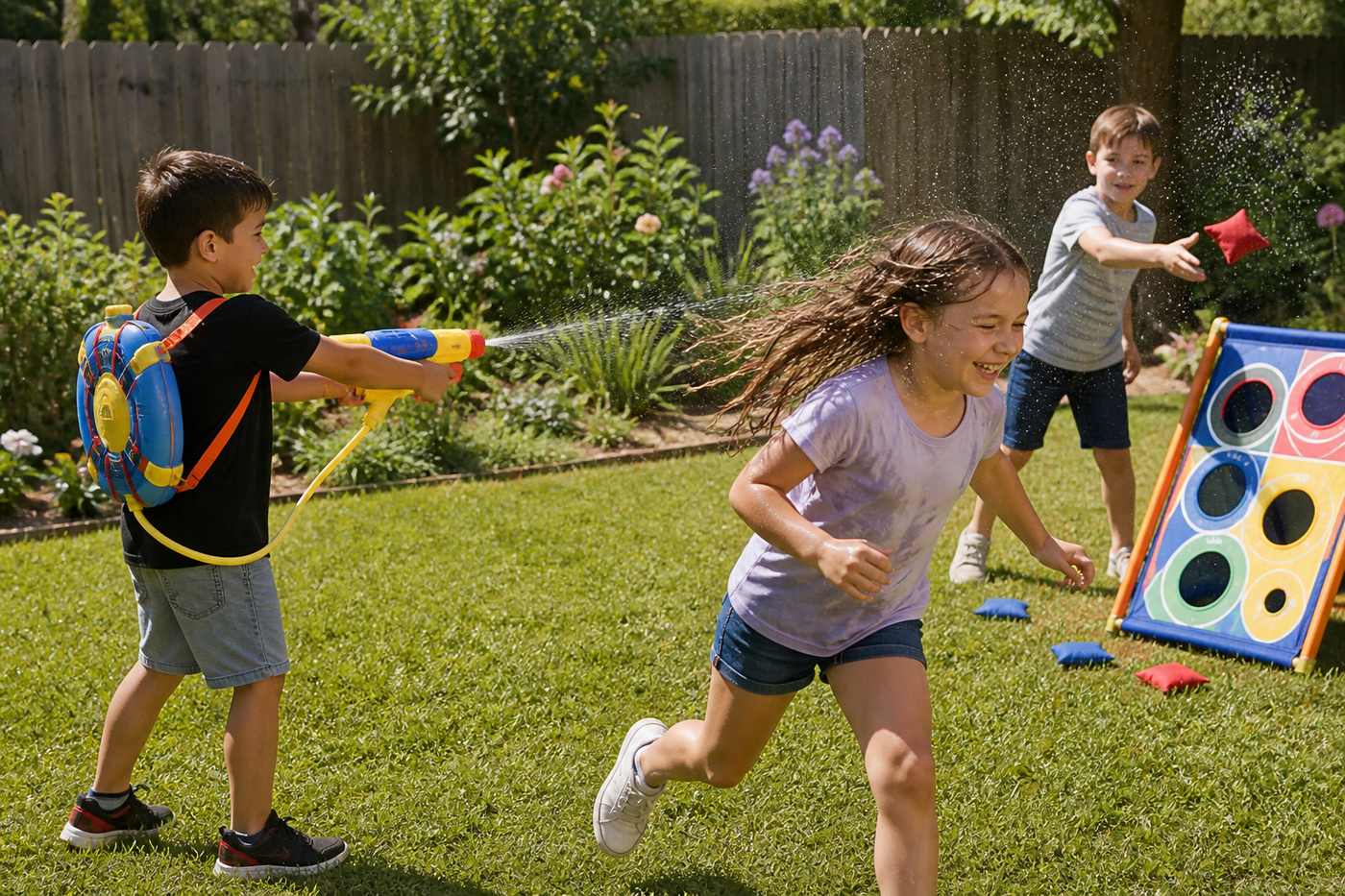
Spec the low-MOQ 3-in-1 golf/basketball/toss stand if you are testing a skill-neutral sports category, the dinosaur toss board if you need cheap mixed-container filler, and the light-up bow or bowling set if night play is the hook — but approve no performance copy until the TDS and the sealed sample are in hand. This page compares six declared sports and target-game SKUs on the only fields the records actually carry: declared material, declared MOQ, declared unit price and the play format. Everything else — Shore hardness, impact values, age grade, certification status, carton CBM — is an evidence gap you close by asking the factory, not by guessing.
The working frame is risk, not ranking. A sports toy buyer's real exposure sits in three places: a copy sentence that promises a developmental outcome, a plastic line that hides which polymer you bought, and a sample approved from a photo instead of a physical piece. Each of those is cheap to fix before the PO and expensive after.
What Buyers Should Take Away
- Declared MOQ across these six SKUs spans 20 to 144 units, so a single order cannot treat them as the same commitment level — the 3-in-1 stand at MOQ 20 is the trial SKU, the football target mat at MOQ 144 is the volume SKU.
- Five of six records declare material as Plastic and one declares no material at all, which means you cannot run a like-for-like material comparison until the missing TDS arrives.
- Skill-neutral copy describes the object and the play action; it does not claim the toy builds coordination or suits a skill tier, because outcome claims are the ones a buyer cannot verify from a carton.
- 'Plastic' is not a specification — ABS, PP and PE behave differently under impact and UV, so ask for the resin identification and the impact test row before approving any durability sentence.
- A sealed golden sample on the QC shelf, not an email thread, is what settles colour, fit, flash and function disputes on the second lot.
The Six Declared SKUs at a Glance
| Rank | New Portable 3-in-1 Outdoor Sports Toy Golf Basketball & Toss Game Stand for Toddlers | MOQ 20 | Plastic | 14.58 USD | Multi-game stand, skill-neutral entry SKU |
|---|---|
| Rank | New Outdoor Sports Toys-Wall Boxing Targets Children's Exercise Equipment | MOQ 36 | Plastic | 4.30 USD | Wall-mounted target, confined retail space |
| Rank | Kids Bowling Racks Set Indoor and Outdoor Games With Light-up Toys | MOQ 72 | Plastic | 2.69 USD | Light-up bowling, night or indoor play |
| Rank | New Design Light-Up Bow and Arrow Toy Indoor Outdoor Night Sports Game for Kids | MOQ 72 | Plastic | 3.05 USD | Light-up archery, night play |
| Rank | Indoor 150CM Football Target Football Game Mat Outdoor Sport Toy Hover Soccer Ball | MOQ 144 | Material not stated | 3.78 USD | Large play surface, volume tier |
| Rank | 2 in 1 Dinosaur Toss Game and Basketball Board Kids' Outdoor Dart Throwing Sport Toy | MOQ 144 | Plastic | 1.70 USD | Lowest unit price, filler role |
| Shore hardness / impact values (all six) | ask TDS |
| Age grade and small-parts status (all six) | varies by spec |
| Carton CBM, gross weight, pallet height (all six) | ask TDS |
| Certification status (all six) | varies by spec |
How We Ranked These Six SKUs
The order above is a decision sequence, not a league table. It runs from lowest declared commitment to highest, because the first question a buyer answers is how much cash and shelf space to risk before the category proves itself. The 3-in-1 stand at MOQ 20 sits first for that reason; the two MOQ 144 SKUs sit last because they are the ones you commit to after the trial reads back.
Four criteria were applied, and only four, because the records carry nothing else. Does the record name an outdoor or target-game use? Is a material stated? Is an MOQ stated? Is the unit price stated? Six records passed all four; the football target mat passed three, because no material is declared for it. No price basis, no certification, no age grade and no capacity figure is supplied for any of the six, so none appears here. Where a cell is blank, the honest answer is 'ask TDS' or 'varies by spec' — not a typical range.
Scenario, Material, Reason: Walking the Decision Path
Testing a skill-neutral sports category with minimal exposure points at the 3-in-1 golf, basketball and toss stand. Its declared MOQ of 20 is the lowest in the set, and a multi-game stand does not lock the buyer into one skill, one age band or one play pattern. The material is declared as plastic, which is enough to place the PO and not enough to write a durability sentence. Before bulk, ask for the resin identification, the impact test row, and the carton spec including pallet height — three questions, one email.
Filling cubic metres alongside outdoor goods points at the dinosaur toss and basketball board. At a declared 1.70 USD it is the cheapest unit in the set, and a toss-and-throw format reads as skill-neutral on a shelf. The catch is that a cheap throwable is exactly the SKU where tip material and small-parts status matter most. Ask what the dart tip is made of, whether the animal figures are separate small parts, and what the agreed inspection plan on the PO says about defect classification. A supplier who answers those three in writing is a different supplier from one who answers with a price list.
Night play and indoor play point at the two MOQ 72 light-up SKUs — the bowling rack set and the bow and arrow. They share a commitment tier, so the comparison is format fit and unit price, not order size. Light-up changes the risk profile: the questions become battery type, how the compartment closes, and whether the safety report covers the circuit. None of that is declared, so none of it can go in your copy yet.
Confined retail space points at the wall boxing target at MOQ 36 or the 150CM football target mat at MOQ 144. Wall boxing asks less cash up front; the mat offers a larger play surface but the higher commitment and no declared material. For the wall unit, ask for the mounting hardware spec and the load test behind the wall fixation. For the mat, ask for the backing material and the anti-slip spec — and treat the missing material declaration as the first thing to close, because you cannot compare a mat with no stated polymer against five plastic SKUs.
What Skill-Neutral Copy Actually Means on a Sports Toy Carton
Skill-neutral copy describes the object and the play action — throw, toss, aim, strike, roll — and stops there. It does not say the toy builds coordination, improves aim, or suits a particular skill tier. The commercial reason is blunt: outcome claims are the claims a buyer cannot verify from a carton, and they are the ones that generate returns and marketplace takedowns when the physical product does not match the sentence.
The six SKUs here declare one material line between them: plastic. That single word covers ABS, PP, PE, PVC and blends, and those polymers behave differently under impact, UV and repeated flexing. A bowling rack that cracks at the pin base and a bow that loses limb tension after fifty draws are different failure modes with different test rows. Do not let a supplier's 'plastic' line stand in for a material specification, and do not let it stand in for a performance claim.
The TDS Rows to Read Before You Approve Any Performance Sentence
For each SKU, request the Technical Data Sheet and read four rows. Resin identification: which polymer, and is it virgin or regrind. Impact performance: for rigid parts that get thrown or struck, the notched Izod or Charpy value and the test standard used. Flex performance: for any part that bends in play, tensile strength at yield and elongation at break. Electrical spec: for the light-up SKUs, the LED driver and battery compartment specification rather than a brightness adjective.
If the TDS carries no impact row, that is an evidence gap, not a green light. Ask which test method and which specimen thickness produced the number. If the supplier cannot name the method, keep the copy descriptive and leave the performance sentence out.
One compliance box, and only one: certification status is not declared for any of these six SKUs. EN71 for the EU, ASTM F963 for the US and ISO 8124 as a global reference are the standards a buyer should ask the supplier to evidence with a test report, not a catalogue sentence. Treat a listing's certification badge as supplier-stated until the report is in your inbox. For aquatic toys specifically, Australia's Consumer Goods (Aquatic Toys) Safety Standard 2026 commenced on 26 June 2026 — relevant only if a SKU in your range is water-play, which none of these six declares.
From Sample to Mass: Where Second-Lot Risk Is Actually Created
Colour fights end with a physical piece, not an email. A sealed golden sample held on the QC shelf is the reference for colour, fit, flash and function, and bulk is compared against it. Buyers who approve from a photo pay for the difference on the second lot, when the mould is warm and the first run's judgement has been forgotten.
Inspection follows the same logic. A defect rate written into a blog is worthless; a defect classification agreed on the PO is not. The workable sequence is to isolate a failed lot, record the defect class, and release only after rework. If you want a number, get it from the inspection plan attached to the order, not from a catalogue sentence.
Packaging is the third place risk hides. Corner-sensitive and light-up goods die in LCL when the booking instruction is vague. Specify double-wall construction, corner boards, edge crush test value and pallet height in the booking file, because that is where the claim is won or lost. Tooling deserves the same treatment: a mould cannot be assumed transferable just because a buyer paid for a sample or a development fee — write the transfer conditions into the contract. And keep the OEM scope explicit: OEM normally means the supplier manufactures to your specified design, brand or technical requirements, so the contract should define exactly what that covers.
Buyer Questions on Sports Toy Sourcing
What MOQ should I expect for a first sports toy trial order?
In this declared set, MOQ runs from 20 units on the 3-in-1 golf/basketball/toss stand to 144 units on the football target mat and the dinosaur toss board. Treat MOQ 20 as your category test and the MOQ 144 SKUs as the volume commitment you make after the trial reads back. MOQ for any SKU outside this set must be confirmed with the supplier.
Can I write 'builds coordination' or 'improves aim' on the packaging?
No. Skill-neutral copy describes the object and the play action and avoids developmental outcome claims, because those are the claims a buyer cannot verify from a carton and the ones that drive returns and marketplace takedowns. Keep the sentence to what the toy physically is and what the child does with it.
Which certification should I ask for on a plastic sports toy?
Ask the supplier to evidence the standard that matches your destination market — EN71 for the EU, ASTM F963 for the US, ISO 8124 as a global reference — with a test report rather than a listing badge. No certification status is declared for any of the six SKUs in this set, so treat every badge as supplier-stated until the report arrives.
What should I ask for before approving a light-up bow or bowling SKU?
Ask for the battery type, the compartment closure method, whether the compartment requires a tool to open, and the safety report covering the light-up circuit. None of those fields is declared for the two MOQ 72 light-up SKUs, so they must be confirmed before any 'light-up' claim goes on the carton.
How do I stop a colour or finish dispute on the second production lot?
Approve from a sealed golden sample held on the QC shelf, then compare bulk against that physical piece on colour, fit, flash and function. Photo approval is what creates second-lot disputes; a physical reference is what ends them.
What packaging detail belongs in the booking file for these SKUs?
Specify double-wall construction, corner boards, edge crush test value and pallet height, because light-up and corner-sensitive goods are the ones that fail in LCL when the booking instruction is vague. Carton CBM and gross weight are not declared for any of the six SKUs, so request them with the TDS.
Sources
Related Products & Categories
Next Step: Close the Evidence Gaps Before the PO
Pick the SKU that matches your scenario, then send one request covering the four TDS rows, the age grade and small-parts status, the carton spec, and the certification report for your destination market. If you want to see the declared sports and target game range side by side before you shortlist, start with the collection page and pull the spec sheets you need for the comparison.
Browse the declared range: Sports & Target Games (/collections/sports-target-games/) and Backyard Games (/collections/backyard-games/).