
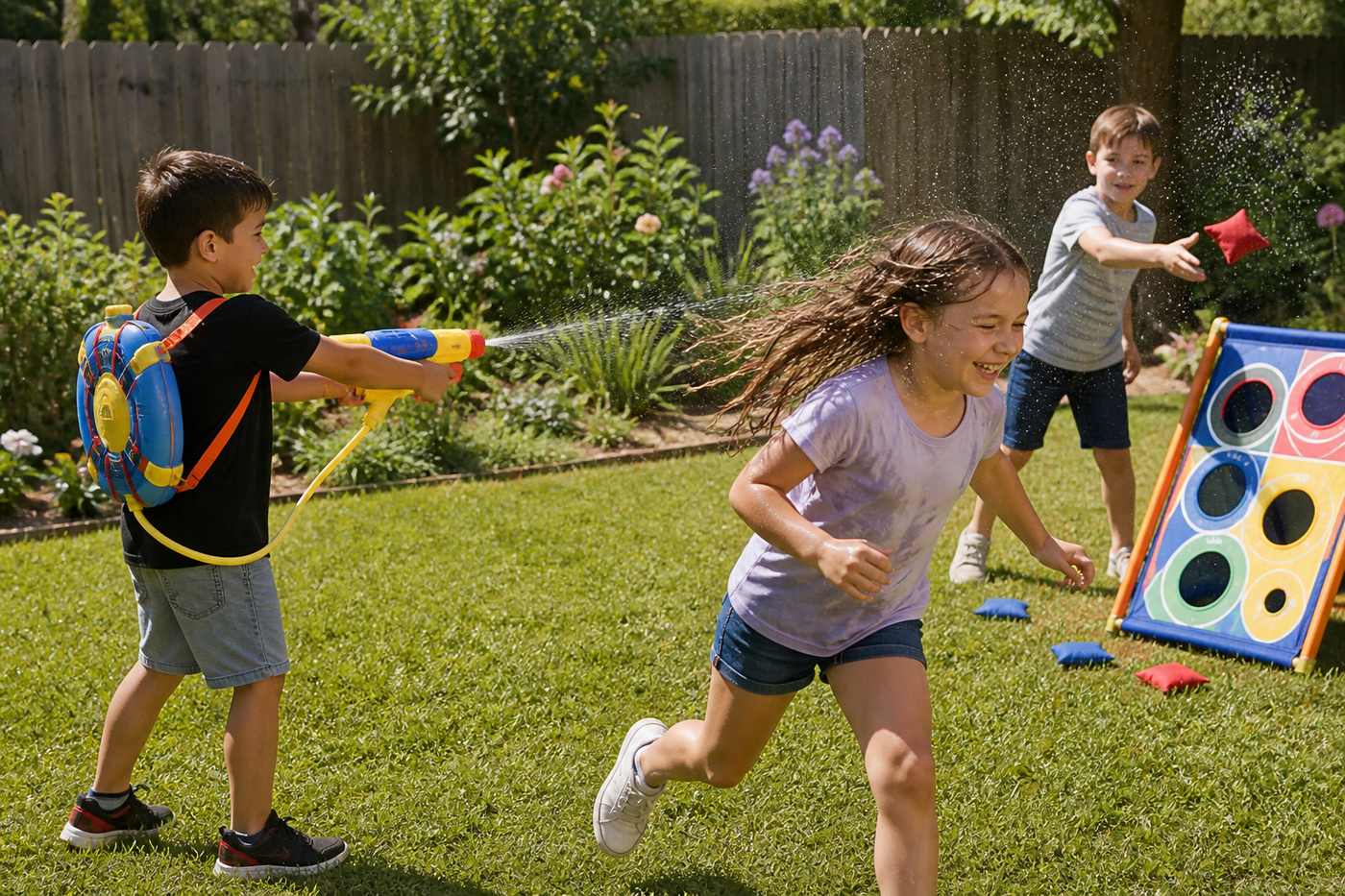
A buyer sends a water-gun RFQ in October with a Pantone reference, a logo placement and a 'same as last year' note. Production starts in February. The first container arrives in April with a shifted trigger color, a bubble-gun box that still says 3+ while the CPC lists 6+, and a UKCA file that does not cover the VOC clause the retailer asked for. None of that is a manufacturing accident. It is an approval gap.
Artwork approval for summer toys wholesale is the OEM/ODM control point where you lock the sealed golden sample, the tool number and revision, the packaging artwork, and the test-and-labeling file to one lot. Approve those four things in writing before tooling release, and the second lot matches the first. Approve a photo instead, and you pay for it twice.
This page covers how to run that approval: what to put in the RFQ, which materials and tests to request per outdoor use case, where these goods are usually produced, and which questions to ask before you sign.
Key Takeaways for Buyers
- Approve a physical sealed golden sample, not a photo. Photographs lose color and surface finish; a sealed piece on the QC shelf is the only reference that settles a bulk color dispute.
- Put the tool number and revision on the approval card. A Canton Fair booth unit is often a hero sample with different lighting and sometimes a different revision, and it is not a production standard.
- Artwork is a compliance document, not a design file. Age grading, small-parts warnings and certificate citations (for example 16 C.F.R. part 1303 for paint, 15 U.S.C. § 1278a for substrate lead, 16 C.F.R. part 1505 for electrically operated toys) belong on the approved artwork, not added after the carton is printed.
- Third-party testing and a Children's Product Certificate apply to products designed or intended primarily for children 12 or younger, so confirm the age grade before you approve a label. A 13+ positioning changes the paperwork.
- Match the market to the marking route: Great Britain and Northern Ireland use different product-marking paths, so the listing must identify the destination before you select CE, UKCA or CE UKNI evidence.
Approval Artifacts Compared: What Each One Locks Down
| Sealed golden sample | What it locks | Color, gloss, fit, flash, function of the first approved piece; kept sealed on the QC shelf |
|---|---|
| Sealed golden sample | What it does not cover | Packaging copy, age grade, certificate citations |
| Tool number and revision card | What it locks | Which mold and which revision produced the approved piece |
| Tool number and revision card | What it does not cover | Color tolerance against the sealed sample |
| Packaging artwork proof | What it locks | Age grading, warnings, logo placement, barcode, certificate citations printed on pack |
| Packaging artwork proof | What it does not cover | Physical color match of the molded part |
| Test and labeling file | What it locks | Which standard, which clause and which lot the report covers |
| Test and labeling file | What it does not cover | Whether the next lot used the same resin or masterbatch |
| Booking and carton spec (LCL/container) | What it locks | Double-wall, corner boards, ECT and pallet height for corner-sensitive goods |
| Booking and carton spec (LCL/container) | What it does not cover | Product function or artwork accuracy |
What Does Artwork Approval Actually Cover in a Summer Toy Order?
Artwork approval covers three separate files that buyers often merge into one email: the physical sample standard, the printed packaging proof, and the test-and-labeling packet. They are approved by different people at different times, and merging them is how a carton gets printed before the age grade is settled.
The physical standard is the sealed golden sample. A sealed piece on the QC shelf is what ends a color dispute; a thread of emails does not. Compare bulk to it on color, fit, flash and function. Buyers who approve only a photo pay for it on the second lot.
The printed proof carries the age grade, warnings and certificate citations. The packet behind it carries the standard, the clause and the lot. UKCA plus a VOC file on an electric bubble machine are different papers: map the market, the lot, and which file covers which test. Paperwork that does not match the lot is not paperwork.
Use Case to Material and Test: What to Ask in the RFQ
| Electric water gun, high-cycle trigger use | Material to ask | Declare shell resin and confirm HDPE or equivalent stiffness for rigid molded housings where the chemical and impact balance fits the design; ask for gear and seal material |
|---|---|
| Electric water gun, high-cycle trigger use | Test to request | Confirm applicable ASTM F963 sections and, for electrically operated toys, cite 16 C.F.R. part 1505 on the certificate |
| Low-cost manual squirt gun, high MOQ program | Material to ask | Confirm masterbatch and colorant supplier; ask for UV-stabilized grade if the item will sit on outdoor shelves |
| Low-cost manual squirt gun, high MOQ program | Test to request | Small-parts assessment where applicable (16 C.F.R. part 1501) plus paint/surface-coating lead (16 C.F.R. part 1303) and substrate lead (15 U.S.C. § 1278a) |
| Bubble machine, outdoor event or resort use | Material to ask | Ask for the VOC file separate from the marking file; these are different papers and cover different tests |
| Bubble machine, outdoor event or resort use | Test to request | Electrically operated toy clauses (16 C.F.R. part 1505) plus the destination-market marking route |
| Beach and sport trainer sets | Material to ask | Confirm whether the item is designed or marketed as a plaything for children under 14 or falls in an excluded category such as sporting goods |
| Beach and sport trainer sets | Test to request | Ask the factory which ASTM F963 sections it applies and which are excluded by 16 C.F.R. § 1250.2(b) |
| Target and scoring sets with projectiles | Material to ask | Confirm projectile energy and tip material; ask for the small-parts and projectile clauses the factory applies |
| Target and scoring sets with projectiles | Test to request | Age-grade-dependent testing: third-party testing and a CPC only where the product is primarily for children 12 or younger |
Where Are Summer Outdoor Toys Usually Produced?
Origin follows material and construction more than price. Injection-molded plastic outdoor toys concentrate in Chenghai, where tooling, color matching and electric water-gun assembly sit in the same industrial cluster. Wooden outdoor and beach items sit in Yunhe. Plush, which shows up in summer as water-safe character items and camp novelties, sits in Yangzhou. Mixed seasonal assortments and general merchandise fill out in Yiwu.
That matters for approval sequencing, not for a supplier ranking. A Chenghai tool shop can re-cut a steel mold quickly, which shortens the loop between sample rejection and revised sample. A Yiwu trading desk may source the same item from several workshops, so the tool number and revision card becomes more important, not less.
Do not ask which city is 'best'. Ask which workshop owns the tool, who signs the golden sample, and whether the same line runs the second lot.
What Does the Golden Sample Have to Contain Before You Approve It?
A golden sample is only useful if it is sealed, dated, signed and paired with a revision card. The card should name the tool number, the revision, the resin and masterbatch reference used, and the date. Without the card, a bulk batch can match the sample visually and still be a different revision.
A sealed golden sample on the QC shelf is what ends a color dispute; emails do not. Keep one sealed reference in your own office and one at the factory, and state in the PO which one governs.
At the Canton Fair a booth sample is often a hero unit. Label tool number and revision on the table, and refuse to take a Fair photo as the production standard. Fair lighting lies. The revision card does not.
What Should Be on the Packaging Artwork Proof Before Print?
The proof should carry the age grade, the small-parts warning where applicable, the certificate citations that match the product, and the logo placement with a measurable position. Under Outdoor Toy, the certificate for a painted toy must cite 16 C.F.R. part 1303 in addition to the relevant ASTM F963 section; for accessible substrate lead it must cite 15 U.S.C. § 1278a; for electrically operated toys it cites 16 C.F.R. part 1505; for small parts it cites 16 C.F.R. part 1501 either instead of or in addition to the relevant ASTM F963 section, depending on other applicable requirements.
Two things buyers routinely get wrong. First, they approve a beautiful dieline and never check whether the certificate citations on the back panel match the file. Second, they assume seasonal packaging waives the standard. It does not: Halloween, Christmas and Easter novelty toys remain toys if they are designed or intended for play, and seasonal packaging does not waive EN 71, ASTM F963 or Outdoor Toy.
Approve the proof against the test file, line by line, before the carton goes to print. Repainting a carton is more expensive than repainting a PDF.
Which Test File Covers Which Lot, and How Do You Tie Them Together?
A test report is only evidence for the lot it covers. The buyer's job at approval is to tie three identifiers together: the tool number and revision, the lot or batch code, and the report reference. If those three do not appear on the same page somewhere in your file, you have a folder, not a compliance record.
Great Britain and Northern Ireland use different product-marking routes for toys. The listing must identify the destination before selecting CE, UKCA or CE UKNI evidence. A single certificate reused across two markets is a common and avoidable failure.
Buyers often ask for a specific AQL number in the approval pack. Do not accept one invented in a catalogue sentence. On the floor a failed lot is still isolated, the defect class recorded, and release happens only after rework. The AQL number comes from the agreed inspection plan on the PO. Defect classification should define critical, major and minor defects in the buyer's quality agreement rather than relying on informal factory language.
How Do You Approve Artwork for an LCL Shipment of Corner-Sensitive Goods?
Packaging artwork and carton engineering are two approvals, not one. Corner-sensitive goods die in LCL when the booking instruction is a thank-you note. Write double-wall, corner boards, ECT and pallet height into the booking file, and approve the carton spec alongside the printed artwork.
For summer outdoor items the risk profile is different: water guns and bubble machines are bulky and light, so the carton tends to fail on compression and handle tear rather than corner crush. Ask the factory for the carton spec it intends to run, then decide whether it is enough for your route.
The practical rule: approve artwork and carton spec in the same sign-off, and keep the booking file with the sealed sample record. Claims are won on the booking file.
What Belongs in the RFQ So the Approval Does Not Slip?
Write the RFQ so the factory has to declare, not guess. Ask for the tool number and revision, the resin and masterbatch reference, the carton spec, the destination market, the age grade, and the specific ASTM F963 sections the factory applies plus any sections excluded by 16 C.F.R. § 1250.2(b).
State the approval sequence explicitly: sample rejection window, revised sample, sealed golden sample, artwork proof, test file, booking file. Put the sign-off name for each step. When the sequence is written, the March argument about a shifted trigger color becomes a one-line email referencing the sealed sample.
Leave MOQ, price and lead time as fields the factory fills. Do not pre-fill them from an old order, because a new tool or a new color changes the answer.
How Do You Decide Whether a Seasonal Outdoor Collection Fits Your Program?
The OEM and ODM decision for a seasonal outdoor collection should rest on comparable product and supplier evidence, not on a single attractive sample. Compare at least two factories on the same four artifacts: sealed golden sample, tool revision card, artwork proof, and lot-matched test file. If a supplier cannot produce all four, the price advantage is usually a paperwork gap.
Choose the supplier with the tighter revision control if your program spans holiday, summer and event windows, because the second and third lots are where the money is. Choose the cheaper option only if your volume is a one-shot promotional buy and you can absorb a color or labeling variance.
Then decide the program: a water-gun core with electric and manual tiers, a bubble-machine add-on for resort and event channels, and a sport or beach trainer set for sporting-goods retail. Each tier has a different approval risk, so approve them separately.
FAQ: Summer Toys Wholesale and Artwork Approval
Do summer outdoor toys need third-party testing and a Children's Product Certificate?
Only if the product is designed or intended primarily for children 12 years of age or younger. Confirm the age grade first: a 13+ positioning may still fall under ASTM F963 requirements but would not need third-party testing at a Outdoor Toy laboratory or certification in a CPC.
Does seasonal packaging exempt a toy from EN 71, ASTM F963 or Outdoor Toy?
No. Halloween, Christmas and Easter novelty toys remain toys if they are designed or intended for play, and seasonal packaging does not waive EN 71, ASTM F963 or Outdoor Toy. Approve the artwork against the test file, not against the season.
Which certificate citations must appear for a painted plastic water gun?
For paint or similar surface coatings, the certificate must include 16 C.F.R. part 1303 in addition to the relevant ASTM F963 section. For accessible substrates, it must also include 15 U.S.C. § 1278a. For electrically operated versions, cite 16 C.F.R. part 1505 instead of the corresponding ASTM F963 section.
Can one certificate cover both Great Britain and Northern Ireland?
No. Great Britain and Northern Ireland use different product-marking routes for toys, so the listing must identify the destination before selecting CE, UKCA or CE UKNI evidence. Map market, lot and which file covers which test before you approve the pack.
What should I ask the factory to declare about materials in the RFQ?
Ask for the shell resin, the masterbatch or colorant reference, and the UV-stabilized grade decision if the item will sit on outdoor shelves. HDPE is generally stiffer than LDPE and is used for rigid or semi-rigid molded and blow-molded parts when its chemical and impact balance fits the design, so confirm which grade the design assumes.
How do I handle AQL and defect classification at approval stage?
Define critical, major and minor defects in your quality agreement rather than relying on informal factory language, and take the AQL number from the agreed inspection plan on the PO. A failed lot should be isolated, the defect class recorded, and release given only after rework.
What is the minimum I should see before approving a golden sample?
A sealed, dated and signed physical piece, paired with a revision card naming the tool number, revision, resin and masterbatch reference. Compare bulk against that piece on color, fit, flash and function, and state in the PO which reference copy governs.
Sources
Related Products & Categories
Next Step: Build the Approval Pack Into Your Next RFQ
If you are planning a summer outdoor program across holiday, summer and event windows, start with the approval pack rather than the price sheet. Send your use case, destination market, age grade and carton route, and ask two or three factories for the four artifacts: sealed golden sample, tool revision card, artwork proof and lot-matched test file.
For outdoor water, bubble and sport items built to that approval sequence, you can review the current range at /collections/flying-bubbles-outdoor-fun/ and /collections/outdoor-vehicles-rc/.