
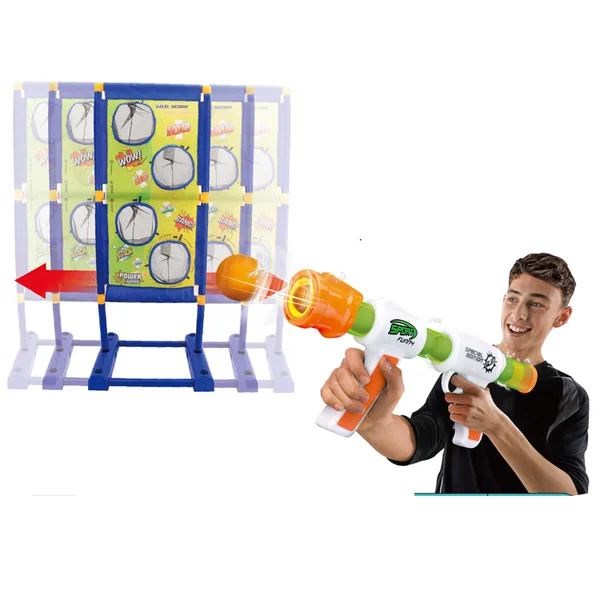
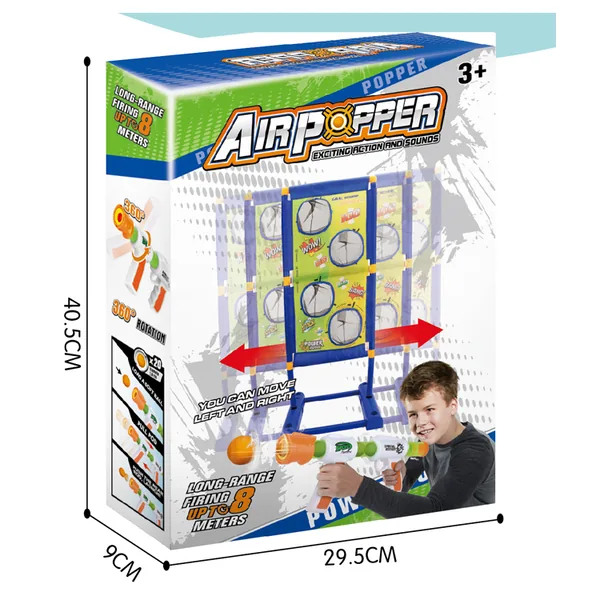
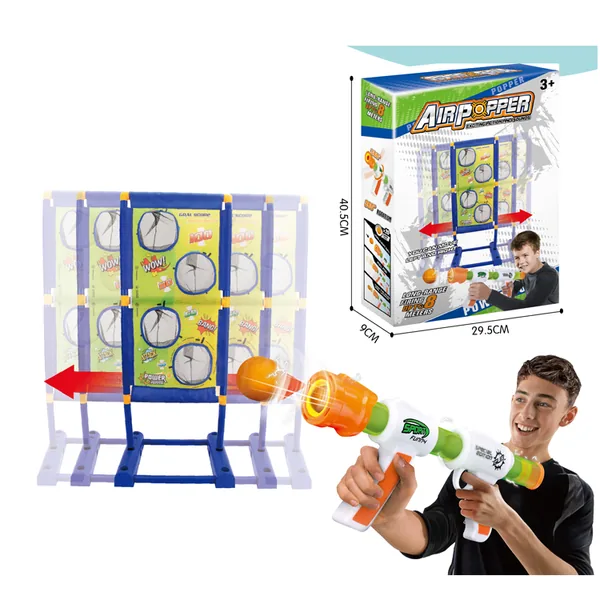
The gate is compliance, not price. A buyer from Ohio emailed us last Tuesday with an RFQ for 20,000 units of a shooting target game. The second line read: 'We want to sell this at Walmart. What do we need to prove?' That question — what does a toy factory actually need to do to become a vendor for Walmart or Costco — is the real gate, and it has nothing to do with price. This article explains the supplier requirements of major North American retailers, the compliance and QC standards they enforce, and how season planning and reorder rhythms work for a Chenghai-based factory that already holds these accounts. You'll learn what to audit before you commit to any supplier.
Retailers like Walmart, Costco, Sam's Club, Target, Five Below, Party City, and Toys'R'Us share a common backbone: they buy from factories with proven compliance, consistent quality, and the capacity to hit seasonal windows. A factory with long-term presence in these accounts can tell you exactly what the buyer’s checklist looks like — and that insight is worth more than any unit price.
Here's the short version: no retailer will buy your toy because it's cheap. They buy because the factory can document safety, pass audits, and deliver on time. The rest of this article shows you how to verify those three things.
What Do Walmart, Costco, and Target Actually Require from a Toy Supplier?
The baseline is the same across all three: full compliance with ASTM F963 (US) and Outdoor Toy (US Consumer Product Safety Improvement Act), plus EN71 if you plan to sell in Europe. For Walmart specifically, the supplier must also complete a Responsible Sourcing audit (formerly known as the Walmart Ethical Sourcing Audit) and register in the Walmart Supplier Center. Costco works through a smaller, invitation-only vendor base and typically requires factories to pass a third-party social compliance audit such as BSCI or SMETA before the first purchase order is even discussed. Target runs its own vendor compliance program, which includes factory assessments and a strict chargeback policy for routing and labeling errors.
For soft goods like plush toys, you add a flammability test (16 CFR Part 1610). For plastic toys with small parts, the choking-hazard standard (16 CFR Part 1501) applies. A factory that already exports to Walmart or Target will have these certificates on file and will share them during the RFQ stage. If a supplier hesitates or asks for a fee to show you their EN71 report, that is a red flag.
The practical takeaway: before you compare MOQs, ask for the factory’s current test reports, their audit certificate (BSCI, SEDEX, or Walmart-specific), and a list of the retailers they currently ship to. A factory that has held a Walmart or Costco account for years — rather than claiming they 'can' sell there — is the one that can actually navigate the paperwork.
Compliance Standards: The First Gate, Not the Last
Compliance is the entry ticket. Without an up-to-date Outdoor Toy third-party lab test (for the US market), no retailer will issue a PO. The test must match the exact product configuration, not a 'similar' item. If you change the color of the plastic, the factory should re-run the test for heavy metals in that color.
The most common certification stack for a Chenghai toy factory shipping to the US and EU includes: ASTM F963, Outdoor Toy, EN71, and REACH. For a digital toy — like an electronic scoring target — you also need FCC (US) and CE (EU) for electromagnetic compatibility. A factory that already supplies Target or Costco will have these ready, because those retailers require them on every invoice.
One nuance buyers miss: the factory must also comply with labeling rules. Walmart and Target enforce strict carton marking — UPC labels, country of origin, and the 'Made in China' stamp must be in the right place. Errors trigger chargebacks of $500 to $2,000 per incident. That is not a rumor; that is in the vendor manuals.
QC Expectations: What the Retailers' Inspectors Will Check
Walmart, Costco, and Target all use third-party inspection agencies — such as SGS, Bureau Veritas, or Intertek — to conduct pre-shipment inspections. The standard is usually ANSI/ASQ Z1.4 with an AQL (Acceptable Quality Limit) of 1.0 for critical defects, 2.5 for major, and 4.0 for minor. That means out of a random sample, the factory can tolerate almost zero critical defects.
The inspector will check more than just function. They measure dimensions against the spec sheet, verify the material is exactly what was approved (a change from ABS to PP without approval is a fail), test the strength of seams on plush toys, and confirm the packaging matches the approved artwork. They also photograph the loading process to ensure the container is packed correctly.
A factory that has shipped to Five Below or Party City for years will have a dedicated QC team that pre-inspects every batch before the third-party inspector arrives. If your supplier does not have an internal pre-shipment check, you will eat the cost of failed inspections and delayed sailings. Ask the factory about their internal AQL and whether they do a 100% visual check on critical items like small parts.
For a shooting target game with a suction-cup arrow, the critical check is the suction cup adhesion and the arrow tip safety. A factory that has produced these for big-box retailers will know to test at 40°C and 0°C, because the suction cup fails in heat and the plastic becomes brittle in cold. That is the kind of experience you cannot get from a trading company.
Season Planning: The Real Reason You Need a Factory with Retailer History
Retailers do not buy toys year-round. The buying calendar is locked: Q1 for summer outdoor toys, Q2 for back-to-school, and Q3–Q4 for the holiday rush. A Walmart buyer typically places the holiday order in March or April, with shipment to the US warehouse by September. Miss that window and you miss the year.
The factory's role in season planning is to hold production capacity. A factory that has worked with Target for a decade knows that the September shipment must leave the port by the first week of August, and they will book the container space accordingly. They also know that reorders — not the initial order — are where the margin lives. A successful summer toy gets a reorder in June for July delivery, and the factory must be able to ramp up labor within two weeks.
This is where the long-term account relationship matters. A factory that has delivered three consecutive campaigns for a corporate client — such as a North American buyer's 'desk wellness' line — understands the reorder rhythm. The first order proves the system; the reorder proves the factory can sustain it. When you evaluate a supplier, ask them for their order-to-reorder ratio on similar products. If they cannot name a repeat buyer, you are their experiment.
The Chenghai Advantage: Why This Cluster Supplies These Retailers
Chenghai, a district in Shantou, Guangdong, is the world's largest toy production cluster. The ecosystem here is not a single factory; it is a vertical supply chain compressed into a few square kilometers. Injection molding, mold making, printing, packaging, and electronics assembly all exist within a 10-kilometer radius. That proximity means a factory can iterate a prototype in days, not weeks, and can source a replacement part without waiting for a freight shipment.
For a Walmart or Costco order, this cluster advantage translates into three concrete benefits. First, speed: a new mold that takes 45 days in another region takes 20 days here because the mold shop is next door. Second, flexibility: if the buyer's spec changes the color from blue to red, the factory can re-run the color match the same day. Third, cost: the logistics density means fewer trucking legs, which keeps the FOB price competitive without cutting corners on material.
Yiwu, by contrast, is the hub for small consumer goods and party favors, with a strength in merchandising variety rather than deep manufacturing. For a complex toy with electronics or multiple moving parts, a Chenghai factory is the right fit. For simple plastic novelties with a very low price point, Yiwu might be cheaper, but the compliance and QC infrastructure for big-box retail is far more mature in Chenghai.
When evaluating any factory in this cluster, look beyond the showroom. Check if they have their own injection molding machines versus outsourcing. Ask to see the lab — a factory shipping to Target will have a basic in-house testing station for drop tests and pull tests. And walk the production floor: a messy floor with parts scattered is a sign that QC discipline is weak, regardless of what the brochure says.
Key Takeaways for Sourcing from Chenghai for Big-Box Retail
- Compliance baseline: ASTM F963, Outdoor Toy, EN71 (for EU), plus REACH for materials. FCC/CE for electronic toys. Audits: BSCI, SEDEX, or Walmart Responsible Sourcing.
- QC standard: ANSI/ASQ Z1.4 with AQL 1.0 critical, 2.5 major, 4.0 minor. Third-party inspections (SGS/BV/Intertek) are mandatory for most big-box POs.
- MOQ posture in Chenghai: Typically 1,000–3,000 units for standard items; lower for best-selling designs. Custom molds start at 3,000–5,000 units depending on complexity. Varies by spec.
- Season planning: Holiday orders placed in Q1–Q2, shipped by August/September. Reorders are the profit engine; evaluate the factory's repeat-buyer ratio.
- Best factory type: A manufacturer with its own injection molding, an in-house QC lab, and a current roster of US/EU retail accounts. Trading companies lack the QC control.
Retailer Requirements at a Glance
| Walmart | Requires Walmart Responsible Sourcing audit, full ASTM/Outdoor Toy, strict carton labeling, chargebacks for errors. MOQ: high (typically 10,000+ units). |
|---|---|
| Costco / Sam's Club | Invitation-only vendor base; requires BSCI/SMETA audit; emphasizes value per unit; lower SKU count but massive volume per SKU. |
| Target | Own vendor compliance program; strict routing guide; AQL 2.5 major; heavy focus on social compliance and sustainability. |
| Five Below | Price-point driven ($1–$5); accepts smaller MOQs but still requires full compliance; faster reorder cycles on trending items. |
| Party City / Toys'R'Us | Seasonal spikes (Halloween, Christmas); requires EN71 for EU markets; flexible on MOQ for licensed vs. generic items. |
How to Verify a Chinese Toy Factory Before You Commit
Start with a factory audit — not just a photo of the workshop, but a real third-party audit report. If the factory claims it ships to Walmart, ask for the audit certificate with the factory name and address. Cross-check that address on Google Maps to confirm the building exists and matches the description. It is common for trading companies to rent a showroom and claim it is their factory.
Second, order a pre-production sample and a gold sample. The pre-production sample must be made from the actual production mold, not a 3D-printed prototype. The gold sample is the approved reference you keep and the factory uses for comparison during mass production. This is the single most effective way to avoid a color or material mismatch.
Third, verify the test reports are current. A report older than 12 months is not valid for a new production run. The factory should re-test the specific product configuration you are ordering, including the exact colorants. Ask the lab to email the report directly to you, not through the factory, to avoid a doctored PDF.
Fourth, check the factory's production capacity against your order size. A factory running three shifts can handle a 20,000-unit order in two weeks; a small workshop might need a month. Ask for a production schedule with milestones and a penalty clause for late delivery in the contract.
Finally, talk to the factory about reorders. A good factory will reserve a mold for you and keep the spare parts stocked. A factory that treats your project as a one-off will not have the discipline to hit the reorder window when your retailer comes back for more.
Inspection & Logistics Checklist for Big-Box Retail POs
Before the container leaves the port, confirm these five items: (1) The third-party inspection report shows no critical defects and major defects within AQL. (2) The carton markings match the retailer's routing guide — wrong carton labels are the #1 cause of chargebacks. (3) The loading container is clean and dry, with proper dunnage to prevent damage. (4) The shipping documents include the commercial invoice, packing list, bill of lading, and the test reports. (5) The shipment date aligns with the retailer's required delivery window — a week early is fine, a day late is a cancellation risk.
For FOB Shantou shipments, the factory handles the trucking to the port and the export customs clearance. You, the buyer, arrange the ocean freight and the destination customs. If you are not using a licensed customs broker, budget for delays. Most Chenghai factories have a preferred freight forwarder who knows the local port procedures — ask for a quote from two or three forwarders to compare, and confirm the factory can ship on your own forwarder's container if you have a better rate.
Payment terms are another gate. Most Chenghai factories require a 30% deposit and 70% balance against the Bill of Lading copy. For a first order, that is standard. For a repeat order from a buyer who has paid on time for a year, a factory may offer 30/70 with a letter of credit or even net-30 for very large volumes. Do not expect net-60 from a factory you have never bought from; that is a privilege earned after a track record.
One practical tip: for seasonal items like Halloween or Christmas toys, book your container space at least 30 days before the ready date. Peak season (August–October) sees port congestion in Shantou and Shenzhen, and freight rates spike. A factory with retailer experience will remind you to book early — a rookie factory will not, and your order sits at the dock until the next vessel.
FAQ
What is the minimum order quantity (MOQ) to become a Walmart supplier?
Walmart does not publish a fixed MOQ. In practice, for a standard plastic toy, most Chenghai factories ask for 10,000+ units for a first Walmart PO because the buyer's volume expectations are high. For smaller retailers like Five Below or Party City, MOQs can be as low as 1,000–3,000 units. Always confirm with the factory based on your specific product.
Do I need a US-based importer or can I buy directly from a Chinese factory?
You can buy directly from a Chinese factory under FOB or CIF terms, but Walmart, Costco, and Target require you to be a registered vendor with a US entity, a tax ID, and liability insurance. The factory ships to your US warehouse or to the retailer's distribution center on your behalf.
How long does it take to get a toy certified for the US market?
A standard ASTM F963 and Outdoor Toy test takes 7–14 business days at a Outdoor Toy lab. If the product has electronics, add FCC testing (5–10 days). Budget a total of 3–4 weeks for full certification, plus time for any re-tests if the first run fails.
Can a factory help me design a product for Walmart or Costco?
Yes. A factory with OEM/ODM experience can turn your concept into a production-ready design, including mold making and packaging. The key is to ask for a development timeline and a clear cost breakdown for the mold, sampling, and testing. A factory that has worked with big-box retailers will also advise on safety features to avoid compliance failures.
What happens if my order fails the pre-shipment inspection?
The factory must rework or replace the defective units and pay for a second inspection. This is why you should contractually include an AQL clause and a penalty for failed inspections. A factory with a strong internal QC team will rarely reach this point because they pre-inspect before the third-party arrives.
Related Products & Categories
Request a Quote
If you are ready to evaluate whether a Chenghai factory can meet Walmart, Costco, or Target's requirements, start with a product spec and a target price point. We can provide a compliance checklist, a production timeline, and a sample for your target toy — such as our electronic scoring target sets or indoor sports games. Request a quote and we will walk you through the audit and certification process step by step.
Explore our range of sports and target games to see the types of products built for big-box retail compliance.