
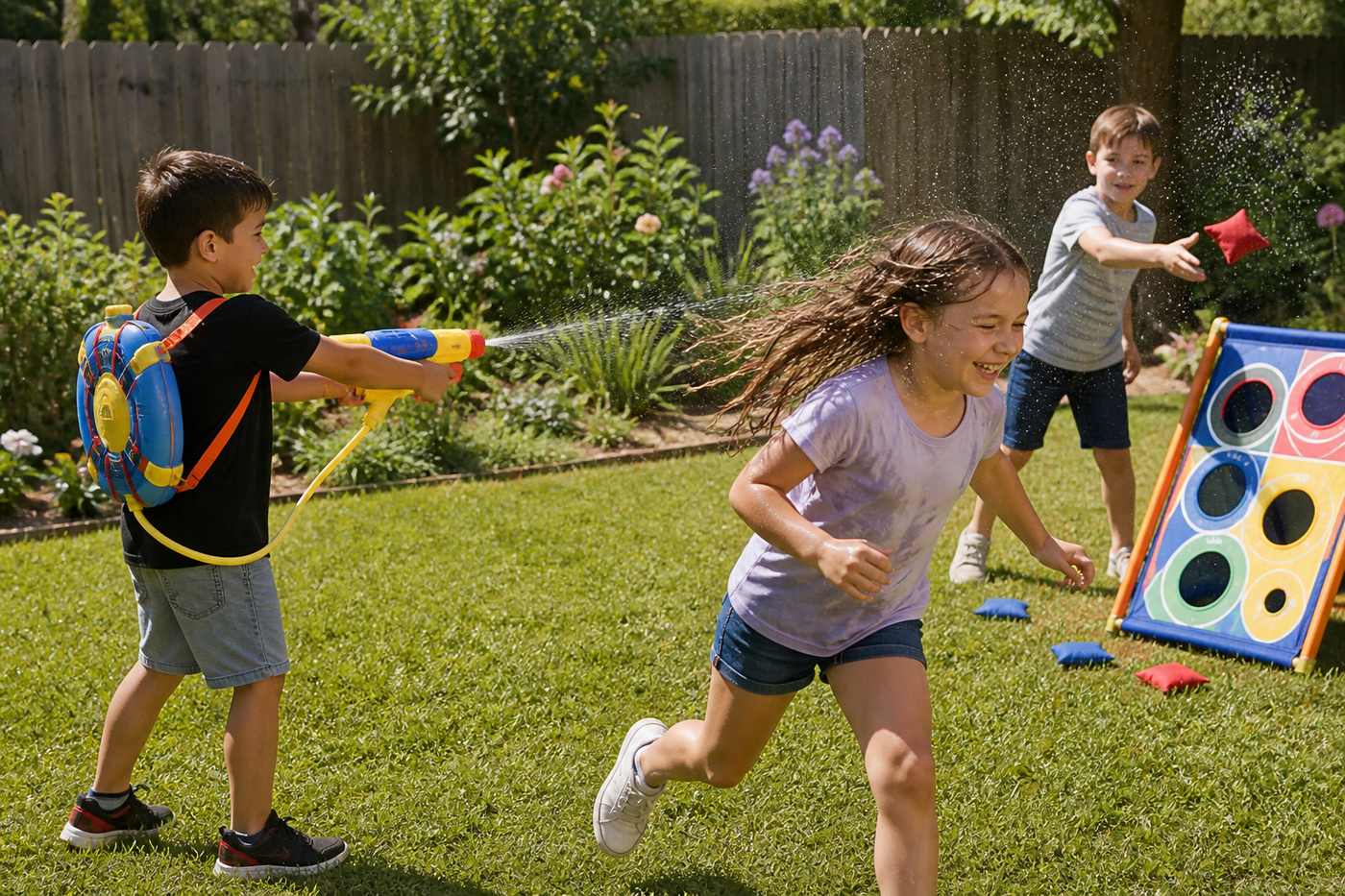
The age range printed on a water toy's wholesale listing—'3-8 Years,' '6 Month +,' '2 to 4 Years'—is a supplier-declared field, not a verified compliance determination. It often conflicts with the age grade a US or EU regulator would assign. Age-band labeling is the single most common source of customs holds and retail rejections, because the label must match the test report for that exact SKU, not a similar model from the same factory. Before you commit to packaging copy, verify the age band against documented evidence—the test report or Children's Product Certificate—and ask the supplier three pointed questions that separate a real compliance file from a marketing claim.
Key Takeaways
- Age bands are not self-evident: The age range on a water toy listing is a supplier claim. ASTM F963 and EN71 assign age grades based on small parts, choking hazards, and accessible edges—not on the material name or the product's general look.
- Verify per SKU, not per category: Certifications like EN71 or ASTM F963 on a listing do not prove the age-band label is correct for the specific product model you are buying. You must request the test report or CPC that names that exact SKU and check that the age grade matches your intended label.
- Water toys have two design risks beyond material: Small parts that shed under impact or torque, and water retention inside cavities that can harbor mold, are the two failure modes that a material name like ABS does not address. Ask which small-parts test was run and whether the toy's internal chambers drain.
- If the supplier cannot produce a report, treat the age band as unverified: No test report for the exact model means you cannot legally defend the age band. Request a fresh test or a written statement of which existing report covers the product before you approve packaging.
How Six Water Toy SKUs Compare on Age-Band Evidence
| Light-up Stepping Stones (MOQ 40) | Material: ABS | Age band in listing: none stated | Certifications: none listed | MOQ: 40 | Price: $11.16 | Verdict: Low MOQ for testing, but no age or certification evidence—ask for test report before labeling. |
|---|---|
| 710ML Water Pump Gun (MOQ 140) | Material: Plastic | Age band: none stated | Certifications: none listed | MOQ: 140 | Price: $4.50 | Verdict: Classic water gun with no age data—request small-parts test and age grade. |
| Sand & Water Table with Tent (MOQ 120) | Material: ABS | Age band: none stated | Certifications: none listed | MOQ: 120 | Price: $12.00 | Verdict: Larger footprint item; no age evidence—confirm age grade for play-set category. |
| DIY Flowers Water Sprinklers (MOQ 162) | Material: Plastic | Age band: none stated | Certifications: EN71, ASTM F963 | MOQ: 162 | Price: $2.06 | Verdict: Certifications listed, but no age band—ask which ASTM F963 sections were tested and the age grade on the report. |
| Electric Water Gun (MOQ 120) | Material: Plastic | Age band: none stated | Certifications: EN71, ASTM F963, CE, Outdoor Toy, CPC | MOQ: 120 | Price: $2.28 | Verdict: Most complete certification list, including CPC—confirm the CPC covers the motorized components and battery compartment, not just the shell. |
| Dinosaur Water Guns (MOQ 360) | Material: Plastic | Age band: 'Ages 3+' stated in product name | Certifications: none listed | MOQ: 360 | Price: not supplied | Verdict: Only SKU with an explicit age band, but no certification evidence—request the test report that supports the 3+ grade. |
How the Age Band Is Actually Determined (and Why Listings Get It Wrong)
ASTM F963 and EN71 assign age grades using defined criteria—small parts, choking hazards, accessible edges, and in some cases ingestion or aspiration risk—not a supplier's menu selection. The US small-parts analysis must match the intended age grade and the product's reasonably foreseeable use; a '3+' label cannot automatically replace a 0-3 assessment. The EU toy-safety Regulation covers products designed or intended for use in play by children under 14, subject to listed exclusions.
Wholesale listings often show overlapping age ranges—one splash ball product, for example, lists '2 to 4 Years, 5 to 7 Years, 8 to 13 Years, 14 Year'—which signals the supplier has not resolved the age determination against a specific standard. A single, defensible age band is what your packaging needs, and the only way to get it is from the test report for that exact SKU.
A beach or pool accessory is not automatically an aquatic toy; classification depends on intended play, water use, and the applicable market definition. That distinction can change the age grade and the testing required, so do not assume a 'water toy' label means the same thing in every market.
Verify the Age Band Before You Print the Label
The age band on a water toy listing is a marketing claim until a test lab confirms it. A supplier's '3+' or '6-36 months' in a product table is not evidence. The evidence is the age grade stated on the test report or Children's Product Certificate (CPC) for that exact SKU, not for a similar model from the same factory.
Ask the supplier for the test report and CPC that name the specific model number you are buying. Check that the age grade on the report matches the age band you intend to print. If the report says 3+ but your packaging says 'for toddlers,' you have a labeling compliance problem before the product ships. If the supplier cannot produce a report for the exact SKU, treat the age band as unverified and request a fresh test or a written statement of which existing report covers the product.
None of the six products compared above show an age band in the product data—only the material (ABS or plastic) and certifications for two items (EN71, ASTM F963 for the DIY sprinkler; EN71, ASTM F963, CE, Outdoor Toy, CPC for the electric water gun). The absence of age data on the other four is a red flag for a buyer who needs to label correctly. Request the age grade from the test report for each SKU before you commit to packaging copy.
Design Risk: Water Toys Fail on Small Parts and Water Retention, Not on Material Alone
Water toys carry two design risks that a material name like 'ABS' or 'plastic' does not address. First, small parts: a stepping stone with a light-up module, a sprinkler with a valve, or a water gun with a removable reservoir can each shed components that fail small-parts testing for younger age bands. The test is not about the main body material—it is about the assembly, the fasteners, and what breaks under impact or torque. Ask the supplier which small-parts test was run and at what age grade.
Second, water retention and mold: toys that trap water inside—sprinklers, squirt guns, bath toys with openings—carry a hygiene risk that is assessed differently across markets. ASTM F963 and EN71 do not uniformly cover internal water drying; some markets apply additional guidance for bath toys. The supplier's certification list does not tell you whether the toy's internal cavities were designed to drain. Ask for the product's drain-hole design or any test evidence on water retention, and inspect the golden sample yourself for trapped-water pockets before approving mass production.
The factory note about the sealed golden sample applies directly here: a photo approval of a water toy does not show you whether the valve seats properly, whether the light module survives a drop, or whether water pools inside the shell. Compare bulk against the physical sample for function—trigger action, seal integrity, drain behavior—not just colour and flash. For the electric water gun (the only product with a CPC listed), confirm that the CPC covers the motorized components and battery compartment, not just the plastic shell.
Certification Names Are Not Proof of Correct Age Labeling
A listing that says 'EN71, ASTM F963, CE' is a starting point, not a conclusion. According to the product page for an outdoor playing water toy, certifications are product-level, and buyers must confirm age guidance and labeling for the exact SKU and destination market. The page itself advises confirming documents per market rather than assuming a catalog-wide certificate. The DIY sprinkler and electric water gun in our comparison list certifications, but those do not confirm the age-band label is correct for your intended market. You need the test report that names the model, the age grade, and the specific standard sections tested—and you need it before you print packaging.
FAQ
Can you provide the CPC for this exact SKU, citing ASTM F963 and the accredited test lab?
Ask for the Children's Product Certificate that names the SKU, the ASTM F963 standard, and the lab. If the supplier cannot produce it, the age band is unverified.
What age grade is printed on the product and packaging, and does it match the age band in your listing?
The printed age grade should match the test report. If the listing says '3+' but the report says '6+', you have a labeling conflict. Confirm the physical label matches the report before you order.
Does this water toy contain small parts that would require a 'not for under 3 years' warning under EU or US rules?
Check the small-parts test in the EN71 or ASTM report. If the toy has removable components—like a light-up module or a reservoir—it may fail for younger age bands. Ask the supplier which small-parts test was run.
Can you share the EN71 test report showing which parts of the standard were tested for this model?
Request the report that names the exact model number. EN71 covers physical/mechanical, flammability, and chemical sections; the age grade depends on which sections were tested and the results.
If I target both the US and the EU, will you provide separate compliance documentation for each market?
You need separate documentation because the requirements differ. The US uses ASTM F963 and CPC; the EU uses EN71 and the Toy Safety Directive. A single certificate is rarely valid for both—ask for the file per market.
What is the process if the age band on the physical sample differs from what was agreed in the PO?
The golden sealed sample is the reference. If the bulk differs from the sample on age-critical features, the lot should be isolated and reworked. Agree on an inspection plan in the PO that includes age-band verification before shipping.
Sources
Related Products & Categories
Request a Quote
Ready to source water toys with verified age-band labeling? Send the SKU, target market, and quantity to our team, and we will provide the compliance file—test reports, CPC, and age-grade documentation—for the exact items you plan to order. Start your RFQ today.