
You can get competitive factory pricing on outdoor toys without committing to a 20-foot container of a single SKU. In 2026, B2B buyers sourcing water blasters, RC planes, ride-on scooters, and soft bullet guns can secure low MOQs through mixed-SKU containers, consolidated LCL shipments, and direct factory relationships that accept as few as 32–80 units per design. This guide covers where to buy wholesale outdoor toys in bulk, how to vet suppliers, what MOQs to expect, and how to structure your first order to minimize risk while keeping quality and compliance intact.
Why Buy Outdoor Toys in Bulk
Buying outdoor toys in bulk is not just about a lower unit price. It is about securing inventory for peak seasons — summer, holidays, and school breaks — when demand for water play, ride-ons, and outdoor games spikes sharply. Retailers who buy piecemeal through B2B marketplaces lose margin to per-unit shipping costs and miss the seasonal window entirely.
Bulk purchasing also gives you leverage in supplier negotiations. A single mixed container of 2,000 to 5,000 units across several SKUs often unlocks a pricing tier that a 50-unit test order never will. For distributors, bulk buying builds a repeatable supply chain, which matters more than any single transaction when you are planning a 12-month sell-through calendar.
The economics change dramatically at scale. Freight per unit on a full container can drop 30–50% compared to LCL or parcel shipping. That delta alone can fund your warehousing or marketing budget.
Best-Selling Outdoor Toys for 2026
Outdoor toys break into four high-velocity categories for 2026. Water blasters and bubble guns are the summer volume leaders — lightweight, low-cost, and easy to impulse-buy at retail. RC planes, cars, and drones appeal to an older kid demographic and carry higher price points with strong margins. Ride-on scooters and balance bikes are the durable goods of the category, bought once per season but at a premium. Soft bullet guns round out the assortment, especially in markets where foam dart blasters remain a top-seller.
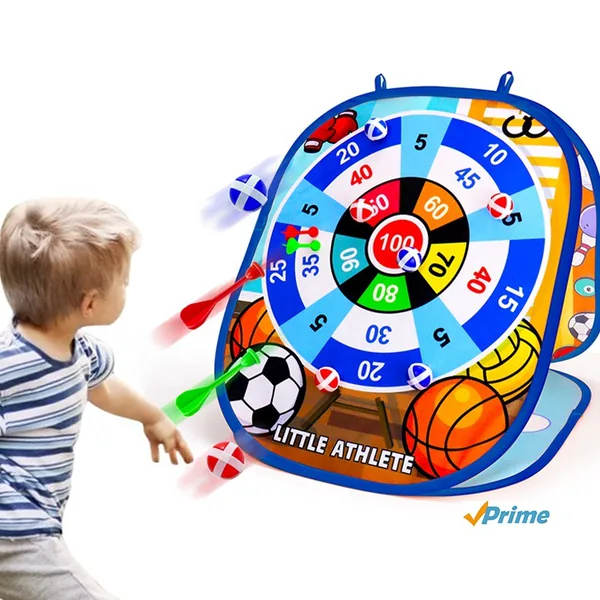
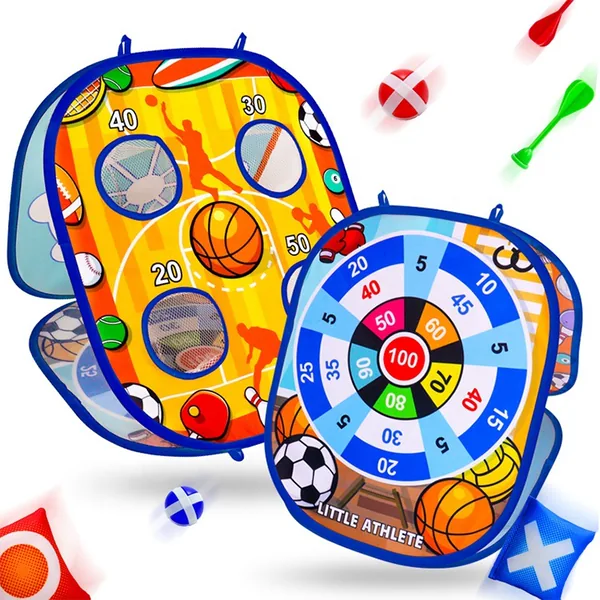
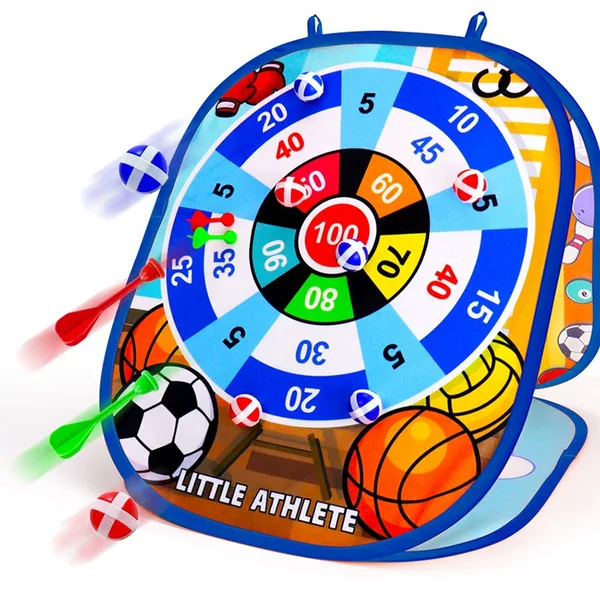
For balance and coordination toys, stepping stones are a consistent performer. A 5-piece ABS plastic set can retail at a healthy markup over wholesale, and they are light enough to keep freight costs low. Catch-and-toss games — sticky ball sets, chase vests, and throwing/catching combos — are the filler SKUs that round out a mixed container. They move fast, cost under a dollar per unit at wholesale, and give your container the CBM density you need.
These are all toys that need outdoor space, which means they sell on sunny weekends and school holidays. Stock them before the season, not during it.
By Theme / Use-Case
Backyard and garden play is the anchor use-case. Balance stepping stones, pogo jumpers, and toss games fit here — they are compact, easy to store, and appeal to parents with young children. A 36-unit MOQ on a bean bag cornhole set makes this an easy entry point for a first order.
Beach and pool use drives a distinct buying pattern. Water blasters, sticky ball catch sets, and splash-resistant toss games dominate. These are high-impulse items; discount stores and seaside resorts move them in volume. The MOQs here are forgiving, often starting at 32–80 units per design.
Parks and community events are a third theme. Cornhole boards, ring toss games, and large-format chase games suit schools, camps, and event organizers who buy in bulk for group activities. For this segment, durability matters more than price — a plastic cornhole board that survives a season of public use justifies a higher wholesale cost.
Choose your theme first, then your supplier. A factory that excels at injection-molded ABS stepping stones may not be the right fit for soft bullet guns with electronic components. Matching the supplier's core competency to your use-case is the single biggest quality lever you control.
How to Choose the Best
Decide between a factory and a trading company. Factories in manufacturing hubs like Shantou's Chenghai district — which hosts over 10,000 toy production and supporting enterprises — offer lower unit prices and direct quality control. Trading companies offer flexibility, consolidated sourcing across multiple factories, and often better English communication. Choose a factory if you are ordering a single product category in volume; choose a trading company if you need a mixed container of unrelated SKUs.
Vet suppliers systematically. A rigorous approval process covers eight areas: qualifications, production capacity, technical capability, quality control, certifications, social responsibility, financial health, and responsiveness. Do not skip the financial check — a factory that goes bankrupt mid-production is your problem, not theirs.
Understand MOQ structures. A single-SKU MOQ might be 300–600 units, while a mixed-SKU container can accept 32–80 units per design as long as the total container volume is filled. This is the key to a low-risk first order: order a variety of designs at lower per-SKU quantities to test the market, then double down on winners in your second order.
Request certifications before you negotiate price. EN71, ASTM F963, and Outdoor Toy compliance are non-negotiable for US and EU markets. A supplier who hesitates to share certification documents is a red flag, regardless of how good their price looks.
Key Takeaways
- These are the sourcing rules that separate profitable bulk orders from expensive mistakes.
- Channel: Factory-direct for single categories; trading companies for mixed containers. B2B marketplaces work for small test orders but kill margin at scale.
- MOQ expectations: Single-SKU MOQs typically 240–600 units; mixed containers can accept 32–80 units per design. Verify before committing.
- Red flag #1: Supplier cannot provide EN71 or ASTM certification documents before order placement.
- Red flag #2: Price quotes that exclude compliance testing, packaging, or export documentation — the hidden costs will surface later.
- Logistics: Sea freight from manufacturing hubs is the only cost-effective option for container volumes. Factor 30–45 days for production plus 20–35 days transit.
- First order strategy: Use a mixed-SKU container to test multiple designs at low per-SKU quantities. Reorder winners in volume.
Supplier Comparison
| Factory-direct (manufacturing hub) | MOQ: 240–600 per SKU | Price posture: Lowest unit cost | Authorized: Direct manufacturer | Ships from: China (e.g., Shantou, Yiwu) |
|---|---|
| Trading company | MOQ: 32–80 per SKU in mixed container | Price posture: 5–15% higher than factory | Authorized: Aggregator, not manufacturer | Ships from: China (consolidated) |
| B2B marketplace (Alibaba, Global Sources) | MOQ: varies by spec | Price posture: Mid-range | Authorized: varies by spec | Ships from: varies by spec |
| Domestic wholesaler/distributor | MOQ: low (case pack) | Price posture: Highest — pays for warehousing and speed | Authorized: Authorized reseller | Ships from: Local warehouse |
What to Ask Suppliers
| Certifications | Request EN71, ASTM F963, Outdoor Toy, and REACH certificates for each SKU. Verify they are current and cover the specific product, not just the factory. |
|---|---|
| MOQ breakdown | Ask for both single-SKU MOQ and mixed-container MOQ. Confirm per-design minimums and whether you can mix across categories. |
| Sample policy | Confirm sample cost, lead time, and whether the cost is deducted from the first bulk order. Always test a pre-production sample before paying the balance. |
| Quality inspection | Ask if third-party inspection (SGS, BV, TÜV) is available before shipment. Factor the cost into your landed price. |
| Packaging | Confirm whether retail packaging, barcodes, and multilingual labels are included or cost extra. This is a common hidden cost. |
| Payment terms | Standard terms are 30% deposit, 70% balance against the Bill of Lading. Be wary of suppliers demanding 50% or more upfront. |
| Lead time | Confirm production lead time and whether it is quoted in calendar days or working days. Get it in writing. |
| FOB vs. CIF | Know which Incoterm is quoted. FOB gives you control over freight; CIF bundles shipping but often at a markup. |
FAQ
What is the minimum order quantity for wholesale outdoor toys?
It varies by supplier and product. Single-SKU MOQs typically range from 240 to 600 units, but mixed containers can accept as few as 32–80 units per design. Ask for both structures before negotiating.
Should I use a factory or a trading company for my first order?
Use a trading company if you want a mixed container of different product categories with a single point of contact. Use a factory directly if you are ordering one product type in volume and want the lowest unit price.
What certifications do outdoor toys need for the US and EU?
For the US, ASTM F963 and Outdoor Toy are the key standards. For the EU, EN71 is required. Always request current certificates for each SKU before placing an order.
How do I get a good price on a small first order?
Combine multiple SKUs into a mixed container to reach volume-based pricing tiers without committing to a single design. This is the standard strategy for first orders.
What is the typical production and shipping timeline?
Production typically takes 30–45 days for container volumes, plus 20–35 days for sea freight from manufacturing hubs to the US or EU. Plan for 2–3 months from order placement to delivery.
How can I verify a supplier's quality before paying in full?
Order a pre-production sample, request third-party inspection (SGS, BV, TÜV) before shipment, and consider a partial payment structure of 30% deposit / 70% against the Bill of Lading.
Related Products & Categories
Request a Quote
Ready to structure your first bulk order? Send us your target product mix and destination port, and get a detailed quote with MOQ breakdown, certification documents, and logistics options. We specialize in mixed-container outdoor toy sourcing from manufacturing hubs, with flexible per-SKU minimums to help you test the market without overcommitting.