
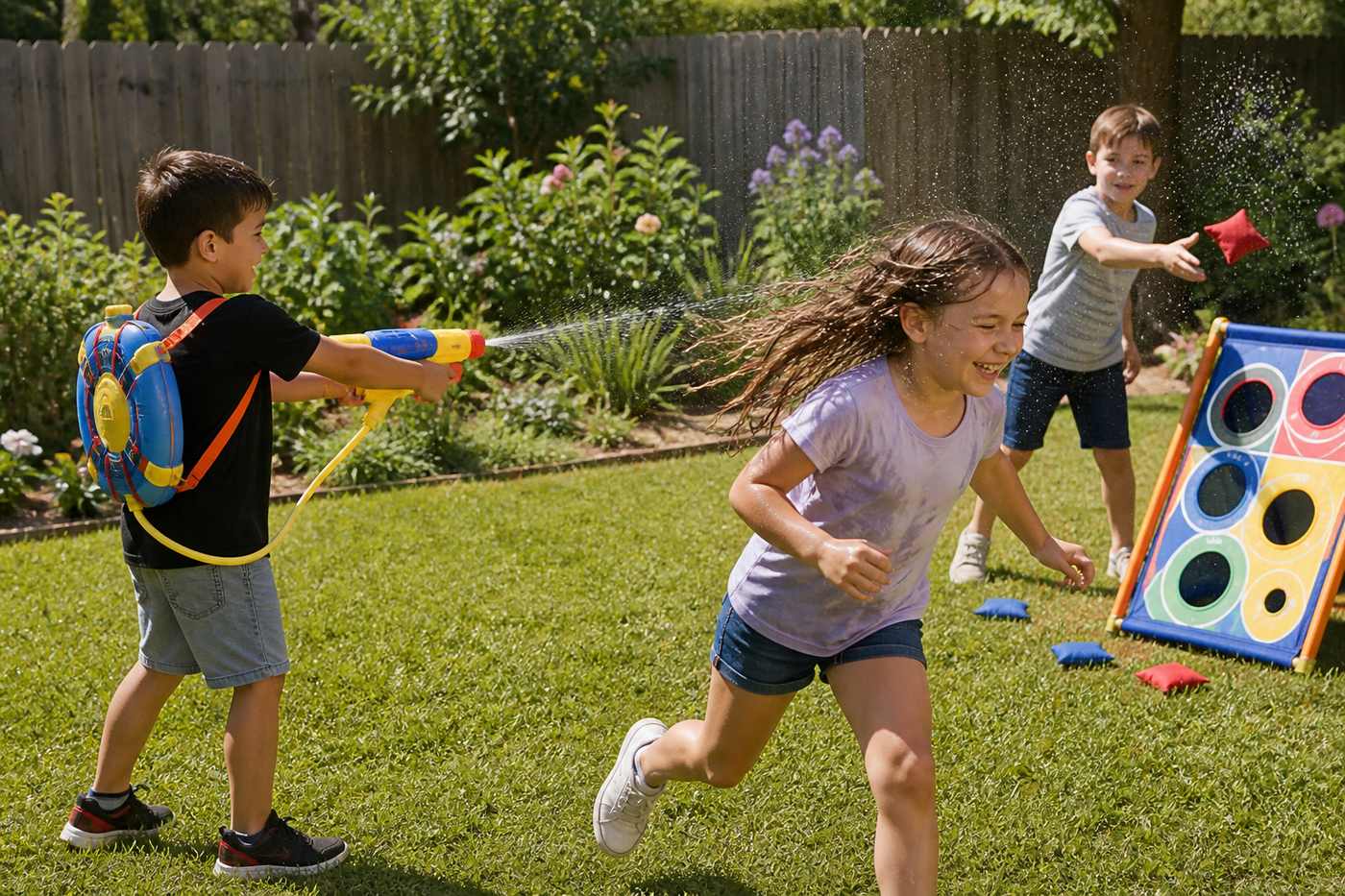
For a 2026 summer outdoor toy buy, place a small test order first whenever the SKU's recorded MOQ allows it, and commit core depth only on items whose sample-to-mass gap you have already closed in writing. The test-order-versus-depth decision is not a category decision — it is a per-SKU decision driven by three documents: a signed golden sample, a confirmed packaging and carton spec, and a current quote that states whether the price holds at your quantity.
This page covers what actually changes between a sample and a mass run of the same plastic summer toy, which attributes must be signed off before tooling, and how recorded MOQ bands (from single-digit trial quantities up to 300) change the timing math for a seasonal collection. Every figure below is a recorded catalog reference, not a guarantee; where a value is not established, we say so.
Sample versus production
| Item | Automatic ABS Plastic Water Gun, packed in PVC card with bag (YR224441) — recorded MOQ 240, unit price band 1.05–1.15 USD |
|---|---|
| Sample | Approved golden sample: material and colour as signed, size 19*8.5*18 cm, packing format PVC card with bag — sample-stage carton quantity unknown |
| Mass production | Colour match, resin batch, wall thickness at stress points, artwork placement and packed carton configuration all require re-confirmation; carton quantity for this SKU not established |
| What to approve | Signed golden sample plus dated photo set, written packaging and carton spec, written change-control clause, current quote at your quantity |
| Item | 3 in 1 Sport Jump Rope Game Insect Launcher Indoor Outdoor Toss Game (YR283763) — recorded MOQ 120, unit price band 8.51–9.06 USD |
| Sample | Colour box format recorded; size 22*22*12.5 cm; carton quantity recorded at 12 |
| Mass production | Colour box print, insert fit and label placement verified against the approved dieline; plastic finish and small-part assembly checked on a production-drawn sample |
| What to approve | Golden sample, dieline and colour standard, production sample from the actual run before balance payment |
| Item | Bubble Lawn Mower Machine Bubble Gun for Toddlers (recorded MOQ 18) |
| Sample | Low recorded MOQ suggests a short-run or stock position; sample availability and packing format to be confirmed — ask the supplier |
| Mass production | Whether the same line, tool and resin run at higher quantity — unknown; ask the supplier to state it in writing |
| What to approve | Written statement of whether the MOQ is stock or production minimum, plus the packaging format that will actually ship |
| Item | Kids Foldable Indoor Outdoor Cornhole Board Game Ring Toss (YR241404) — recorded MOQ 300, unit price band 5.00–8.20 USD |
| Sample | Colour box recorded, carton quantity 36; foldable board hardware and hinge action checked at sample stage |
| Mass production | Hinge and closure durability, board flatness and print registration are the drift points; test a production-drawn unit before bulk release |
| What to approve | Golden sample with hardware sign-off, carton drop-test result or your own test, and the price tier at MOQ 300 versus a lower quantity |
What must be signed before tooling
Only three things genuinely block tooling: colour, packaging and structure. Everything else can be adjusted later at a cost; those three cannot be changed cheaply once the tool and print setup are cut.
Colour is the first sign-off. Get the master standard — a Pantone reference, a physical master chip, or a signed colour box proof — and state the acceptable visual tolerance in the purchase order. A verbal "match the sample" is not a standard; it is a future argument. For plastic parts, confirm whether the colour is in the resin or applied, because in-resin colour shifts with batch and applied colour shifts with cure.
Packaging is the second. The recorded catalog shows the same product family shipping in PVC card with bag, PVC net bag, window box and colour box, with carton quantities ranging from 9 to 36 across SKUs. Each format has its own print setup and its own carton cube, so a format change after sample approval is a re-quote and a new carton spec, not a cosmetic tweak. Ask for the dieline, the carton dimensions and the gross weight per carton in writing before you approve the sample.
Structure is the third. This covers wall thickness at stress points, hinge and closure design, and how the product sits in the insert. You do not need to invent tolerances — ask the supplier for the drawing and the TDS, and mark any dimension they cannot document as unknown rather than accepting a verbal range. The recorded catalog reference for each SKU should be treated as a starting point only: the snapshot entries themselves state that no certification, age suitability, licensing, stock or factory capacity is established, and instruct buyers to reconfirm the approved sample, current quote, packing and destination documents.
One compliance point belongs here and nowhere else. If you change a material or component on a children's product, the affected requirements generally need retesting and a new Children's Product Certificate issued from the passing results — according to Outdoor Toy guidance on third-party testing, which also advises separating unchanged components from changed materials and confirming who coordinates the document review. Do not assume an earlier report covers a revised configuration. For EU-bound stock, the European Commission has been moving a strengthened toy safety framework through the legislative process; treat any specific requirement date as something to verify with your importer or lab rather than something a supplier's listing settles.
How recorded MOQ changes the test-order timing math
MOQ is the practical lever on timing, because it sets how much cash and how much shelf space you commit before you have any sell-through data. Within one recorded plastic summer-toy set, MOQs span from single digits and teens up to 240 and 300, with unit price bands from roughly one dollar to the mid-teens. That spread is the whole opportunity: you can run a genuine test on the low-MOQ items and reserve depth for the items you have already proven.
Low recorded MOQ usually means a higher unit price band, because you are absorbing setup and short-run cost. High recorded MOQ usually means a lower unit price band, because the tool and line are amortised across a larger run. Neither is better in the abstract — the question is whether your forecast is strong enough to justify buying at the low price. If it is not, buying deep to chase the price is how seasonal inventory becomes next year's problem.
Timing guidance from the outdoor sector is market-specific and worth mapping before you commit. A B2B buyer guide for outdoor and camping products places Europe and North America's camping season at May to September, with January to February ordering for European summer stock, and Southeast Asia's dry-season peak at October to April, with orders placed 8 to 10 weeks before October. Those windows come from supplier guidance, not from a standard, but they are a useful sanity check on when a test order has to land to be worth anything.
A separate winter-camping sourcing guide makes the cost of late commitment concrete: it describes a mid-year bulk booking window, warns that orders placed after mid-August risk peak-season surcharges and arrival after the retail peak, and breaks end-to-end lead time into sampling, bulk manufacturing, QC and packing, ocean freight, and inland warehousing. The specific months are that source's guidance for winter camping gear, not a universal calendar for summer toys — but the structure transfers. Build your own five-phase timeline and get each phase confirmed per SKU, because a test order and a depth order do not run through the same phases at the same speed.
No lead time, production slot availability, stock position or seasonal cut-off is established for any of the recorded SKUs. Ask for those in writing, per SKU, before you treat a timing plan as real.
Verifying mass production against the approved sample
A production sample drawn from the actual mass run is the only check that proves the line matched the golden sample. Ask for it before balance payment, not after arrival, and compare it to the approved sample on the attributes that generate returns: colour against the master standard, resin and surface finish, wall thickness at stress points, hardware and closure action, artwork and label placement, and the packed carton configuration.
Record the comparison. A dated photo set with the SKU, sample type and inspector name turns a subjective argument into a documented finding, and it is the evidence you need if a later shipment drifts. If the supplier cannot provide a production-drawn sample before the deposit, treat that as a finding about the supplier rather than a scheduling inconvenience.
Functional checks matter as much as cosmetics for outdoor items. The principle is simple: test the thing the way the end user will abuse it. Fold and unfold the board, cycle the hinge, fill and fire the water toy, drop the packed carton. Consumer resale guidance in the camping sector makes the same point from the other direction — testing functionality before selling avoids discovering problems after the sale, and discovering them post-sale destroys margin and reputation. That source is market talk, not a toy test method, so use it as a prompt to define your own check list rather than as a standard.
Finally, keep the sample and the paperwork together. A golden sample in a warehouse and a test report in an email folder are two halves of one approval. If the configuration changes, the report may no longer describe what you are buying.
FAQ
Should I place a test order or commit to core depth for a summer outdoor toy collection?
Place the test order first on any SKU whose recorded MOQ is low enough to make a trial affordable, and commit core depth only where you already have comparable sell-through evidence. In one recorded plastic summer-toy set, MOQs range from single digits up to 300, so the test-order option genuinely exists — you are not forced into depth to get started.
What is the confirmed unit price at my test-order quantity versus my depth quantity?
The recorded catalog gives a unit price band per SKU, not a quantity-break schedule, so the depth price is not established until the supplier confirms it in writing. Ask for the price at your exact test quantity, the price at your depth quantity, and the price validity period, and treat the recorded band as a reference only.
Which document proves the toy is compliant for my destination?
A listing that names a standard is not proof; you need the test report tied to the exact SKU, material, colour and age grade you are buying, plus the declaration naming your company where your market requires it. The recorded catalog entries state that no certification, age suitability or licensing is established, so request the report number, issuing lab and date before you commit.
Does changing the packaging after sample approval affect the price or the carton spec?
Yes — packaging format drives print setup, carton cube and freight, so a change from colour box to window box or from PVC card with bag to a net bag is a re-quote and a new carton specification. Confirm the dieline, carton dimensions, carton quantity and gross weight in writing against the recorded row before you approve the sample.
If I change a material or component, does the existing test report still cover the product?
No. Under Outdoor Toy guidance, affected requirements generally need retesting after a material change to a children's product, with a new Children's Product Certificate issued from the passing results. Separate the unchanged components from the changed materials and confirm in writing who coordinates the document review — do not assume the earlier report covers the revised configuration.
What lead time should I plan for a test order versus a depth order?
No lead time is established for the recorded SKUs, so ask per SKU rather than accepting a category average. Sector guidance on seasonal outdoor goods describes sampling, bulk manufacturing, QC and packing, ocean freight and inland warehousing as separate phases, and notes that late-season booking can attract peak surcharges and miss the retail window — build your own five-phase timeline and get each phase confirmed.
Sources
- 2026 Winter Camping Season: When to Place Bulk Orders?
- Best Outdoor Products to Stock Before Camping Season: B2B Buyer Guide
- Camping Gear Flipping Guide: Brands, Safety & Comps 2026
- How to Prepare Camping Tent Orders Before Peak Season - FAIRWIND
Related Products & Categories
Get your sample-to-mass checklist before you commit
If you are weighing a low-MOQ trial against a deeper seasonal commitment, start with the items where the sample-to-mass gap is easiest to close. Browse the Flying, Bubbles & Outdoor Fun range and the Outdoor Vehicles & RC range to shortlist candidates, then request the golden sample, the packaging and carton spec, and the current quote at your quantity for each one you are seriously considering.